1. Ceiling-rail curtain privacy wall with blackout lining
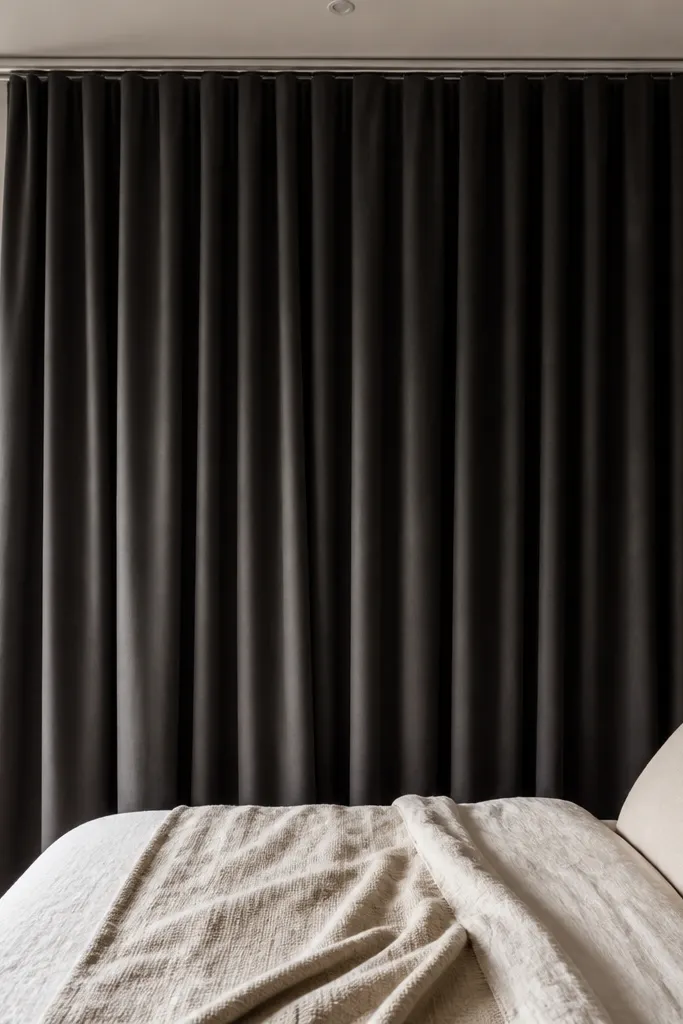
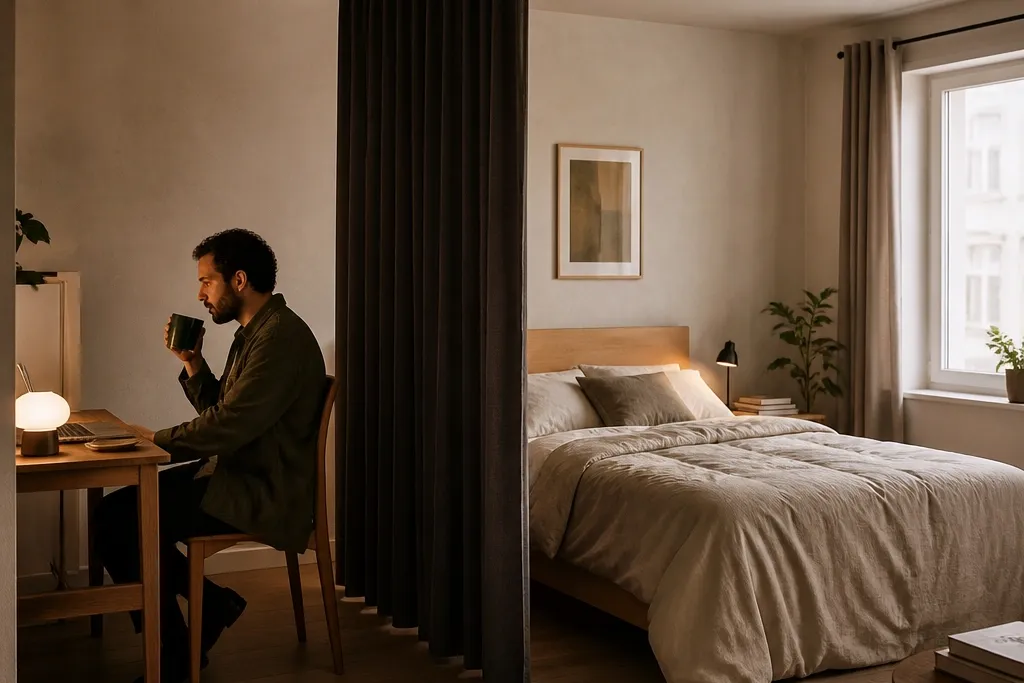
This is the cleanest way to get bedroom privacy on a budget. Hang a floor-length curtain on a ceiling track so it can close fully when you need sight blocking, but slide out of the way when you don’t. Use a blackout lining or a thick interlining so the divider stops silhouettes, not just light. Keep the curtain in a solid neutral like cream, oat, or warm gray so it reads calm and intentional. For small spaces, place it so it interrupts the line from the door to the bed — you want privacy where you feel exposed, not a random wall in the center of the room.
First, measure the span you need to cover and add 6-10 inches of overlap on each side so gaps don’t show. Install a ceiling track with screws into studs when possible; if you can’t, use heavy-duty anchors and keep the rail centered over the divider zone. Then hang two layers: a decorative outer panel (wide enough to puddle slightly) plus blackout lining behind it. Finally, pull the curtain to close and mark the “rest” position so it always closes the same way without fighting you.
Let the curtain touch the floor or hover by 1-2 inches max; that small detail makes it look custom.
Avoid thin sheers alone — they blur light but still show movement.
2. Tension-rod layered curtains for instant, no-drill zoning
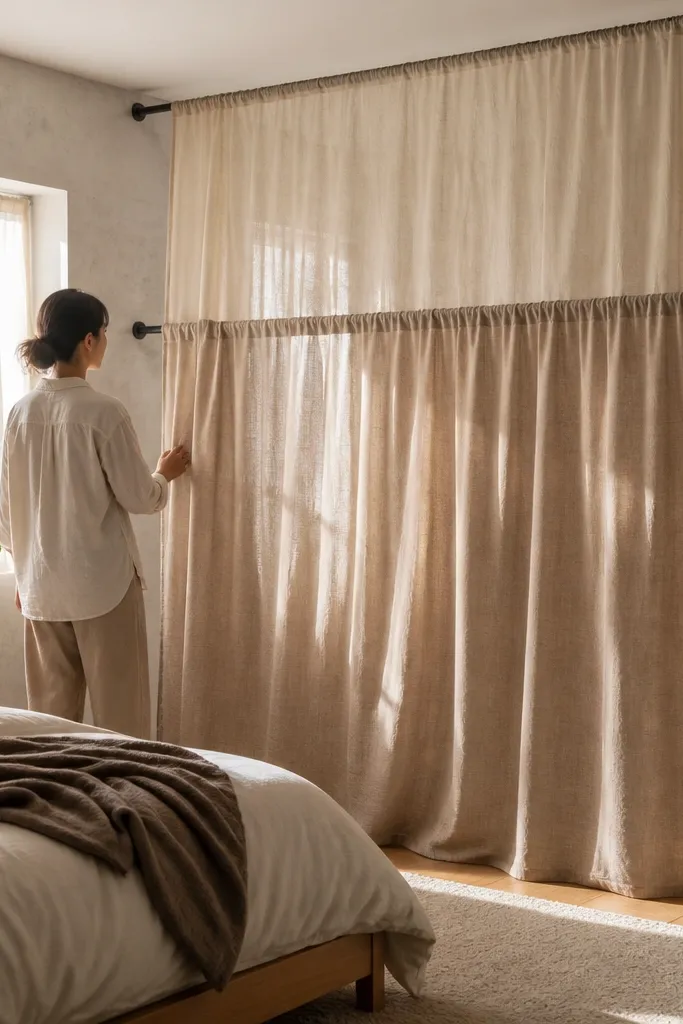
If you rent or you want quick budget room divider ideas, layered curtains on tension rods are the most practical move. Use two rods at different heights: one around 48-54 inches for visual separation and a second closer to the ceiling for full closure. Layer a textured outer fabric like cotton twill or linen-look over a light-blocking layer such as blackout roller shade fabric or thick curtain lining. The layered look hides the mess behind it and keeps the divider from looking flimsy. Place this divider near the bed corner where you need privacy from someone standing at the doorway or across the room.
Start by choosing a rod length that spans the divider area with at least 2-3 inches of clearance on each side. Hang the first curtain pair on the lower rod, then add the second curtain panel higher up so it covers the top sightline. Use curtain clips or rings so fabric hangs straight instead of twisting. Finally, adjust until the curtains overlap by 4-6 inches in the middle when closed.
Pick fabrics that match your bedding undertone — warm beige with warm wood, cool gray with cool metal accents.
Skip lightweight rod-only solutions if you need privacy — the fabric thickness matters.
3. Folding screen with fabric panels in your bedding palette
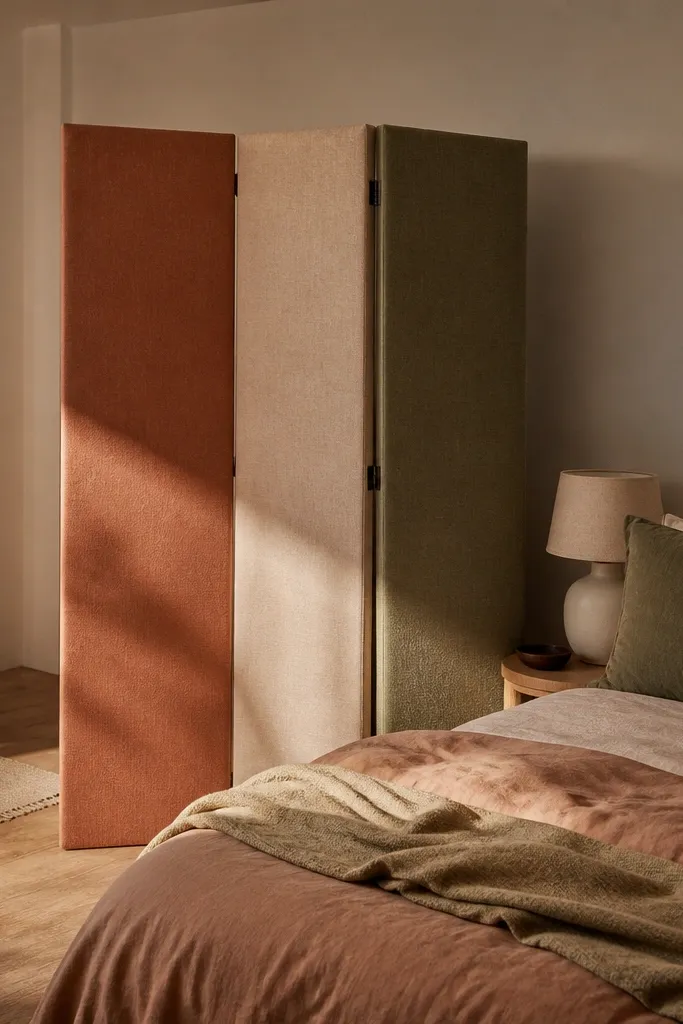
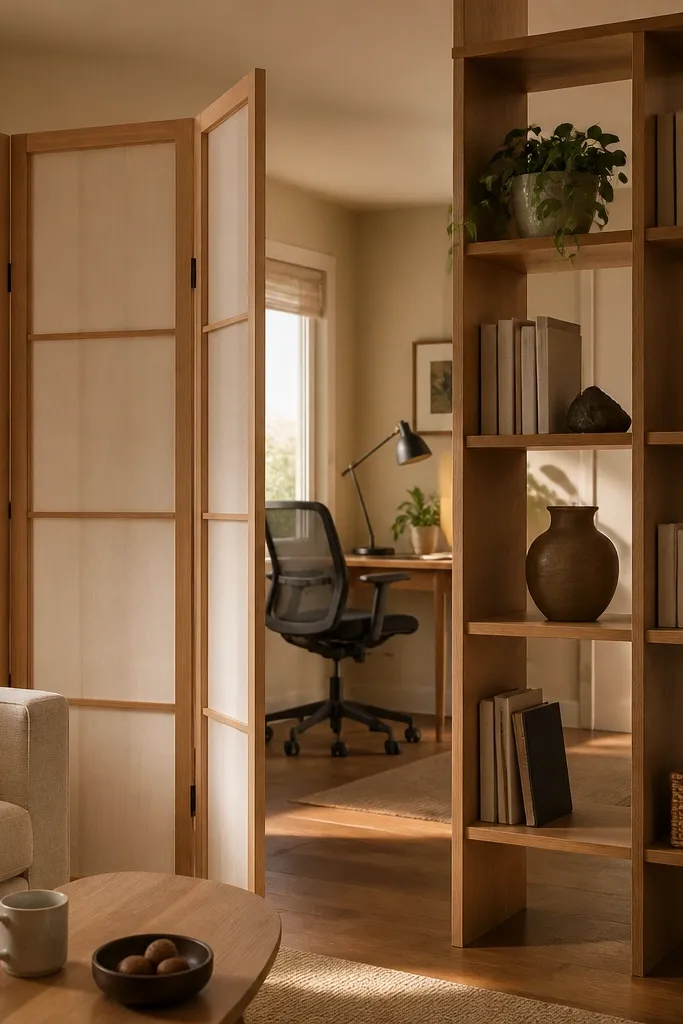
A folding screen gives you privacy with movement — you can close it at night and open it during the day. The key for bedrooms is choosing fabric panels that don’t look see-through from a standing position. Swap in thick upholstery fabric or blackout curtain remnants in the same color family as your duvet so the screen looks designed, not temporary. Keep the screen slightly angled toward the exposed area; a straight-on wall look can feel harsh in a small room. This works especially well when your bed is visible from the door or when you have a dresser/desk in the same line of sight.
First, measure the screen width and pick a placement that leaves a clear walkway — aim for at least 24 inches behind the divider if it’s near the bed edge. Place the screen so it faces the exposure point, then angle it 10-20 degrees for better sight blocking. If the original screen panels are thin, re-cover with heavy fabric stretched tight over the inserts and secure with a staple gun. Use a weighted base or add small non-slip pads to keep it from creeping.
Use fabric with a subtle texture (twill, linen weave) — it hides shadows and looks richer in photos.
Don’t use glossy or patterned panels that reflect light — they can make the divider look cheap and reveal motion.
4. Slim bookcase divider with two-sided styling
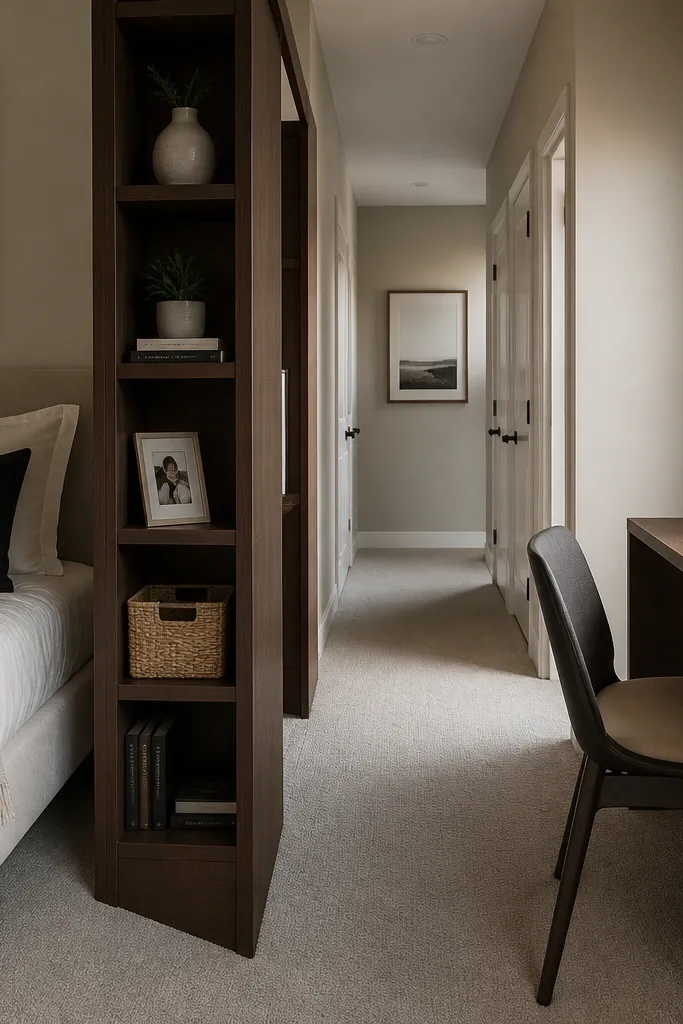
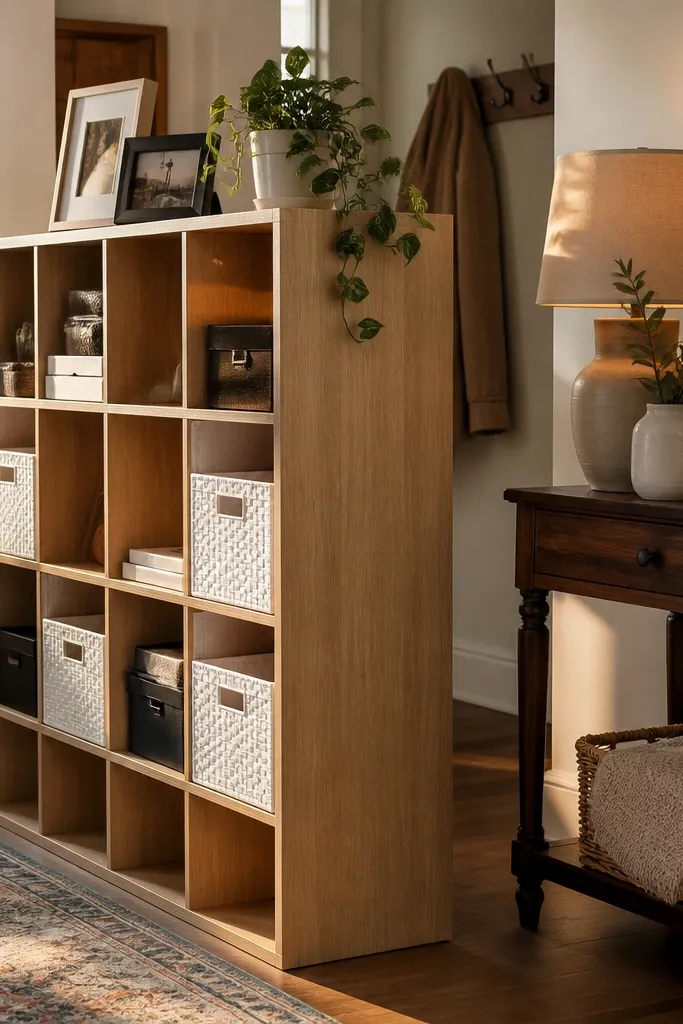
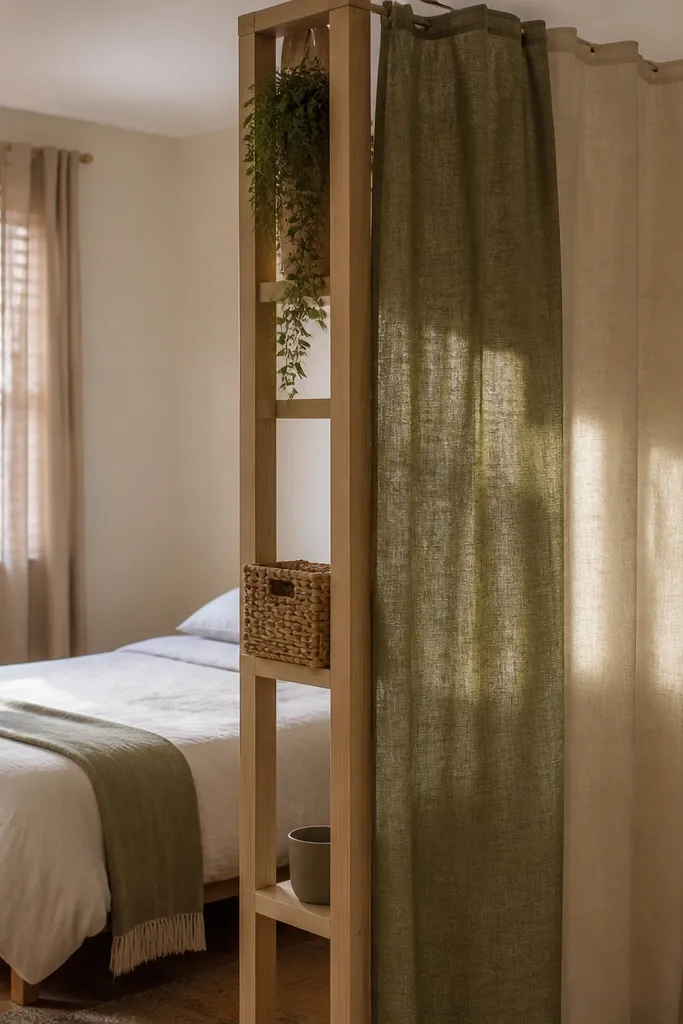
A slim bookcase divider is one of the few budget room divider ideas that adds storage and privacy at the same time. Choose a narrow unit with shelves that are deep enough to hold baskets but not so deep it blocks the room. Style it from both sides so the divider looks intentional from every angle. For privacy, keep the top and bottom zones visually busy with taller items and baskets, while leaving a few open spaces for light. This works best when you want partial privacy but still need space for books, a small lamp, or a basket of linens behind it.
Pro tipUse matching baskets in two sizes — it looks styled and it hides what you don’t want visible.
First, measure the gap you want to divide and choose a bookcase that’s 10-13 inches deep for small bedrooms. Place it so it blocks the door-to-bed line; do a quick test by standing where someone would stand and check what they can see. Load the shelves with baskets on the lower half and books or framed photos on the upper half, alternating heights to break sightlines. Anchor the unit to the wall with an anti-tip strap if it’s tall.
Watch outAvoid putting only tall decor on one side — the other side will look unfinished in photos.
5. Wood slat panel on wheels with linen backing
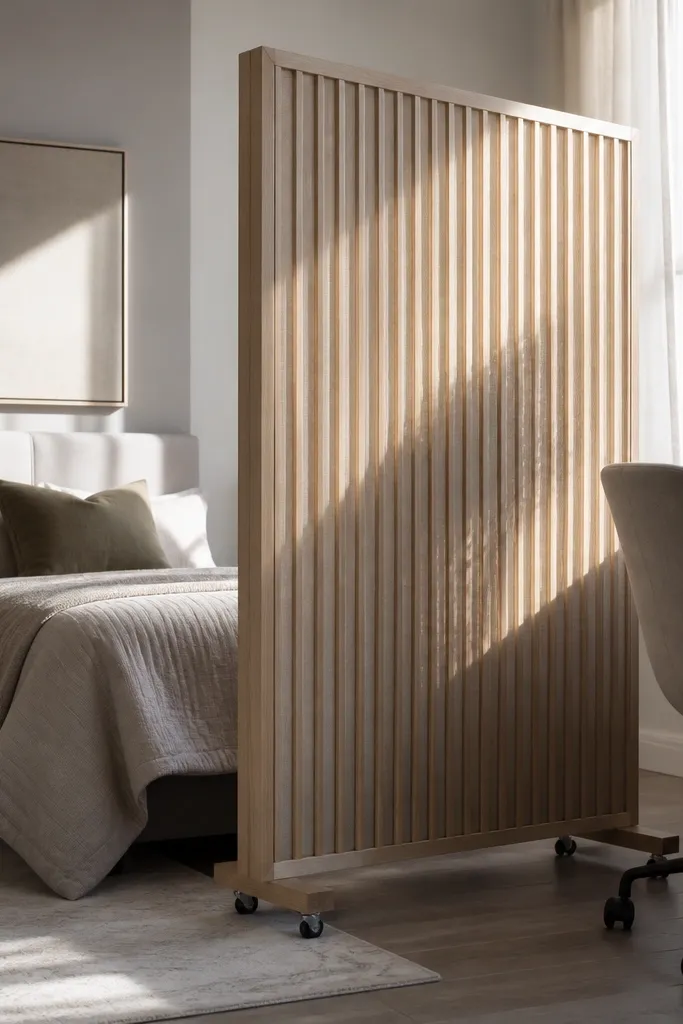
This divider gives you the privacy of a solid panel with the airy look of wood slats. The trick is adding linen backing behind the slats so silhouettes soften instead of showing clearly. Wheels make it practical in small bedrooms because you can position it where you need privacy that night. Choose light oak or natural birch slats to keep the room bright, and keep the linen off-white or warm white so it reads cozy. Place it between the bed and a work zone or wardrobe so it blocks direct sight without swallowing the space.
First, build or buy a narrow slat panel frame and add linen backing behind the slats using staples or a tension fit. Attach four casters rated for the panel weight, and choose locking casters so it stays put. Position it with the slats facing the exposed area, then adjust until the bed edge is partially obscured when viewed from the door. Finally, add a small base weight strip or anti-tip wall clip if it’s near foot traffic.
Keep the slat spacing tight (around 1.5-2 inches) for better privacy while still letting light through.
Skip wide slat gaps — you’ll get style but not the privacy you came for.
6. Upcycled pallet headboard wall divider
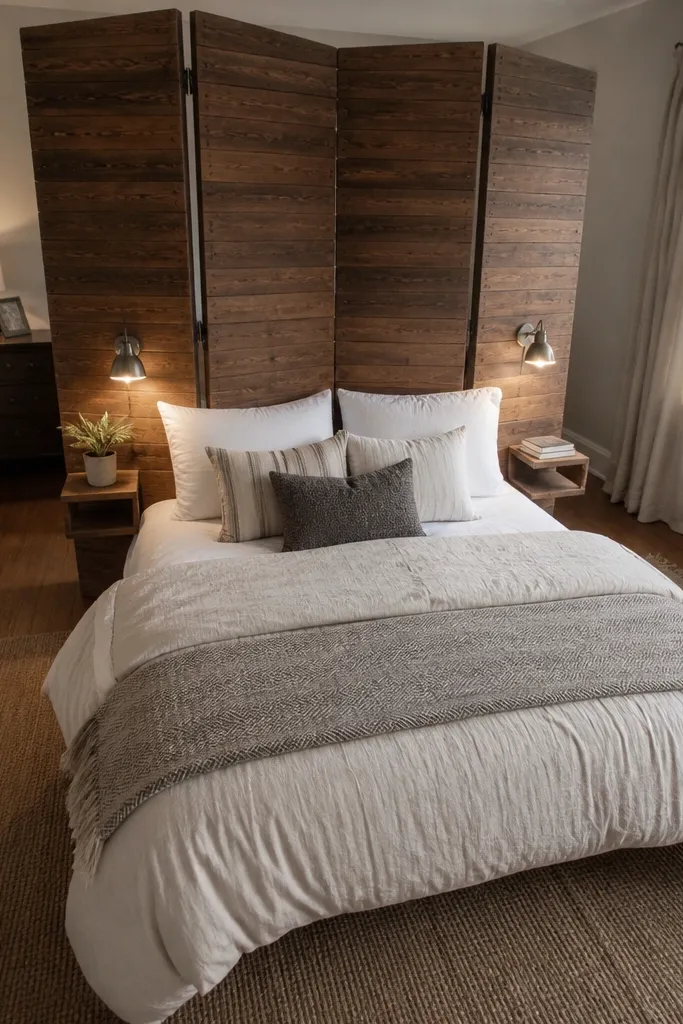
A pallet-based divider can look rustic and still feel clean if you finish it right. Use pallet wood panels mounted into two or three hinged sections so you can fold them like a room divider. Sand thoroughly and stain in a consistent tone like walnut or weathered oak, then seal with a matte clear coat so it doesn’t look rough. The wood adds strong visual separation and blocks sightlines from one side, but the partial wall style keeps the room from feeling closed in. This suits bedrooms where you want privacy for a bed corner and you like warm, grounded textures.
Pro tipUse a single stain color across all sections — mixed tones look messy fast in small rooms.
First, disassemble pallets carefully or buy pre-sanded pallet boards and cut them into matching widths for a uniform look. Build a simple frame with hinges so each section folds; attach wire or fabric backing behind gaps if you want more privacy. Sand 120 then 220 grit, stain evenly, and seal with matte polyurethane. Place the sections behind the bed corner so they interrupt the view from the doorway and secure the end section to the wall with a strap.
Watch outAvoid leaving gaps unsealed if privacy is the goal — movement will show through.
7. Macramé hanging divider with blackout behind it
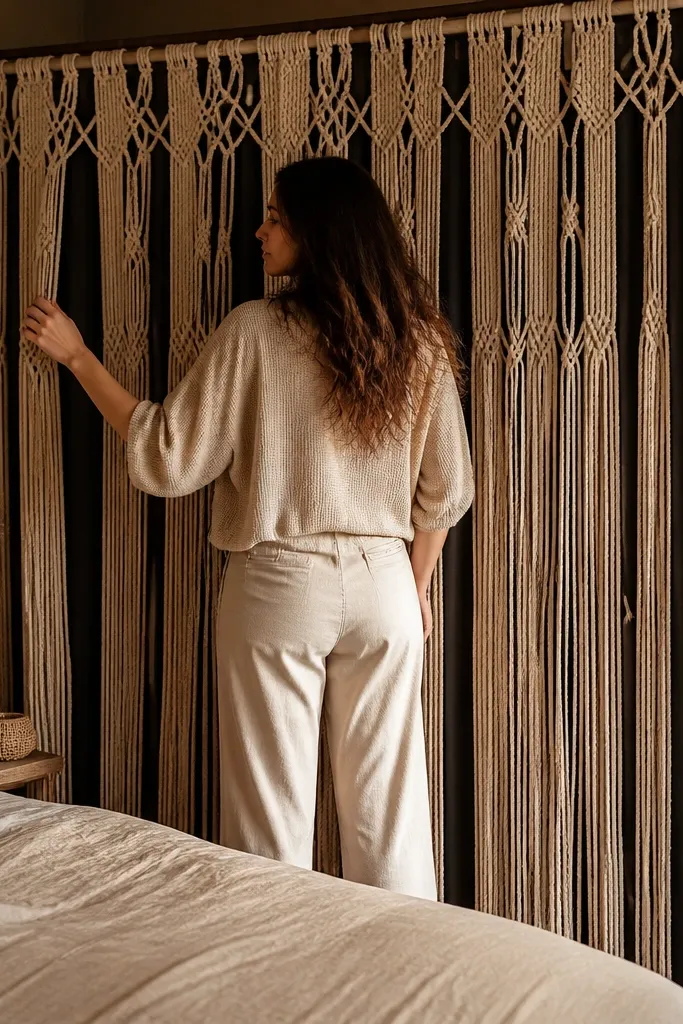
Macramé looks artsy and soft, but privacy needs more than airy knots. The best approach is to hang a macramé divider in front of a concealed blackout curtain panel on a thin second track or rod. That way you get the photogenic texture while silhouettes stay muted. Choose macramé in natural cream, then anchor the top to a ceiling hook line so it hangs straight. Place it to cover the gap between bed and a door or hallway opening. It’s a good fit for bedrooms that already lean boho, warm neutrals, or soft white bedding.
First, install two ceiling attachment points and run a line for the macramé top cord so it’s centered over the divider area. Add a blackout panel behind it on a second rod or track, slightly wider than the macramé so it covers edges. Hang the macramé so it stops around the same height as the bed back or slightly above it (about 60-70 inches). Adjust overlap until the blackout panel is fully covered when viewed from the room.
Keep the macramé panel slightly wider than the blackout so the edges look intentional, not layered.
Avoid macramé-only dividers if you need privacy — you’ll still see shadows.
8. Curtain panel on a tension rod with weighted hem
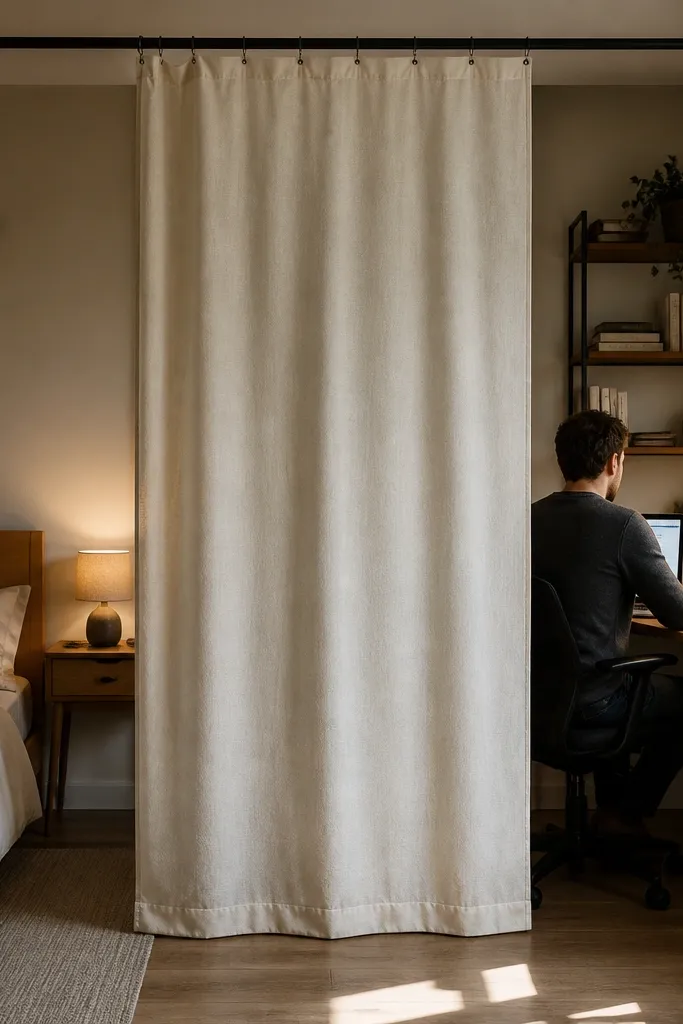
This is a small-space trick: weighted curtains hang straight and look tailored, even when you use a tension rod. For budget room divider ideas, straight hanging fabric is everything because it blocks sightlines better than wavy, floating panels. Use a medium-weight curtain in a solid color like warm white, taupe, or dusty blue, and add a weighted hem or sew in curtain weights so it stays flat. Place the divider along the side of the bed facing the room entrance. It reads clean in photos because it doesn’t billow.
Pro tipUse double-sided curtain tape strips at the bottom hem to stop side flutter when the HVAC runs.
First, pick a curtain width that’s 1.5-2 times the rod span so it overlaps properly when closed. Install a tension rod and use strong brackets that match your wall type. Add weights along the bottom hem or use pre-weighted curtain panels so the fabric doesn’t lift. Then close the curtain and trim the bottom so it skims the floor by 1-2 inches.
Watch outAvoid thin, unweighted curtains — they swing and reveal the view.
9. Felt board divider with fabric panels and hooks
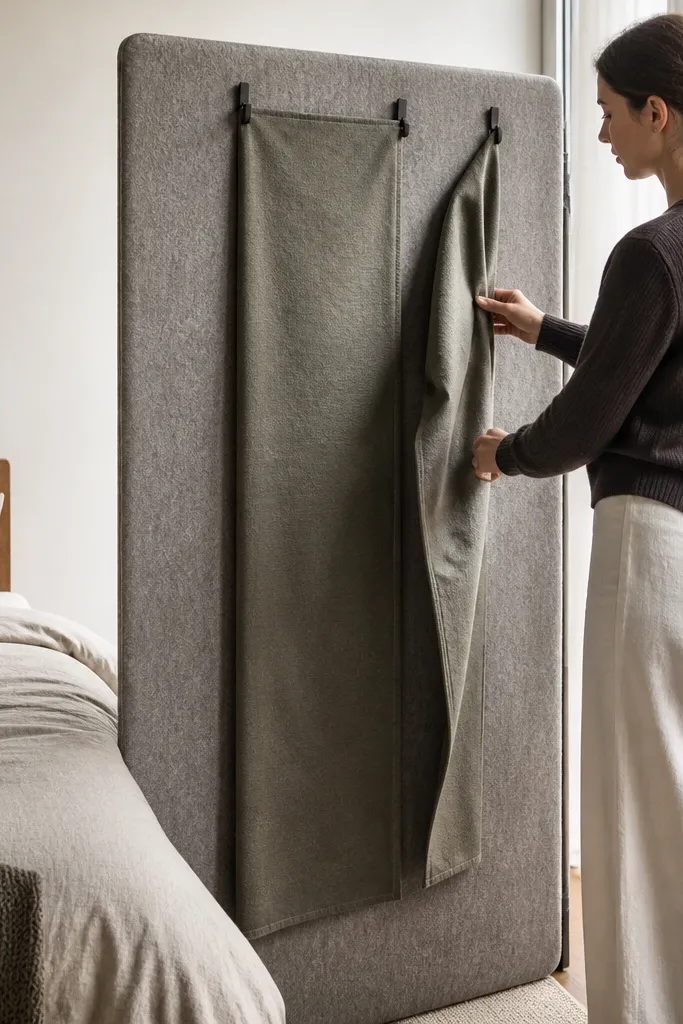
Felt is underrated for bedrooms because it absorbs light and softens what you see behind it. A felt board divider with removable fabric panels gives privacy without heavy wood bulk. Pick a divider frame that’s narrow and light so you can move it, then cover it with dense felt in a calming color like oatmeal or sage gray. Add hooks on the front so you can hang a robe, small bag, or scarf — it’s functional and it looks styled. This works well when you want privacy for the bed area but still need a spot to hang daily items.
First, build a lightweight frame using thin plywood or purchase a freestanding felt board kit, then cover it with dense felt sheets. Cut fabric panels to fit and attach them with Velcro so you can swap colors later. Place the divider where it blocks the visual path from the door to the bed, leaving 6-12 inches clearance from nearby furniture. Add removable hooks and small baskets on the lower section for items you don’t want lying around.
Choose felt in a matte finish — it hides fingerprints and looks better in daylight.
Skip low-density felt — it won’t block silhouettes well.
10. Hanging bead curtain with a solid backing strip
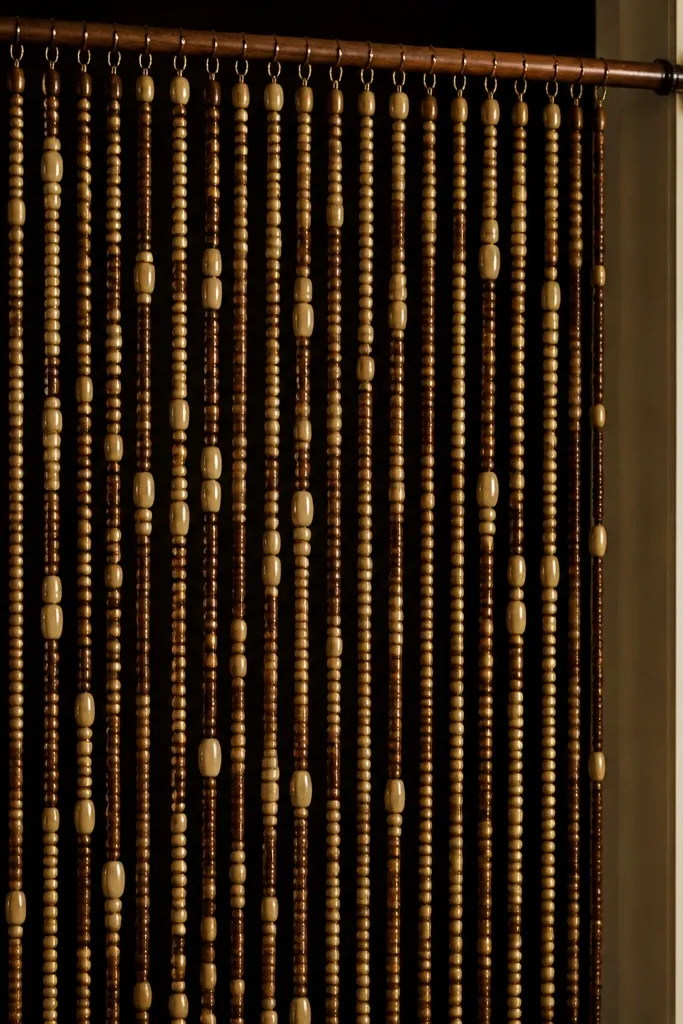
Bead curtains look great in photos because they catch light and add movement, but they don’t give real privacy alone. Fix that by adding a solid backing strip behind the beads, so you get sparkle in the foreground and coverage in the background. Use a neutral bead tone like ivory or warm brown, then attach a wide blackout panel behind it. Keep the bead curtain centered so the backing is hidden when you view it from the bed. This divider is perfect for small bedrooms where you want a decorative barrier between sleeping and a doorway corridor.
First, hang the bead curtain on a tension rod or ceiling line so it’s straight and level. Install a blackout strip behind it using a second rod mounted slightly higher or behind the first. Adjust until the solid layer covers the entire height where you want privacy, then trim the backing so it doesn’t peek out at the sides. Finally, secure the bottom edge with a small weight or Velcro strip to reduce swinging.
Choose beads with a matte finish so they don’t glare in sunlight.
Avoid transparent backing fabric — it kills privacy and looks unfinished.
11. DIY welded-wire + fabric liner panel
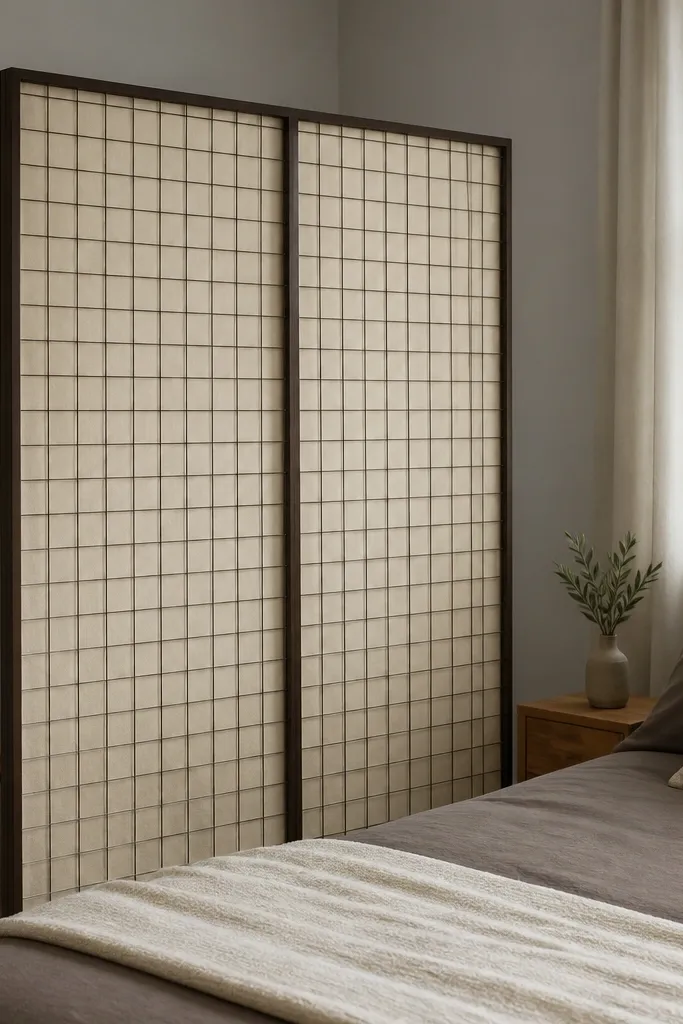
If you like modern bedroom styling, a metal wire panel divider gives you structure without feeling heavy. Add a fabric liner behind it for privacy — the liner blocks silhouettes, while the wire edges keep it airy and design-forward. Use black metal or dark bronze so it looks intentional, then line with a thick cotton canvas in sand or warm gray. This is a great choice for budget room divider ideas when you want a divider that looks architectural and still doesn’t block light. Place it between a desk and the bed so you can work without feeling exposed.
First, build a rectangular frame using welded wire panels sized to your space, then cut fabric liner to cover the back side fully. Attach fabric behind the wire using zip ties or small metal clips so it stays taut. Mount the divider to a freestanding base or add feet so it’s stable, then position it to block the desk-to-bed sightline. Finally, add two small hooks or magnets so you can fold the liner neatly if you want it less covered during the day.
Keep the liner fabric one continuous piece across the panel — seams show and look sloppy fast.
Skip a thin liner — you’ll get style with no privacy.
12. Accordion folding screen with removable curtains
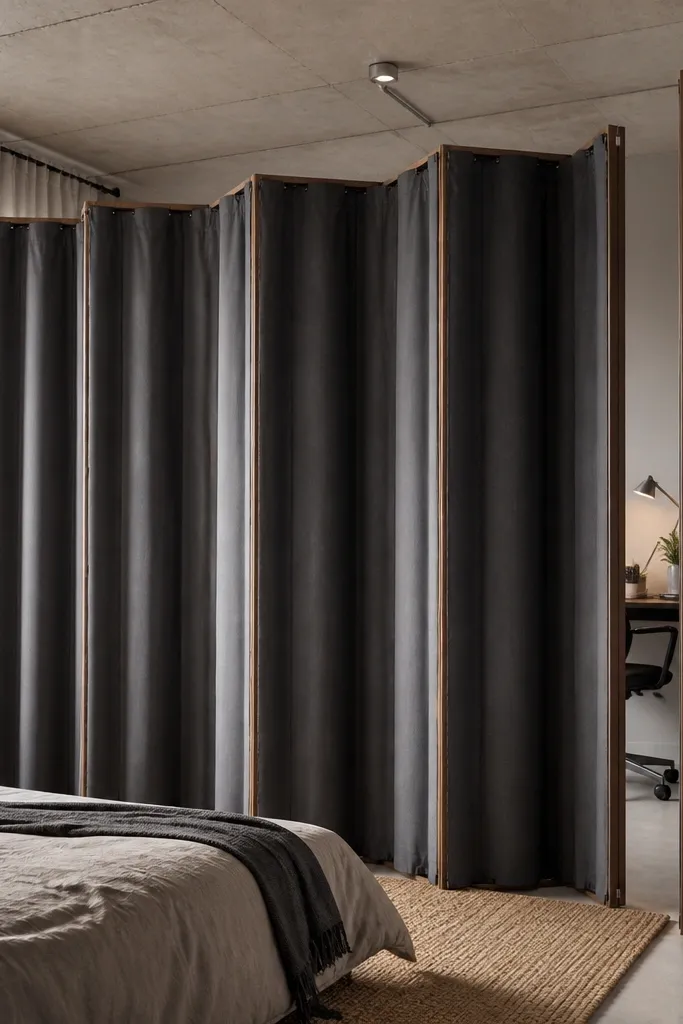
Accordion-style room dividers are great for bedrooms because they fold tight when you don’t need them. Make them look better by swapping the basic fabric inserts for removable curtain panels in a thicker fabric. That gives you privacy and a premium look because the folds line up like real drapery. Choose a medium-dark color like charcoal, deep olive, or muted navy if your room is mostly light — it creates a clear visual boundary. Place it near the bed corner, then open it just enough to preserve airflow while still cutting the line of sight.
First, measure the divider panel height and select curtain panels that hang to the floor or near-floor for the most privacy. Remove the original inserts if possible, then sew or attach curtain panels to fit each accordion section. Use magnetic snaps or Velcro so you can remove and wash the panels. Set the divider in place, then adjust angle so it covers the area between bed and door without blocking your main walking path.
Match the curtain color to your throw pillows, not just your wall — that makes it feel designed.
Avoid using super long curtains that pool and drag; they catch on shoes and look messy.
13. Curtain rail + cafe curtain for side-of-bed privacy
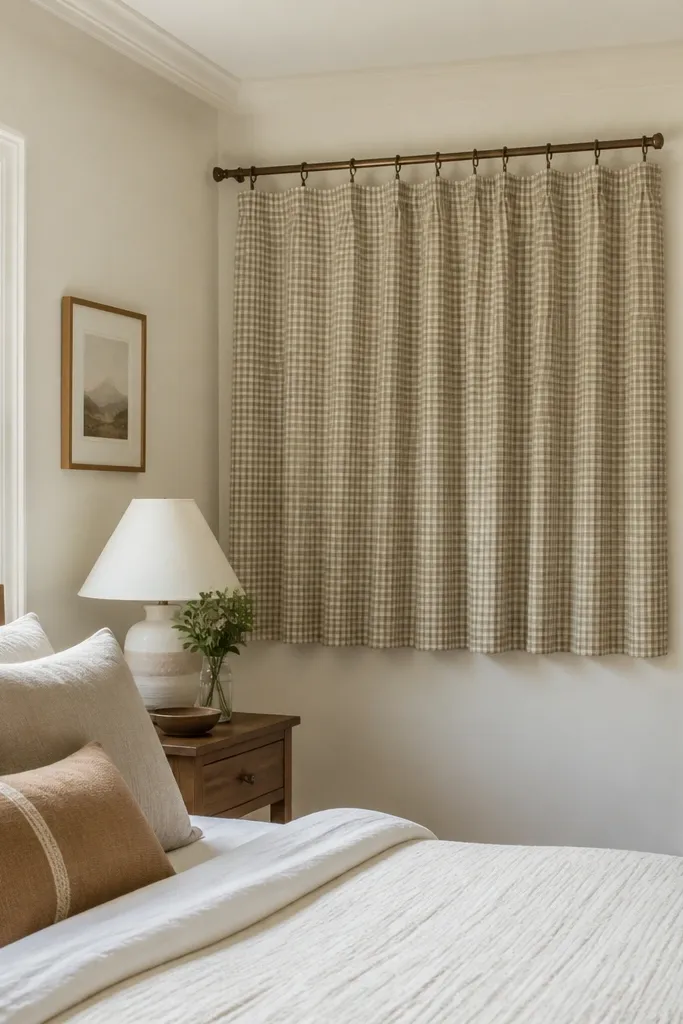
A cafe curtain is a smart budget room divider idea when you only need privacy from one side. Instead of covering the entire wall height, mount a rail at about 60 inches and hang a shorter panel that blocks head-and-shoulder sightlines. Choose a medium-weight fabric with a pattern that looks good up close, like small checks or subtle stripes, so it adds style. This works well when your bed is against a wall and the exposure is sideways — like a window view, a hallway doorway, or a wardrobe opening. It’s also great if you want privacy without making the room feel smaller.
Pro tipUse a curtain rod with a decorative end cap so the hardware looks intentional, not temporary.
First, decide which side needs coverage and measure from the floor to your desired rail height, aiming around 58-62 inches. Install the rail with anchors into studs where possible. Hang a cafe curtain panel with enough width to overlap by 4-6 inches in the center. Then test from the doorway or hallway: if you can still see your pillow, lower the panel height or widen the overlap.
Watch outSkip flimsy fabric — short curtains look cute but they still need body for privacy.
14. Treated plywood panel with fabric-wrapped edges
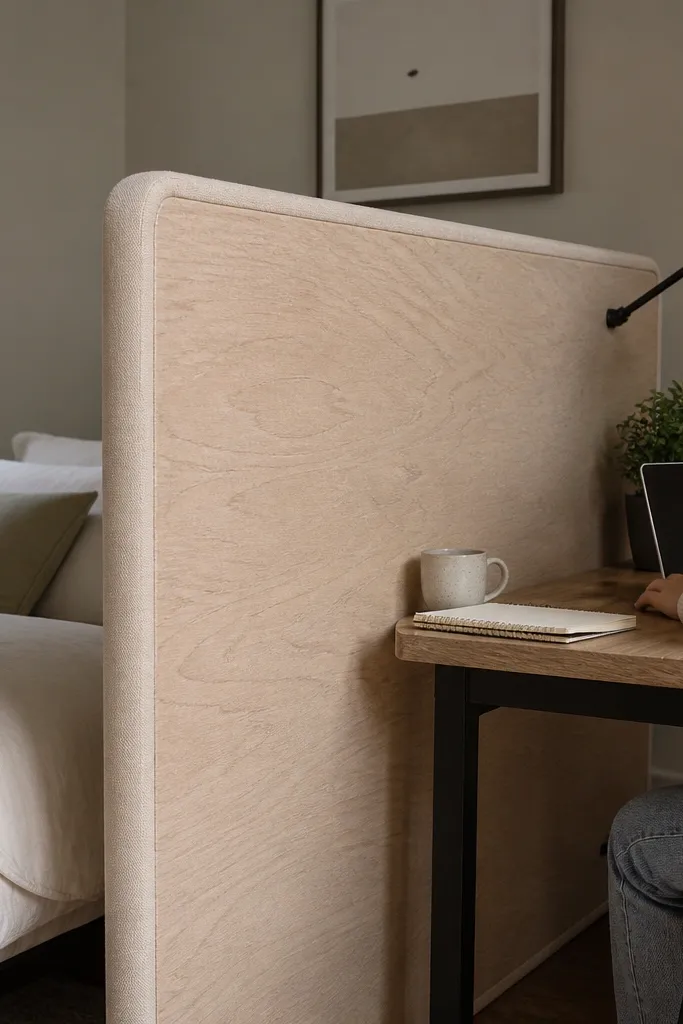
A matte plywood panel divider looks modern and gives solid privacy, but fabric-wrapped edges make it bedroom-friendly. The finish is what keeps it from feeling like a construction sheet. Use plywood treated and sealed in a matte finish, then wrap the edges in matching fabric so the divider looks soft and cohesive with bedding. Keep the panel length to a practical size for small spaces — think 36-60 inches wide and 60-72 inches tall. Place it behind a nightstand line or between the bed and a shared doorway so your sleeping area stays visually protected.
Pro tipChoose fabric that matches your duvet cover — even if the panel is large, the color tie makes it look like part of the room.
First, cut plywood to the size you need and sand edges smooth, then seal with matte paint or clear matte sealer. Wrap the edges with heavy fabric using fabric glue or a tight staple wrap so it doesn’t peel. Mount it on simple hinges to a freestanding base or add a pair of wall brackets if you want it stationary. Finally, position it so it covers the most exposed bed surface, then secure it so it can’t tip.
Watch outAvoid glossy paint — it reflects light and makes the panel look like a barrier.