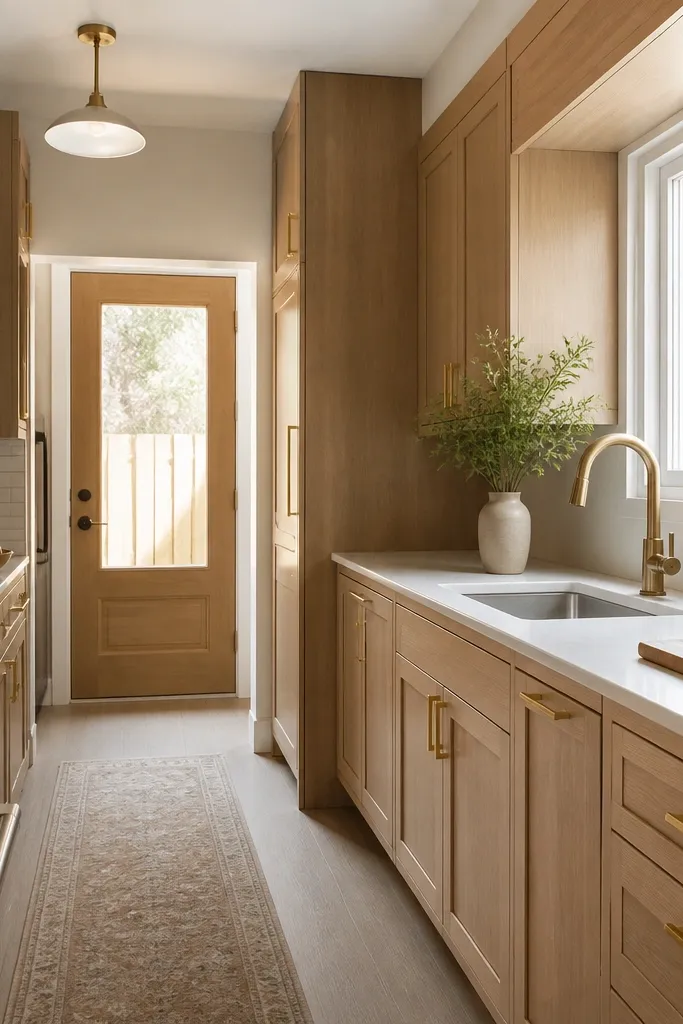
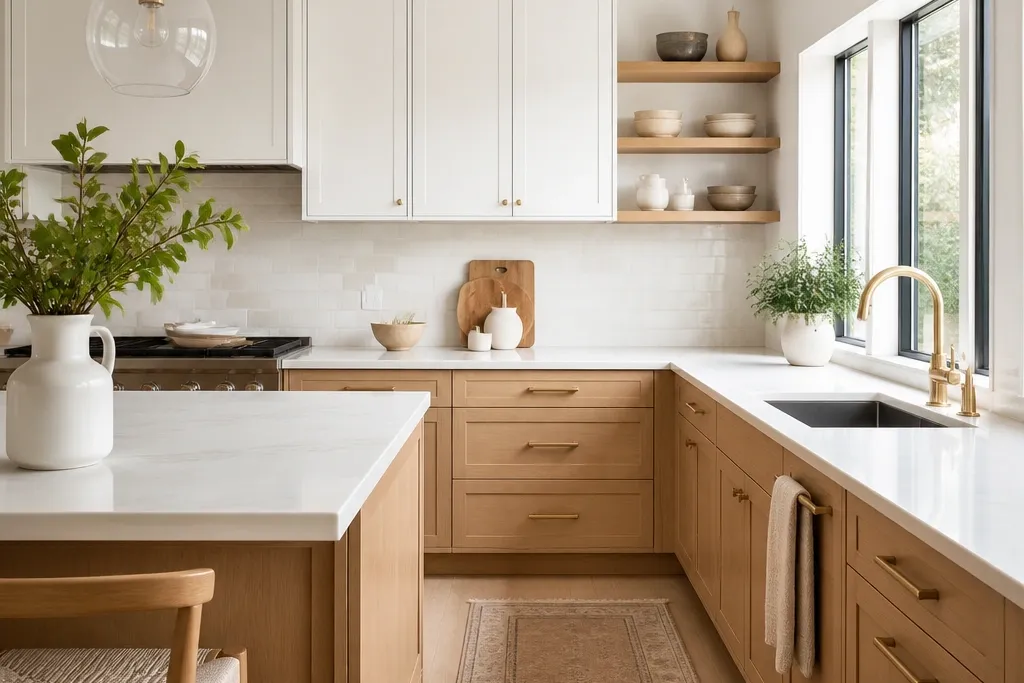
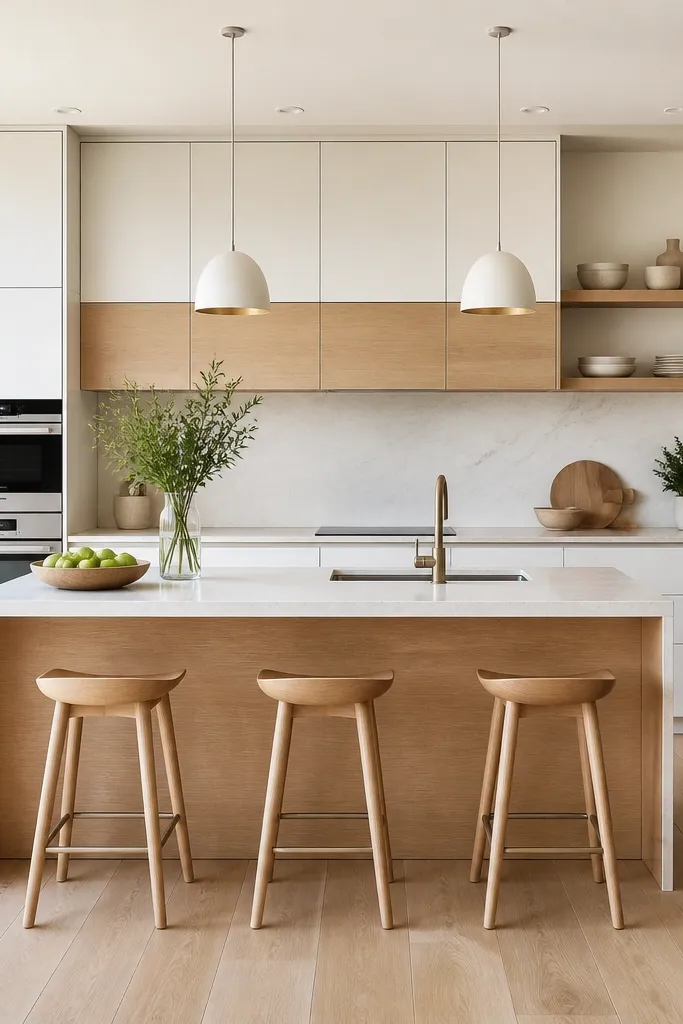
1. White uppers with rift oak lowers and a warm quartz counter
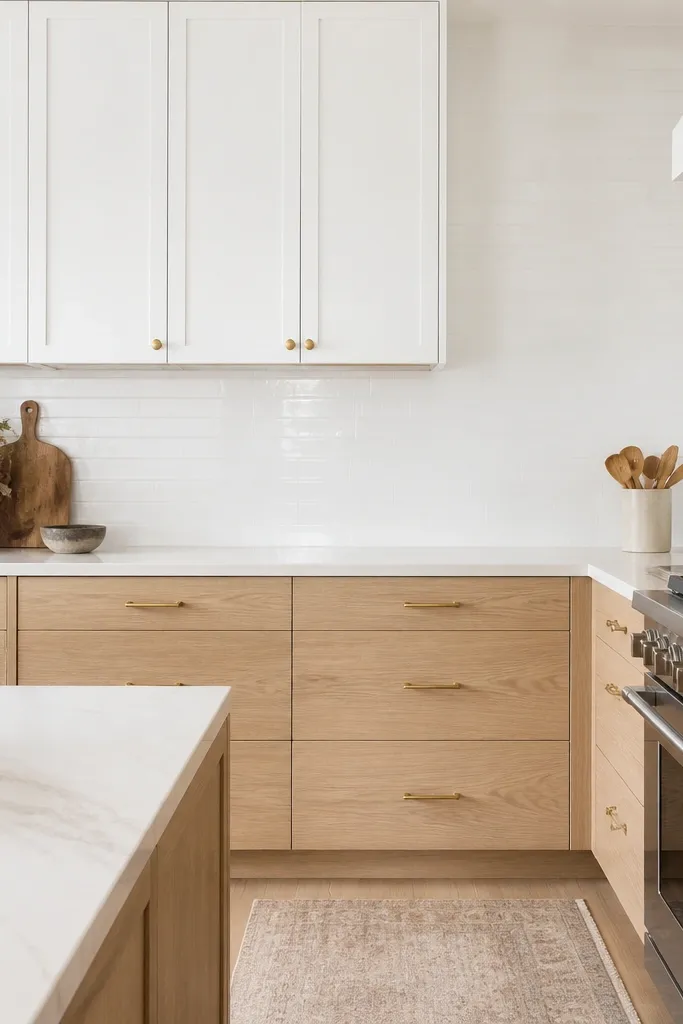
This layout gives you instant brightness up high, then adds warmth where you touch the most — the base cabinets. Rift-cut oak keeps the grain straight and calm, so it doesn’t fight with subtle quartz movement. Warm quartz with light tan veining makes the oak read richer without turning the whole room yellow. Brushed brass adds a soft glow that looks good at night with 2700K lighting.
Keep the cabinet split clean: white uppers from ceiling to soffit, oak lowers from toe kick to countertop. Use 3-inch-wide pulls on drawers and 6-inch pulls on doors so the hardware matches the scale of the shaker frames. Choose a backsplash grout that’s warm white, not bright white, so it doesn’t look stark next to the oak.
If your kitchen gets afternoon sun, use satin paint on the white doors and matte clearcoat on the oak so the sheen doesn’t glare.
Avoid true white paint paired with cool gray grout — it makes oak look dull and the kitchen feel “unfinished.”
2. Oak island with white perimeter cabinets and a waterfall edge
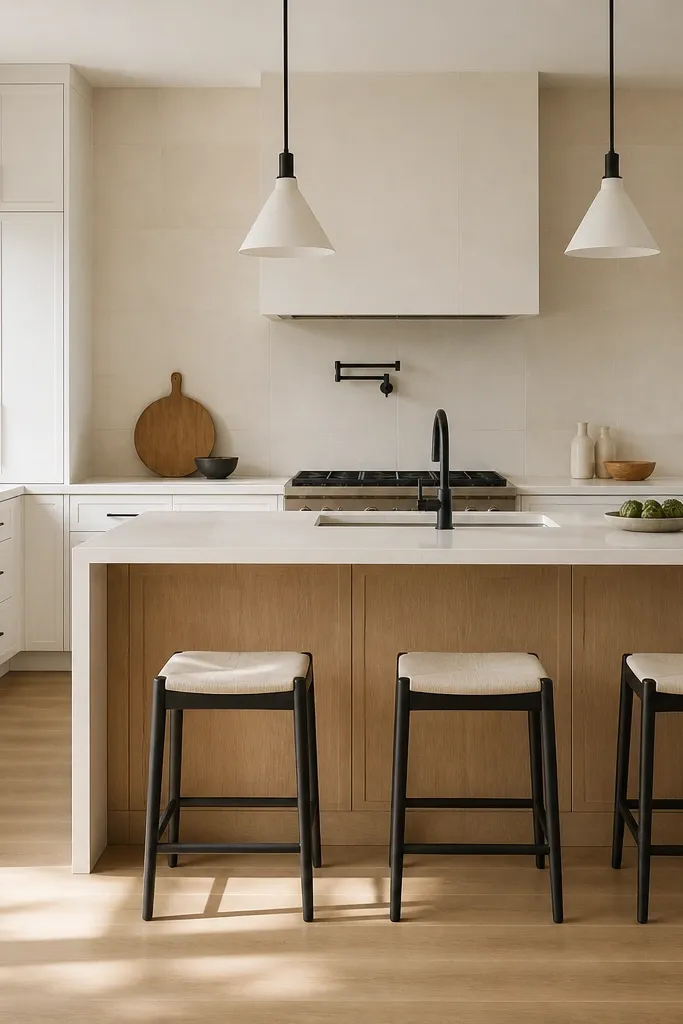
This is the cleanest way to use modern rift white oak kitchen cabinets without making the whole kitchen feel like wood overload. White perimeter cabinets keep sightlines airy, and the oak island anchors the room. A waterfall edge makes the island feel custom and keeps the oak look continuous from top to apron. Matte black pulls and faucet add sharp definition against the warm oak.
Limit oak to the island and maybe a single run of open shelving. Keep cabinet frames consistent thickness so the waterfall edge looks proportional, usually around 1.25 to 1.5 inches of overhang thickness for a clean lip. Use large-format backsplash tile or a slab-style look so the backsplash doesn’t add extra pattern near the island.
Match the black hardware to the light fixture finish — even a small difference shows up fast with oak grain.
Don’t add oak to three zones (perimeter, island, shelves) — the room starts to feel busy instead of modern.
3. Two-tone pantry wall with oak vertical panels
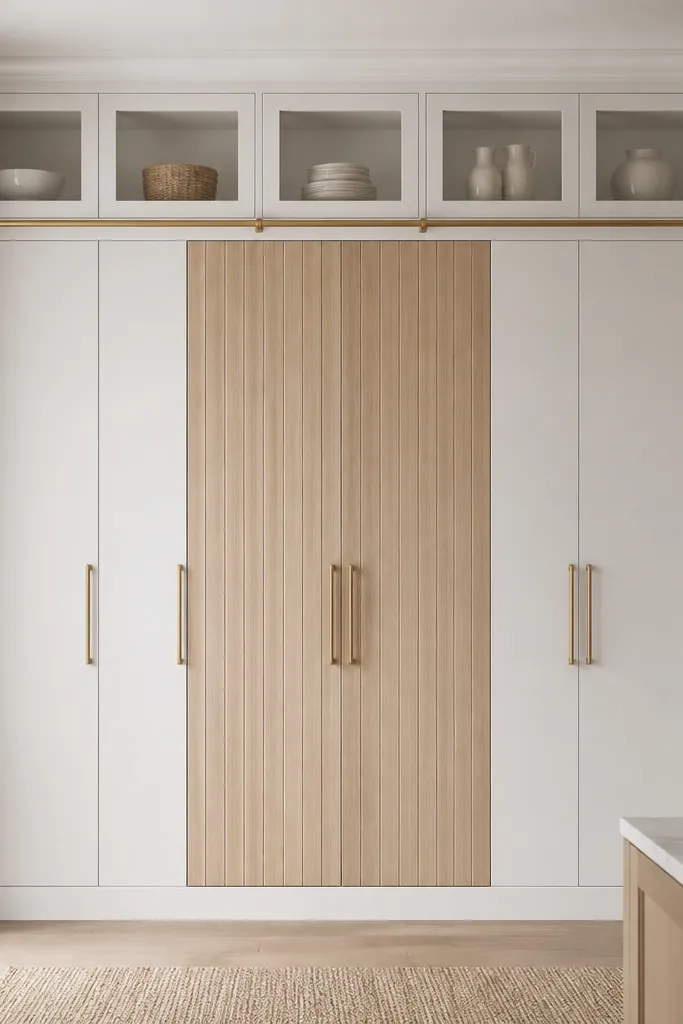
Vertical oak panels add height and motion without changing the overall color story. The white around them acts like a frame, so the oak panels look intentional rather than random. Rift oak’s tight grain makes vertical lines crisp, which reads modern even in a home that’s more traditional. This look also hides clutter — tall pantry doors keep the visual noise away from the kitchen entry path.
Build the wall around one oak “stripe” or centered panel set — keep it to one width so it looks designed. Use a vertical-grain oak veneer or solid paneling for the center doors, not oak applied in a thin horizontal strip. Install glass-front sections only on the top row so the pantry doesn’t look like a display cabinet.
Use soft-close hinges with a consistent door gap of about 1/16 inch so the oak panel edges look sharp.
Skip heavy ornamentation on the oak panels — no raised molding, no extra trim — it defeats the clean line effect.
4. Shaker white cabinets with oak toe-kick and base trim
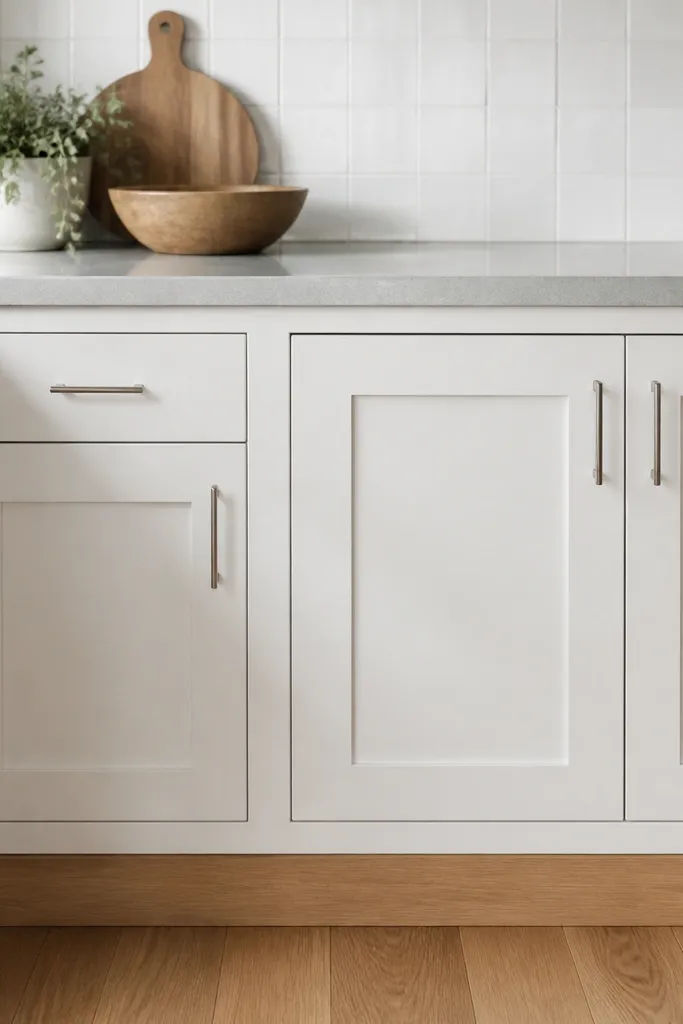
If you like the warmth of oak but don’t want a full two-tone kitchen, this trick works. The toe-kick and base trim put oak at the visual “anchor” line where the eye naturally rests. White shaker doors keep everything crisp, and the oak trim adds a low, grounded warmth. Brushed nickel keeps it modern without fighting the oak grain.
Ask for an oak toe-kick panel and matching oak base trim under the uppers. Keep the toe-kick height around 3 to 4 inches so it reads as intentional trim, not leftover wood. Match the oak trim finish to the cabinet oak finish so you don’t get two different sheens.
Pro tipChoose a backsplash with a tiny texture (like a slightly irregular handmade look) so the oak trim doesn’t feel too flat.
Watch outAvoid painting the toe-kick off-white while leaving the base oak — it looks patchy and cheap.
5. Modern flat-panel whites with oak ceiling-height cabinet banks
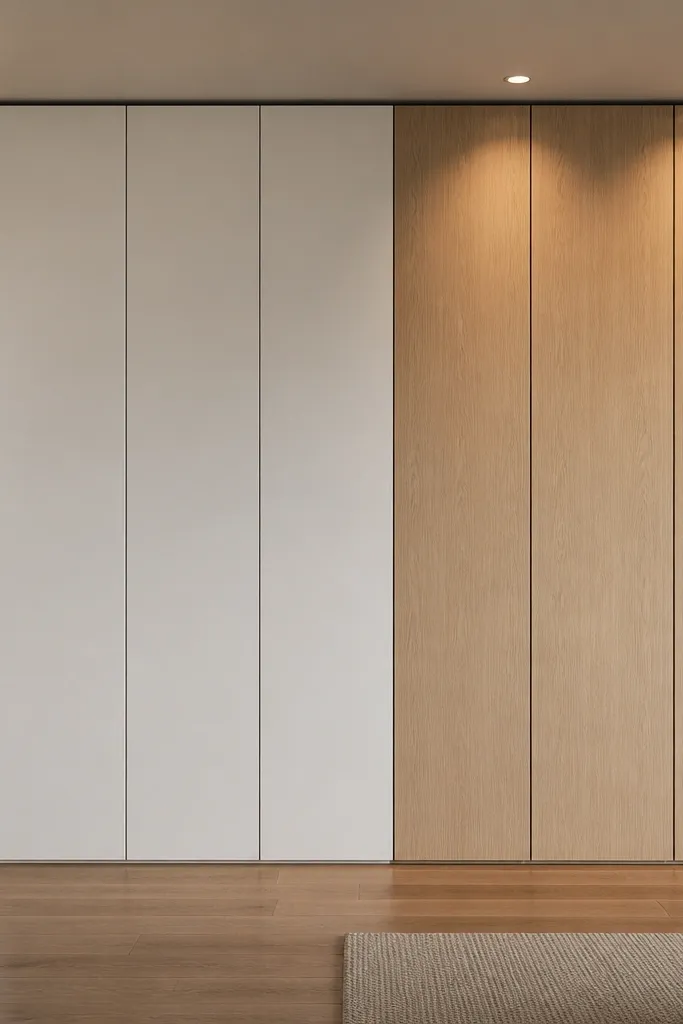
Flat-panel doors look modern fast, and the ceiling-height bank makes the room feel taller. Oak read warm here because the grain is uninterrupted across tall doors. The shadow gap at the top adds a built-in look without needing fancy trim. This is also great if you have a narrow kitchen — the tall units pull the eye up.
Use a consistent door style across the whole run so the oak bank doesn’t look like a separate remodel. Keep the shadow gap shallow, around 1/4 inch, so it stays sleek. Add a slim oak rail or toe trim to connect the floors visually to the cabinetry.
Pro tipInstall under-cabinet LEDs with an aluminum channel — you’ll see the oak grain evenly instead of patchy light spots.
Watch outDon’t skip a shadow gap or toe kick — flat-panel doors without spacing look like they’re glued to the wall.
6. White cabinets with rift oak glass-front uppers
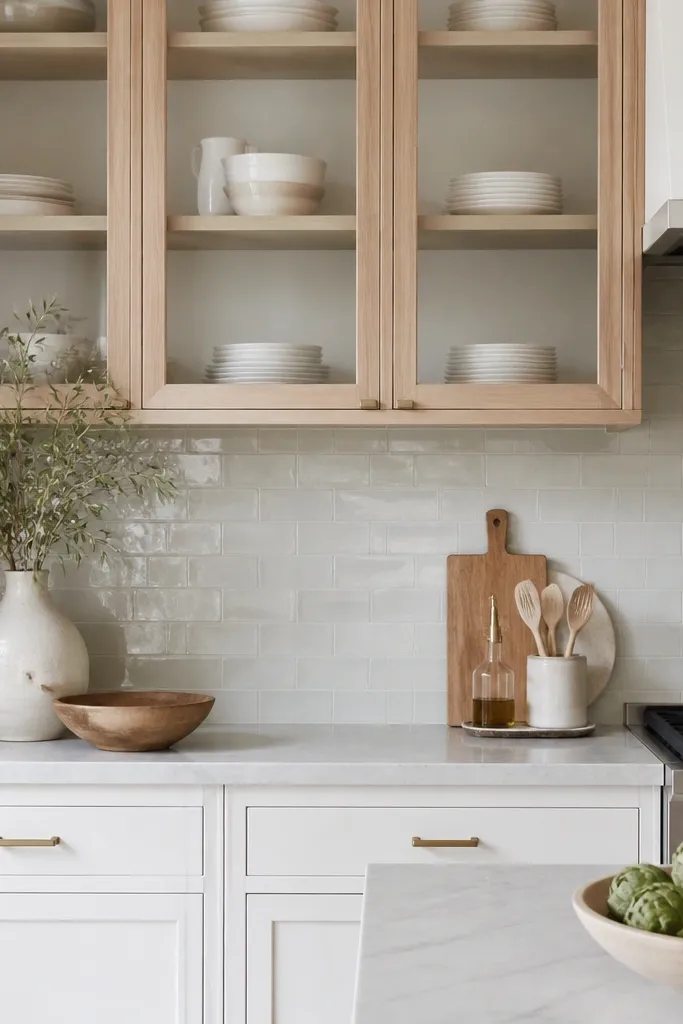
Oak-framed glass fronts add warmth while keeping the kitchen light. White lowers and solid uppers prevent the glass from turning into clutter, and the oak frames bring in texture where you can actually see it. The subtle sheen of the backsplash makes the oak look dimensional without adding a pattern. This look also helps a kitchen feel “designed” even if you keep countertops simple.
Use frosted or clear glass depending on what you store. I like clear for white plates and frosted for mugs so you don’t see random stains. Keep the interior shelf a matching oak finish so the frame doesn’t look like a separate accessory.
Pro tipPick one dish color (white or cream) and stick to it for a calm glass-front look.
Watch outAvoid dark glass or black frames — it turns oak warm tone into a harsh, modern contrast.
7. Oak cabinets with white quartz and a light gray backsplash
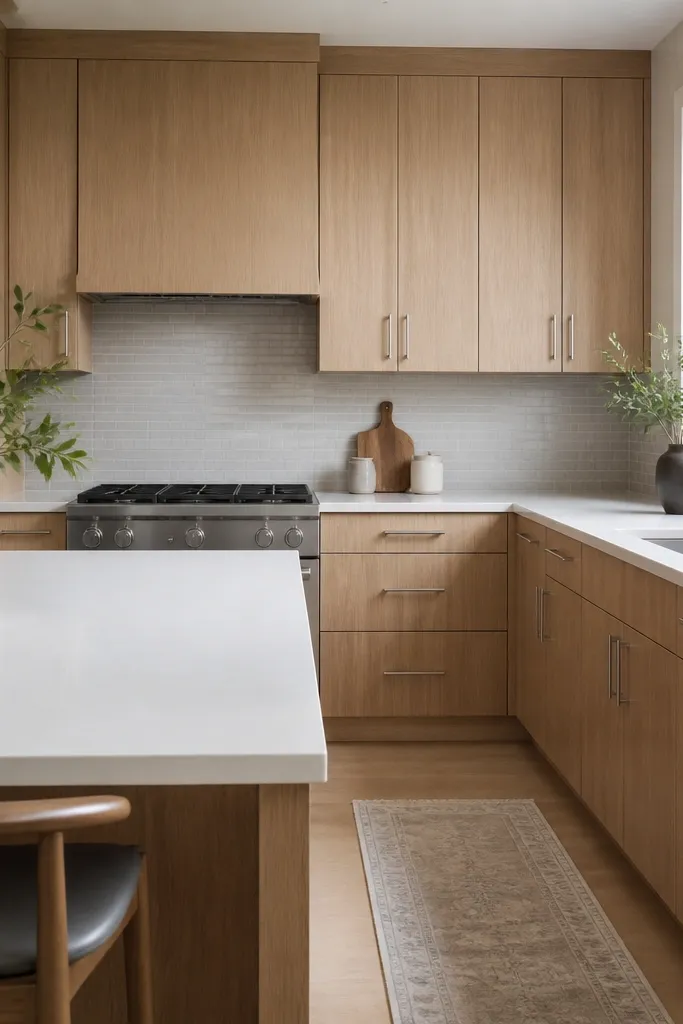
Going mostly oak works when your countertop is truly white and your backsplash stays light, not medium gray. The modern rift grain keeps the kitchen from feeling heavy even with lots of wood. Light gray tile adds a gentle cool counterpoint that stops the oak from reading too warm. Satin chrome hardware ties it together without going industrial.
If your oak is the dominant surface, keep the white quartz slab busy-free — minimal veining or very light movement. Choose tile grout in a near-match to the tile so the backsplash looks like one plane. Add a white or cream runner mat at the entry to keep the warmth from drifting into “cabin” territory.
Pro tipUse 3000K bulbs for this setup if your kitchen doesn’t get much daylight; it keeps oak from going orange.
Watch outAvoid warm beige countertops with oak — it turns the palette flat and dusty.
8. White cabinets with rift oak shelves over a built-in coffee station
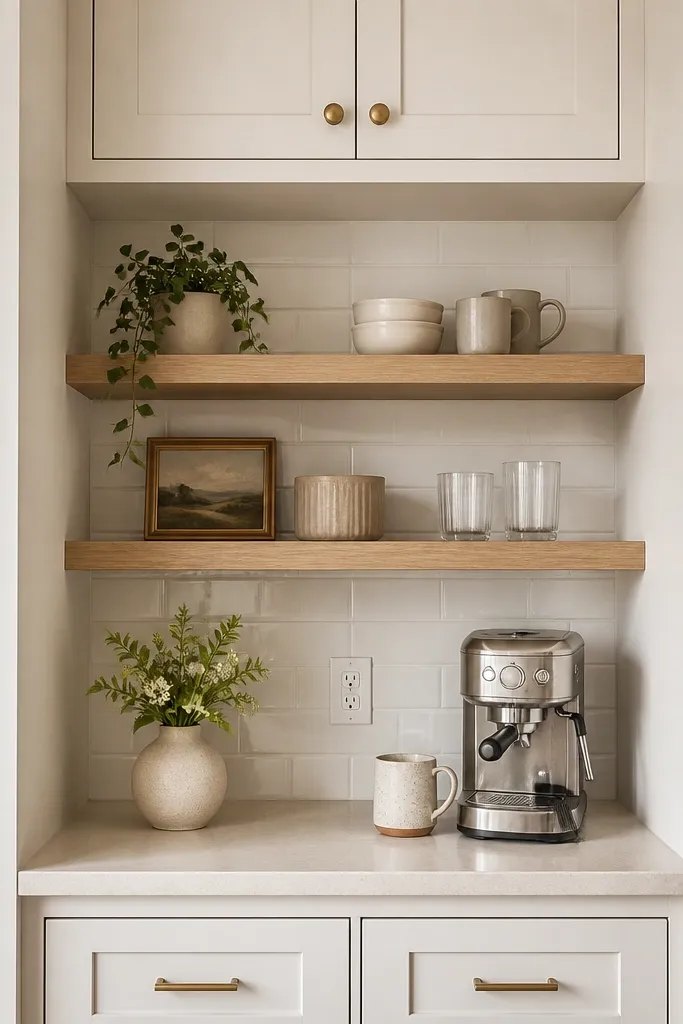
Open shelves are where oak looks best because you can see grain depth and color change. Keeping the rest of the cabinets white keeps the coffee area from feeling cluttered. The built-in outlet and small drawers look intentional and make the space usable every day. This setup also works in an entry-bath corridor because it repeats the white + oak theme in a smaller scale.
Keep shelves shallow, about 8 to 10 inches, so mugs and jars don’t crowd. Use a clear matte shelf finish so fingerprints wipe clean. Center the coffee station under a cabinet light strip for even illumination on the oak.
Use matching ceramic canisters with lids in cream and white so the shelves look styled without effort.
Don’t mix wood tones on the shelves and nearby trim — it makes the oak look cheap.
9. Rift oak hood surround with white cabinets and a thin brass trim
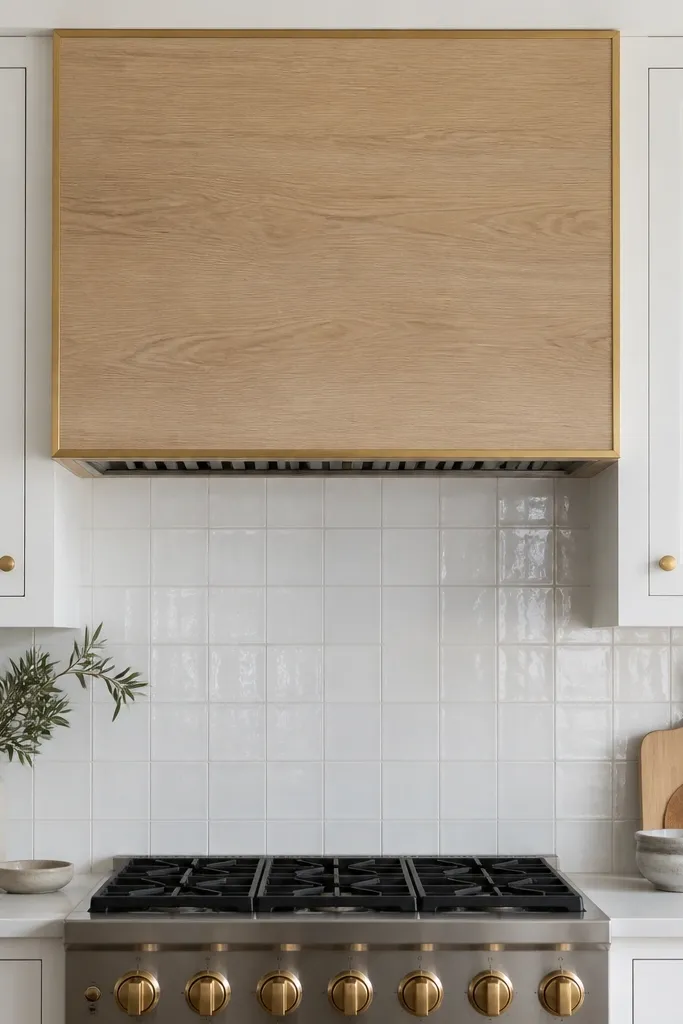
The hood area is where people look first, and oak paneling here makes the kitchen feel custom without changing every cabinet. White cabinets keep the hood from feeling too heavy. Brass trim adds a delicate highlight line that makes the oak look more refined. Glossy white tile behind the hood reflects the brass and keeps the area bright.
Choose brass trim about 1/2 inch wide so it reads like an accent, not a border. Keep the oak surround finish the same as cabinet oak — same sheen and color warmth. Install the hood at the right height for your range, then frame it so the oak panel edges align with cabinet door rails.
Use a backsplash with small grout lines behind the hood so the reflection stays smooth.
Avoid putting oak around the hood and then using a different wood tone on the floor trim.
10. White cabinets with oak end panels for a built-in fridge look
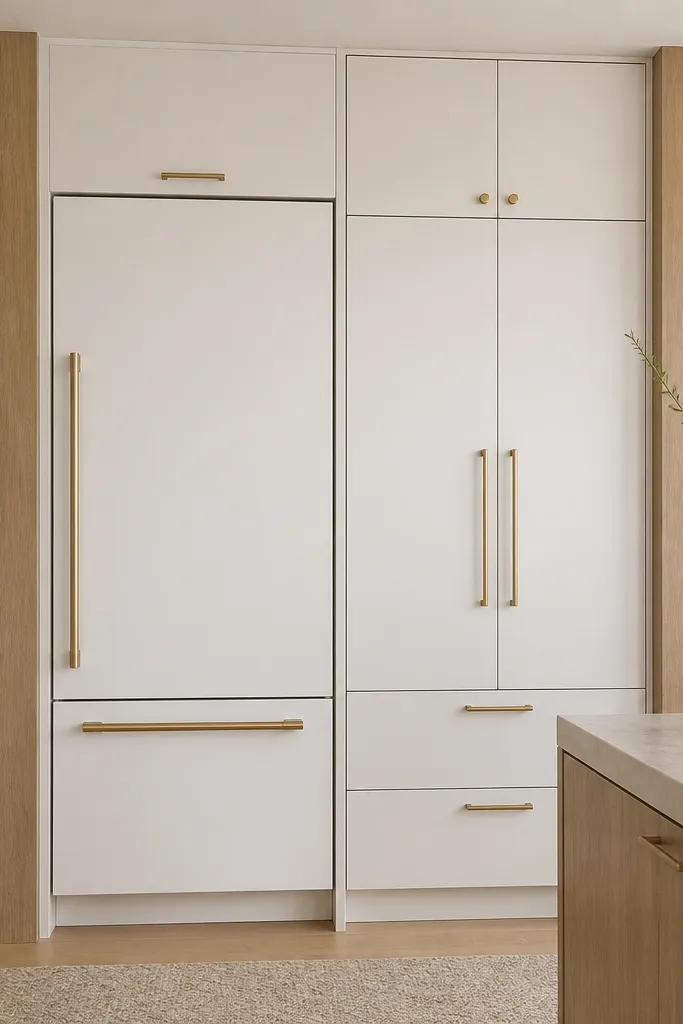
End panels change the whole look because they frame the appliance zone like architecture. Rift oak end panels add warmth at the edges where the eye catches, especially in open-concept kitchens. Keeping the fridge surround white makes the appliance area feel integrated rather than boxed in. This is also a great way to hide the ugly side gap that shows up in many standard layouts.
Use oak end panels the full height from countertop to top cabinet trim. Keep the door reveals consistent — aim for even spacing around the fridge. Add a matching oak filler strip if you have a non-standard cabinet width so the seams line up cleanly.
If your fridge has a stainless front, choose brass hardware so the metal tones match without looking like a mismatch.
Skip mismatched filler panels — uneven seams make the built-in look like a patch job.
11. White-and-oak corner banquette cabinets with a light linen backsplash
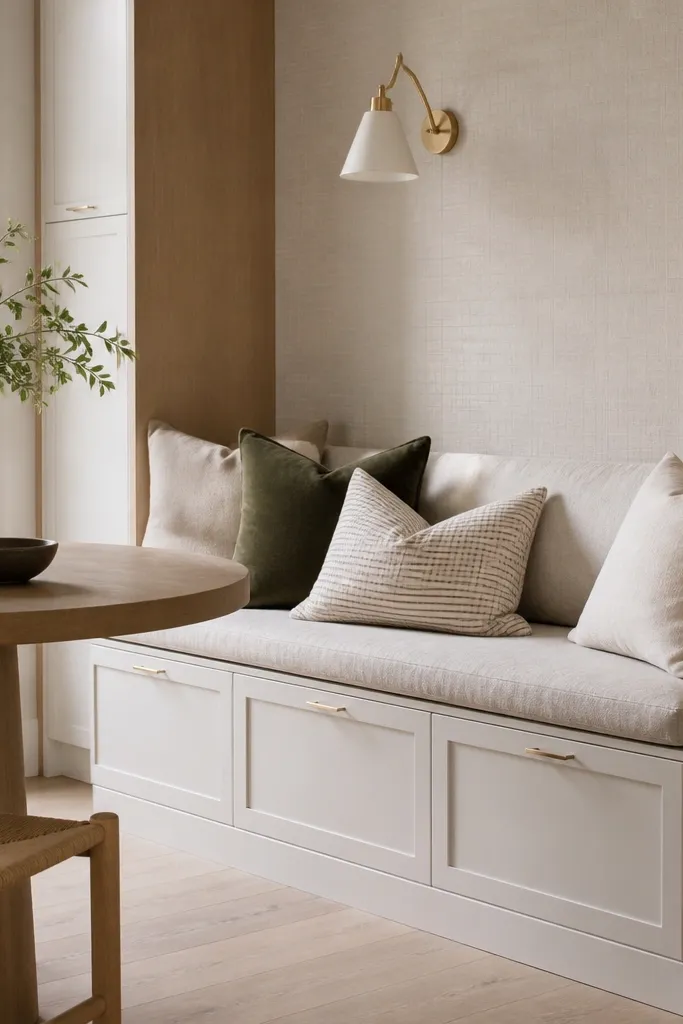
This look uses oak where it counts — on side panels and trim — while keeping the front faces white for brightness. The linen-colored tile and oatmeal cushion soften the oak’s straight lines. It feels modern but still warm because the textures are matte and quiet. If you have a dining-adjacent kitchen, this makes the corner feel intentional instead of like extra storage.
Use white cabinet doors with a simple shaker profile and keep the oak on the side returns only. Match the seat fabric undertone to the tile — both should lean creamy, not pink. Add a small toe heater register cover in the same white as the cabinet for a clean visual line.
Pro tipChoose a seat cushion that’s wipeable (vinyl-linen blend or performance fabric) because kitchen corners get splashes.
Watch outDon’t add shiny tile or glossy paint — the corner starts to look reflective and fussy.
12. Two-tone wall of drawers: oak drawer boxes with white fronts
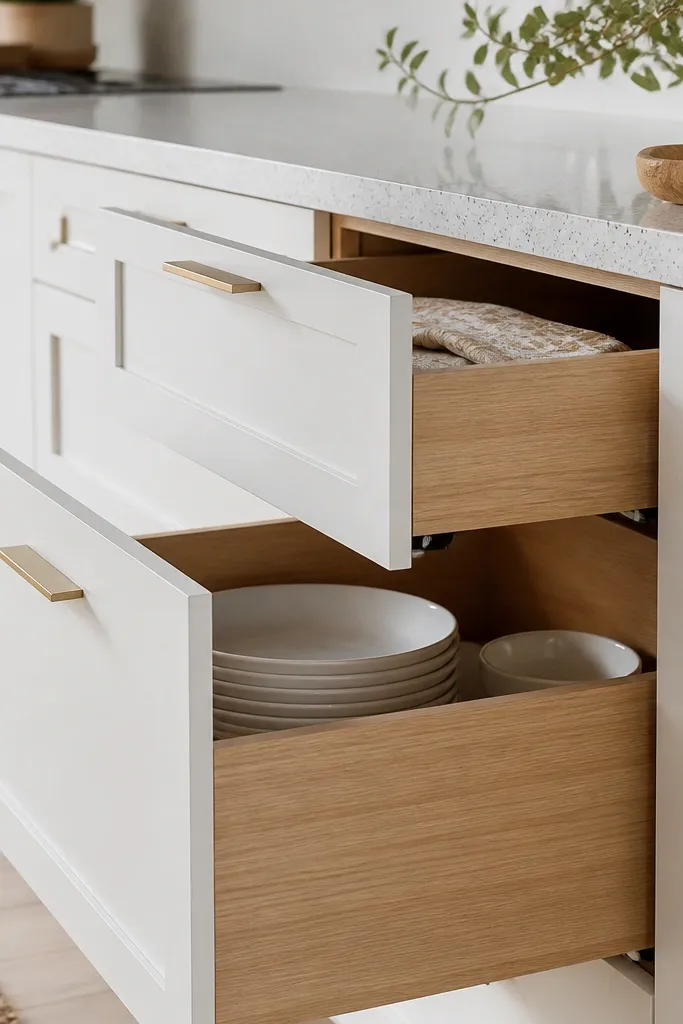
This is the “you notice it in real life” version of two-tone. White fronts keep the kitchen bright at a distance, and oak drawer interiors add warmth every time you open a drawer. Rift oak grain inside drawers looks clean because it’s protected from daily smudges. It also makes the kitchen feel custom without requiring oak on every door.
Request oak drawer box sides and drawer bottoms, then keep the visible face fronts white. Use soft-close full-extension slides so the oak sides show properly. Keep your countertop edge simple so the drawer detail remains the hero.
Store your most-used utensils in matching canisters so the oak interior doesn’t look cluttered when the drawer opens.
Avoid mixing oak and laminate inside drawers — the textures never match and it looks like an afterthought.