1. 12-Inch Deep Wall Niche With Lift Shelf
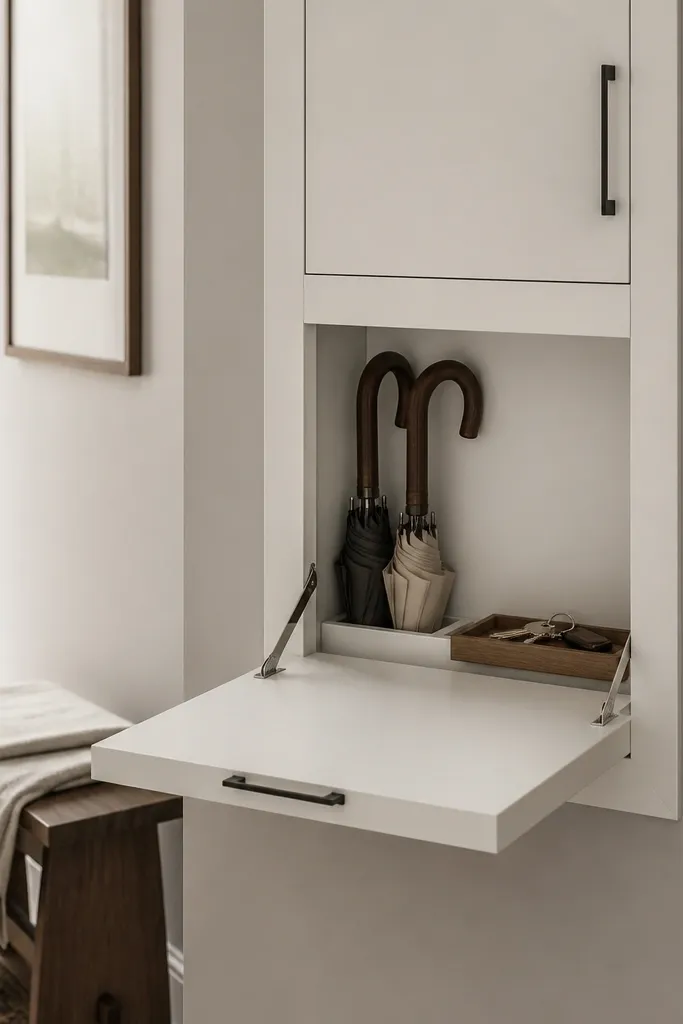
This works because the niche is deep enough to hold wet umbrellas and shoes without spilling into your walkway. The lift shelf keeps the visual line clean when it’s closed, which is the whole point of mudroom ideas entryway modern minimalist. I like matte white for the cabinet because it hides scuffs better than glossy finishes. Add a slim black pull and everything looks intentional instead of “random storage bolted on.”
Build the niche around 12-14 inches deep so umbrellas don’t poke out. Use 1/2-inch plywood or MDF with a durable primer and a washable eggshell topcoat. Inside, add a removable plastic tray so you can pull it out after rainy days and wipe it down.
Line the bottom tray with a thin, water-resistant mat so drips don’t soak into the wood.
Avoid open cubbies for wet items — they turn into a visual mess fast.
2. Floating Bench + Drawer Shoe Cabinet Combo
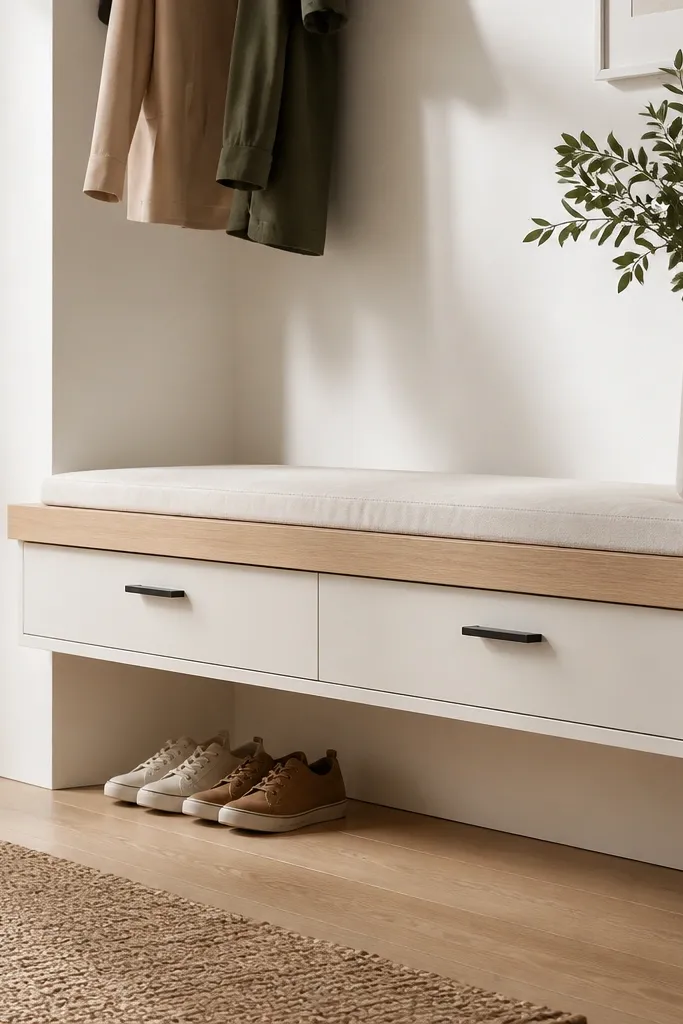
A floating bench makes the entry feel bigger because you can see the floor. The drawer shoe cabinet keeps damp footwear hidden, which is what makes a minimalist entryway stay neat. Light oak warms up the space, while off-white linen adds texture without pattern. This combo reads modern because the bench top and cabinet doors stay clean and flat.
Pro tipAdd a small tray on the bench for keys and a separate cup for sunglasses so everything stays in a line.
Keep the bench depth around 14-16 inches for comfort without crowding the walkway. Match the drawer fronts to the bench finish, and use one pull style everywhere. For shoes, plan drawers at 5-6 inches tall each so sneakers fit without forcing them to wedge.
Watch outSkip thick chunky legs — they steal space and make the whole thing look heavy.
3. Powder-Blue Lockers Look on a Budget
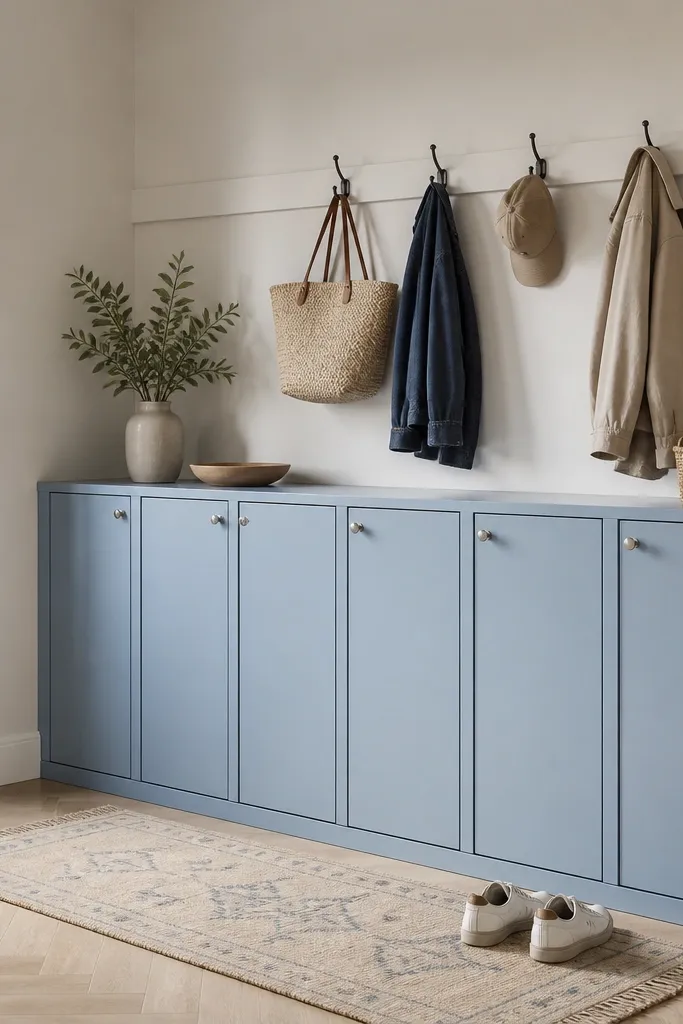
You get the “locker” vibe without the bulky school look by going slim and using a soft color. Powder blue makes the entry feel calm, and the minimalist doors keep it from looking chaotic. The brushed nickel knobs add a gentle shine that doesn’t scream for attention. This design also hides coats and shoes, which keeps the floor clear.
Pro tipLabel the inside with small white vinyl dots for shoe zones — it keeps kids from mixing pairs.
Use pre-made cabinet doors or ready-to-assemble storage units, then paint them with a cabinet-grade enamel. Size matters: aim for 9-12 inch wide compartments so you can store pairs of shoes and small bags. Keep the hook rail narrow and mount it centered over the lockers.
Watch outAvoid bright primary colors — they make the entry feel loud instead of clean.
4. Matte Black Hook Rail + Clear Weather Tray
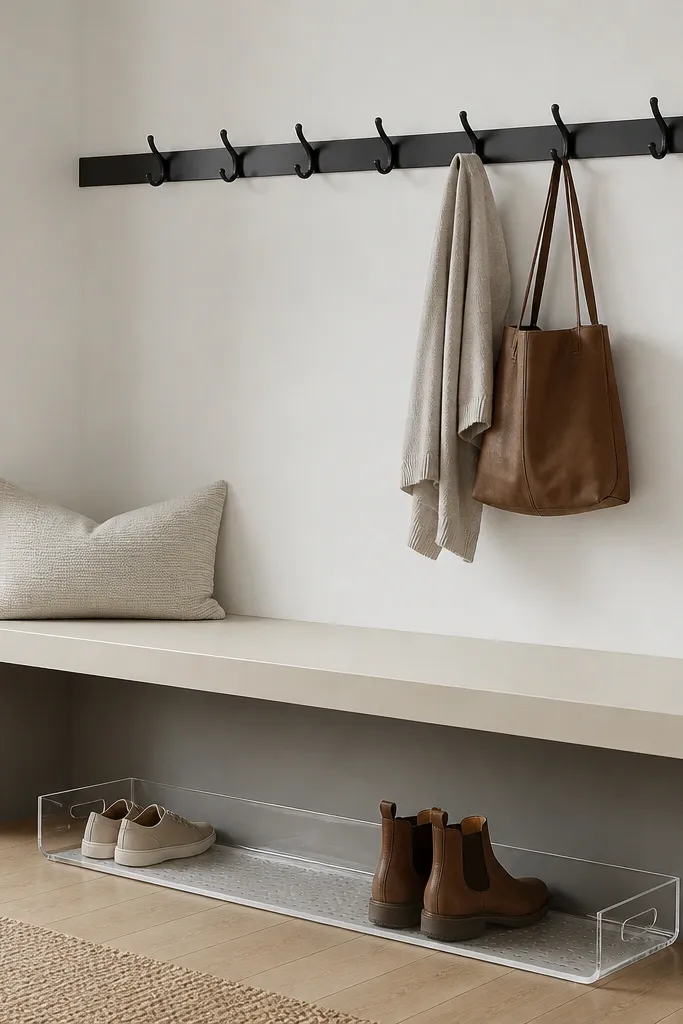
This is the “I need function first” version of mudroom ideas entryway modern minimalist. The hook rail keeps coats off the floor, and the clear tray lets you see what’s wet without hiding it in open clutter. Matte black hardware looks crisp against white walls, and the acrylic tray keeps the area tidy because you can wipe it in seconds. It’s bright and clean even when it’s being used constantly.
Pro tipUse command-style clear bumpers under the tray corners so it never slides on tile.
Mount hooks at two heights: about 50 inches for coats and 36 inches for bags and leashes. Use a tray that’s at least 14 inches deep so shoes don’t hang over the edge. Pair the tray with a vented shoe insert so water doesn’t pool.
Watch outDon’t use a decorative woven basket for wet shoes — it absorbs smells.
5. Linen-Slat Backboard With Recessed Pull Storage
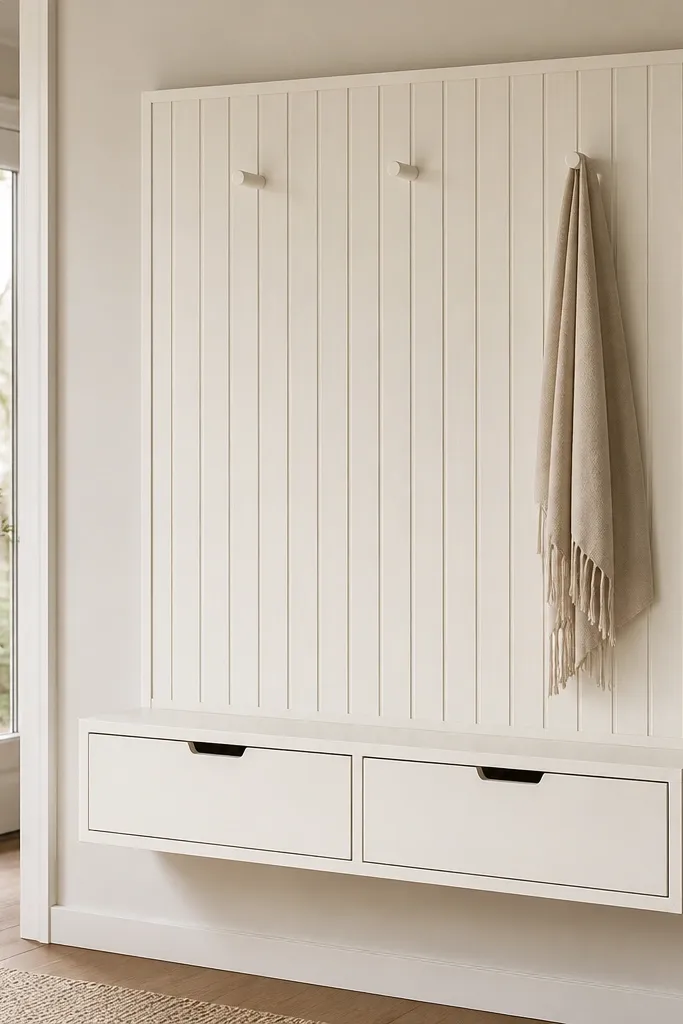
The slatted backboard adds softness without adding clutter, and it makes a modern minimalist entry feel “designed.” Recessed pulls keep lines straight and reduce snag points for bags and jackets. Linen texture also hides minor scuffs compared to smooth laminate. This setup works when you want hooks and storage but don’t want the wall to look like a tool station.
Pro tipSeal the fabric with a matte fabric protector so you can wipe it after rainy days.
Build a backboard frame and stretch a linen-like fabric over thin plywood, then staple it tight and wrap the edges neatly. Use recessed drawer pulls or a finger-pull groove so nothing sticks out. Keep the drawers shallow at 6-7 inches for gloves, hats, and small items.
Watch outAvoid glossy hardware that reflects overhead light — it makes the unit look busy.
6. Two-Tone Bench With Hidden Boot Shelf
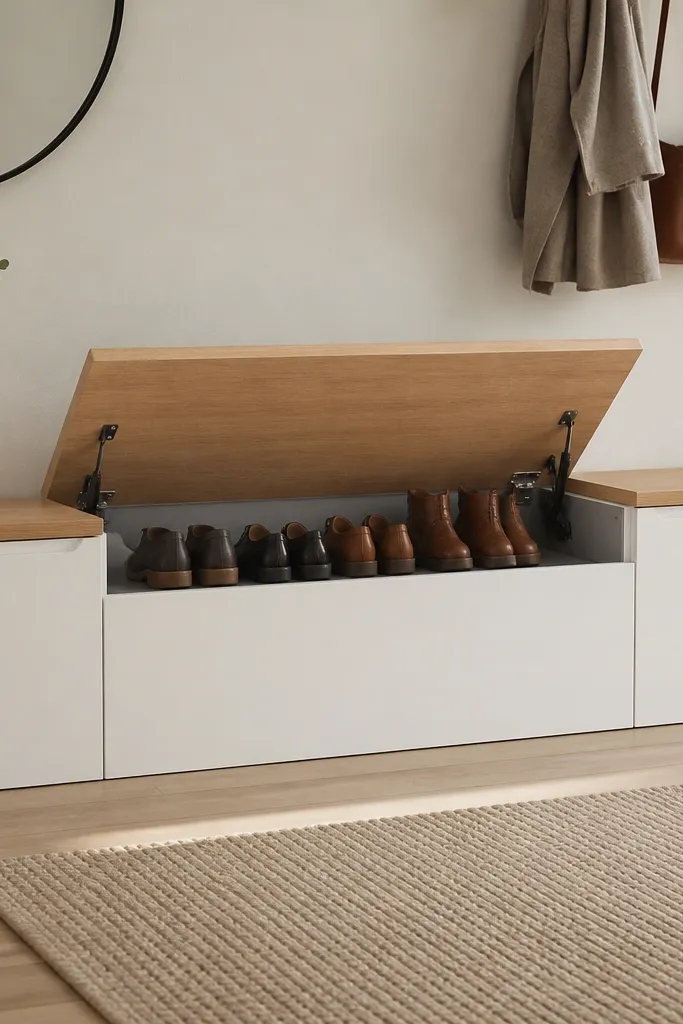
Two-tone looks modern when you keep it simple: one warm wood and one clean paint. The hidden boot shelf matters because boots stay damp and heavy, and you don’t want them visible in a minimalist entry. The gray rubber mat inside is practical — it protects the wood and is easy to wipe. When the seat closes, the whole mudroom reads calm.
Pro tipAdd a small vent gap behind the back panel so air circulates and reduces shoe odor.
Make the seat lift using a soft-close hinge if you can — it feels premium without extra decoration. Size the boot shelf so tall boots fit flat, typically around 16-18 inches deep inside. Use a removable mat and a small mesh divider so boots don’t flop.
Watch outSkip open boot racks in small hallways — they take over the visual space.
7. Vertical Shoe Column With Flip-Top Tray
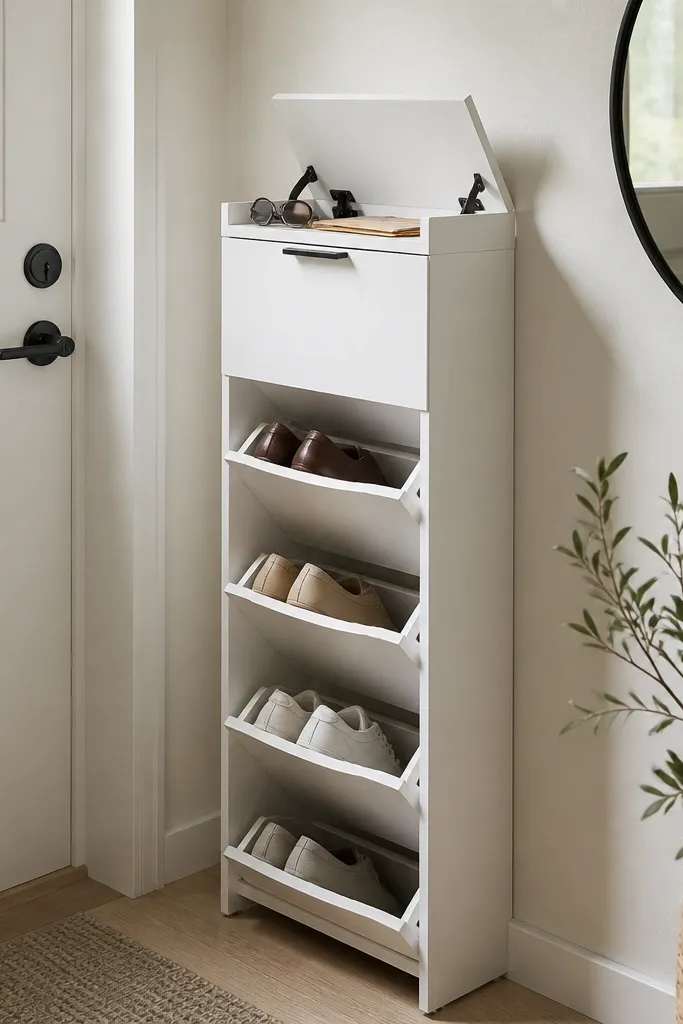
Vertical storage is a lifesaver when your entryway is tight. A flip-top tray gives you one clean place for keys and mail that stays out of sight when you close it. Angled shelves help shoes dry faster because air moves between pairs. The matte black hinge line keeps it sharp and modern.
Aim for a cabinet footprint around 16-18 inches wide and 18-24 inches deep depending on your doorway clearance. Use angled dividers inside so sneakers don’t sit flat. Paint the cabinet with a cabinet-grade finish so wipe-downs don’t dull it.
Put a small hook under the flip-top for a leash or a small tote so it doesn’t land on the floor.
Avoid tall cabinets with shiny fronts — they show every fingerprint.
8. Concrete-Look Wall Panel + Slim Bench
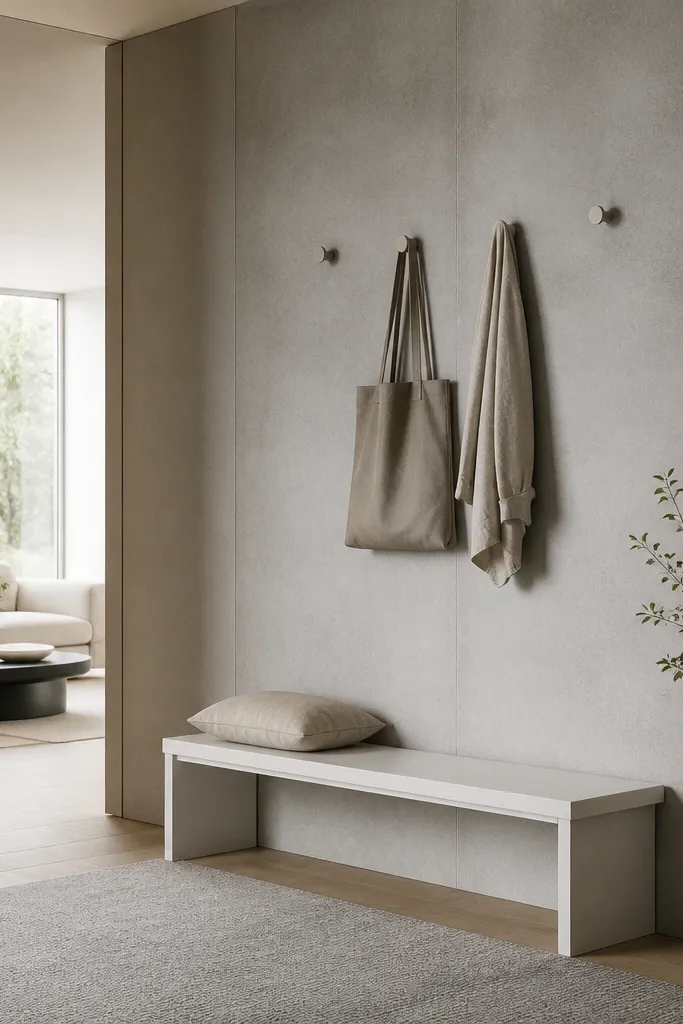
A concrete-look panel is practical because it hides scuffs and stains from shoes and umbrellas. It also makes a modern minimalist entry feel grounded without adding color chaos. Pairing it with a slim white bench keeps the look clean and bright. Low-pile rugs also matter because they don’t trap grit like thick shag.
Choose a wall panel finish that wipes clean, not a porous plaster look. Keep the bench depth around 12-14 inches if the hallway is narrow. Use hooks with smooth rounded ends so bags slide off without snagging.
Install a small drip edge or a thin tray under the hooks if you hang wet coats — it saves your wall.
Don’t use high-contrast patterns on the rug — they fight the minimalist lines.
9. Corner Entry L-Shape Bench With Hidden Storage
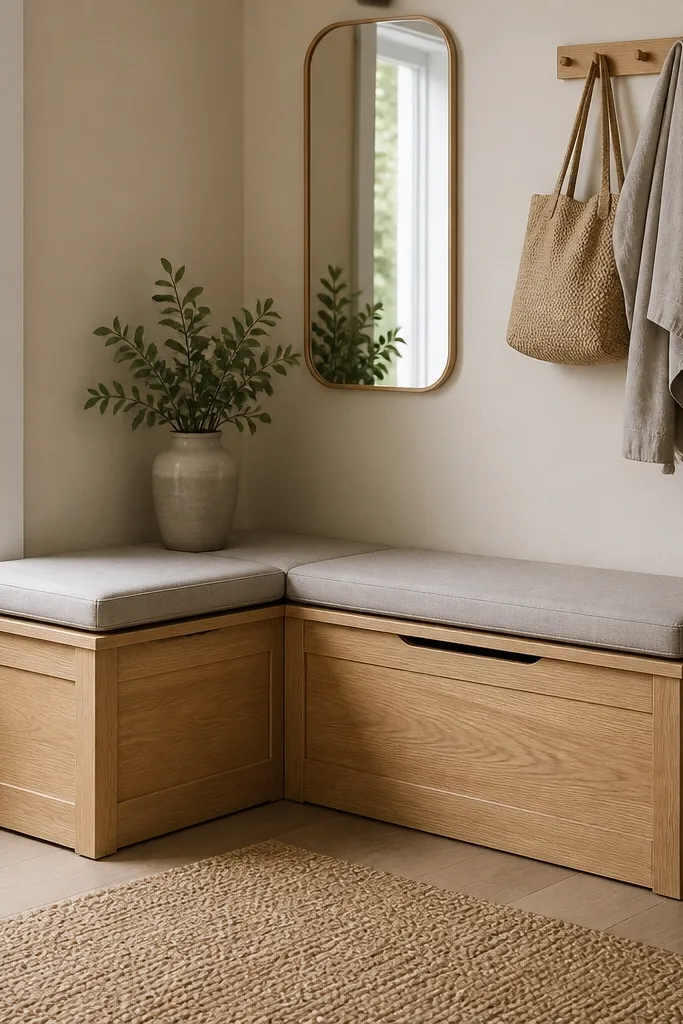
Corners waste space unless you build into them. An L-shape bench gives you more seating and more storage without taking over the main walking path. Lift lids hide everything from dog leashes to rainy-day gloves. The light oak keeps it warm, and the gray cushion adds a calm, neutral tone.
Measure the corner carefully and keep the bench legs thin so you don’t lose clearance. Use two separate compartments so the lids open without hitting each other. Cushion thickness around 2-3 inches feels comfortable without making the bench bulky.
Put a small waterproof mat under the cushion where wet items land most often.
Avoid one huge compartment — smaller bins keep the inside from turning into a junk drawer.
10. Mirror + Rail Combo for Small Hallways
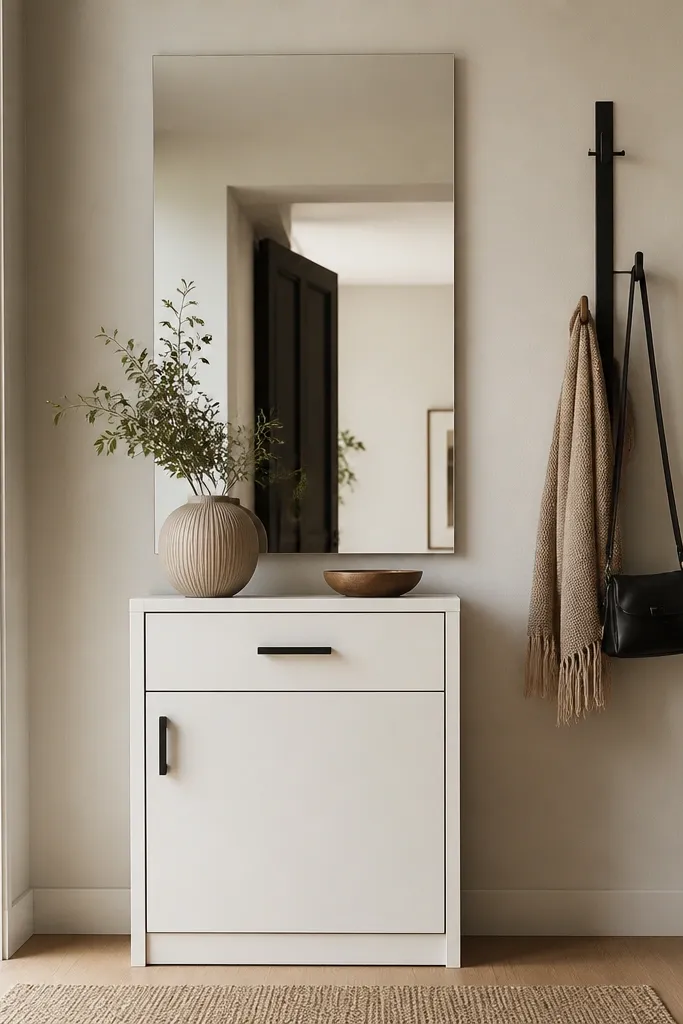
A mirror helps your entryway feel larger, but in minimalist mudroom ideas entryway modern minimalist, placement matters. Put the mirror where you’ll see the hooks and closed storage in one glance — it makes the whole system look intentional. The rail keeps coats from landing on the console. The closed drawer and cabinet hide daily mess so the mirror doesn’t reflect clutter.
Choose a slim console depth around 10-12 inches so you don’t block the door swing. Use one drawer for mail and one closed cabinet for shoes. If you have a narrow wall, mount the hooks on the side of the mirror so you keep a clean vertical line.
Add a small LED puck light inside the mirror frame or above the rail so the hooks read crisp at night.
Don’t hang the mirror too low — reflections make the entry look crowded.