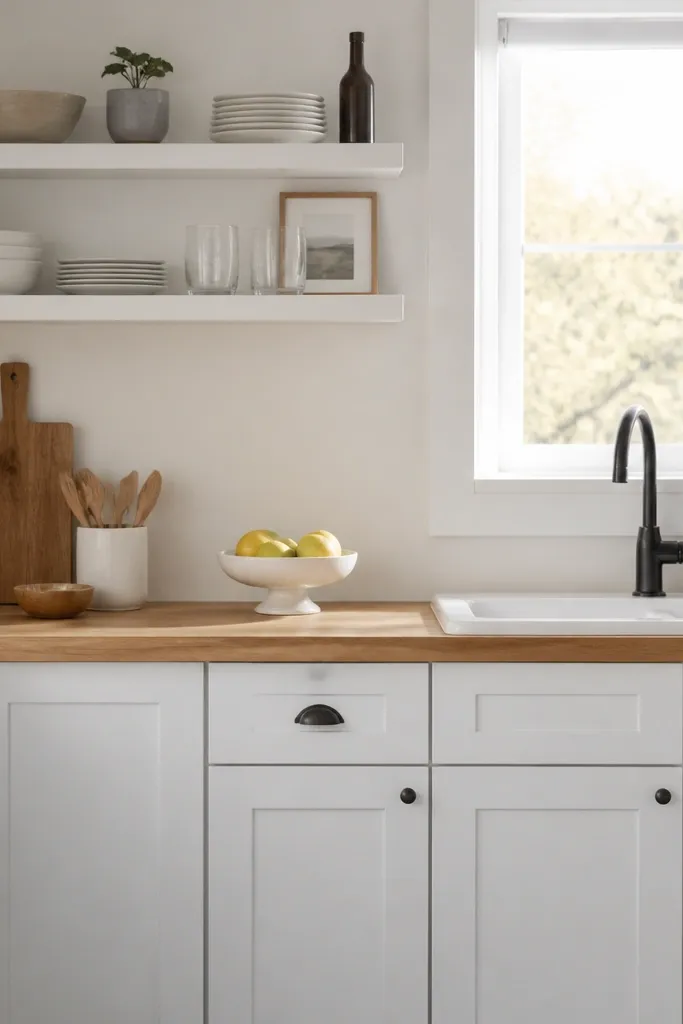
1. Matte black pulls + warm honey butcher block
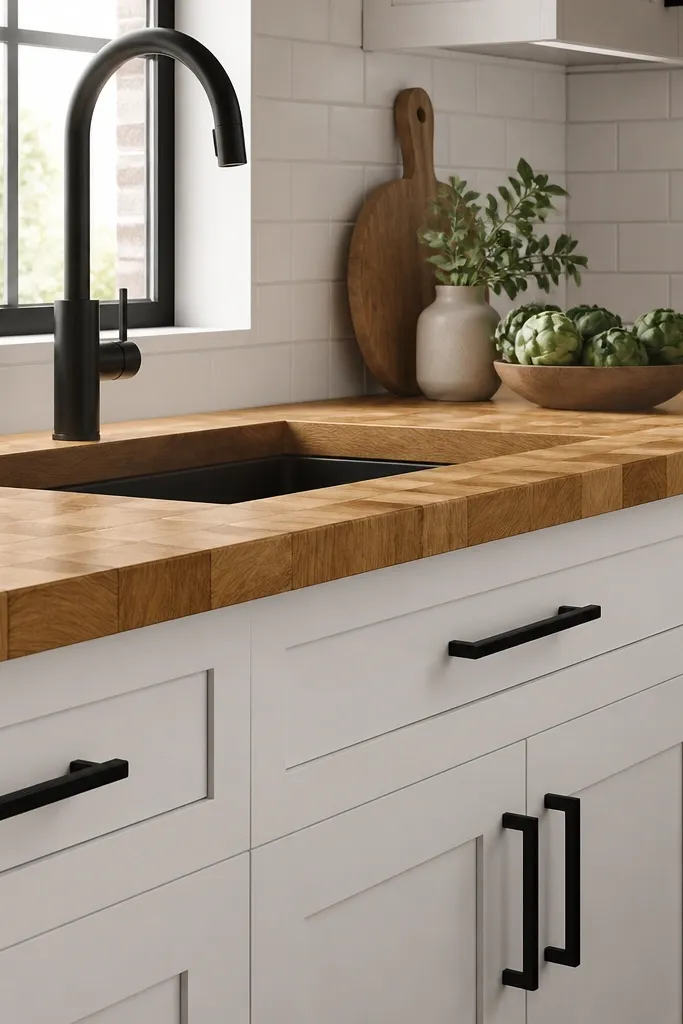
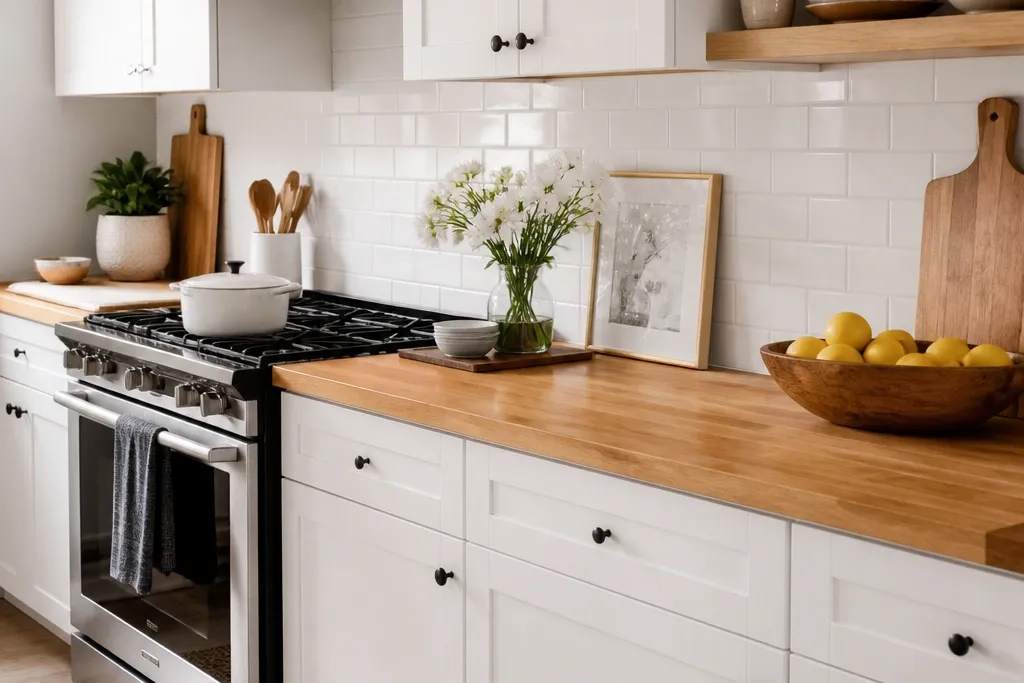
This combo looks crisp because the black hardware gives sharp edges against the soft wood grain. The honey tone keeps the white cabinets from looking sterile. End-grain visibility on the block adds texture that reads intentional up close. The matte black faucet ties the whole thing together so the wood doesn’t feel like an afterthought.
Pro tipIf your cabinets are slightly creamy, test a small offcut of the butcher block in daylight against them before you commit.
Use 5 inch or 6 inch bar pulls to keep the scale right for standard shaker doors. Choose a butcher block that has a warm yellow-brown grain, then seal it with a satin topcoat (not glossy) so it doesn’t reflect like laminate. Pair with white subway tile and grout that’s bright white or light gray.
Watch outAvoid glossy butcher block finishes with matte hardware — it looks mismatched in every photo.
2. Brushed nickel faucet + cool white cabinets
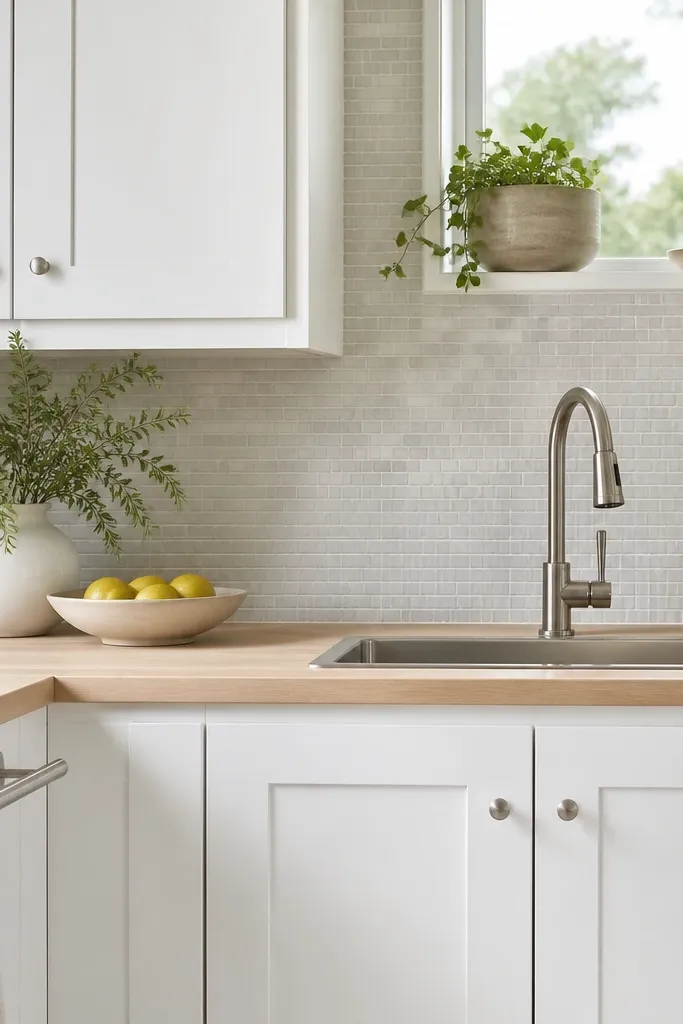
When your cabinets read cool, a neutral tan block keeps the kitchen balanced instead of turning yellow. Brushed nickel adds a soft metallic that doesn’t compete with the wood grain. The light gray backsplash makes the countertops look cleaner and more modern. It’s a “real kitchen” look — not overly farmhouse.
Pro tipUse a clear soap dispenser in brushed nickel glass so the hardware finish repeats without adding more colors.
Pick a butcher block with straight grain and minimal orange. Seal with a medium-sheen finish. Keep the backsplash light — small mosaic or a thin herringbone in pale gray looks great with this specific wood tone.
Watch outDon’t choose a very dark walnut-toned block with cool white cabinets — it makes the space feel heavy fast.
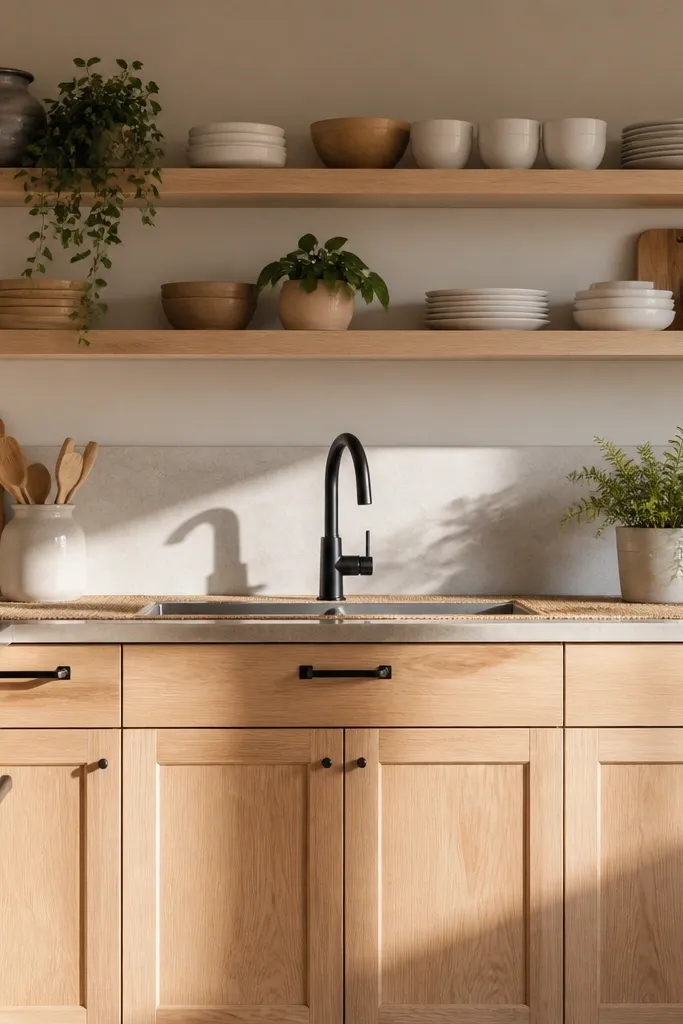
3. Open shelving above butcher block for renter-friendly contrast
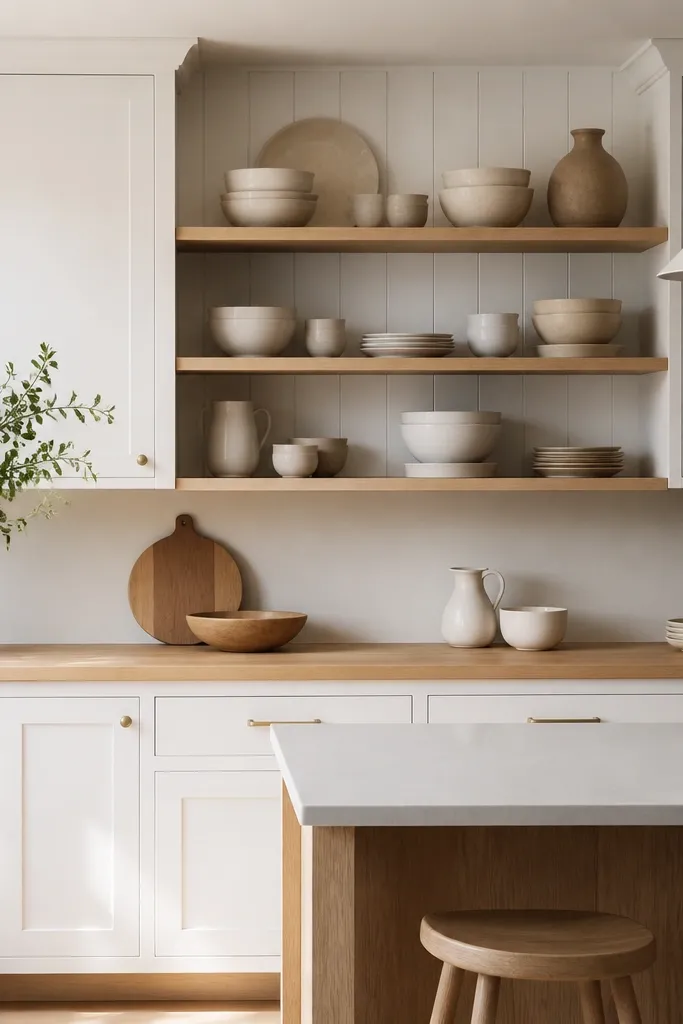
Open shelves break up the all-cabinet look and let the butcher block warmth show without adding clutter. The wood grain under the shelves creates a “continuous” warm band across the kitchen. Keeping the shelf items in two tones (white + tan) makes everything look styled even when you’re busy. This design makes the kitchen feel larger because you’re not hiding everything behind cabinet doors.
Pro tipAdd one vertical element on the shelf — a tall vase or utensil crock — to avoid the “flat” look.
Install shelves with a simple wall bracket system and keep the shelf depth around 9 to 10 inches so it doesn’t overwhelm. Use a butcher block that has a visible top grain but not heavy end grain — it looks calmer under shelves. Stick to white plates and tan wood cutting boards.
Watch outAvoid mixing five different wood tones on open shelves — it turns into visual noise.
4. Quartz-look backsplash with butcher block warmth
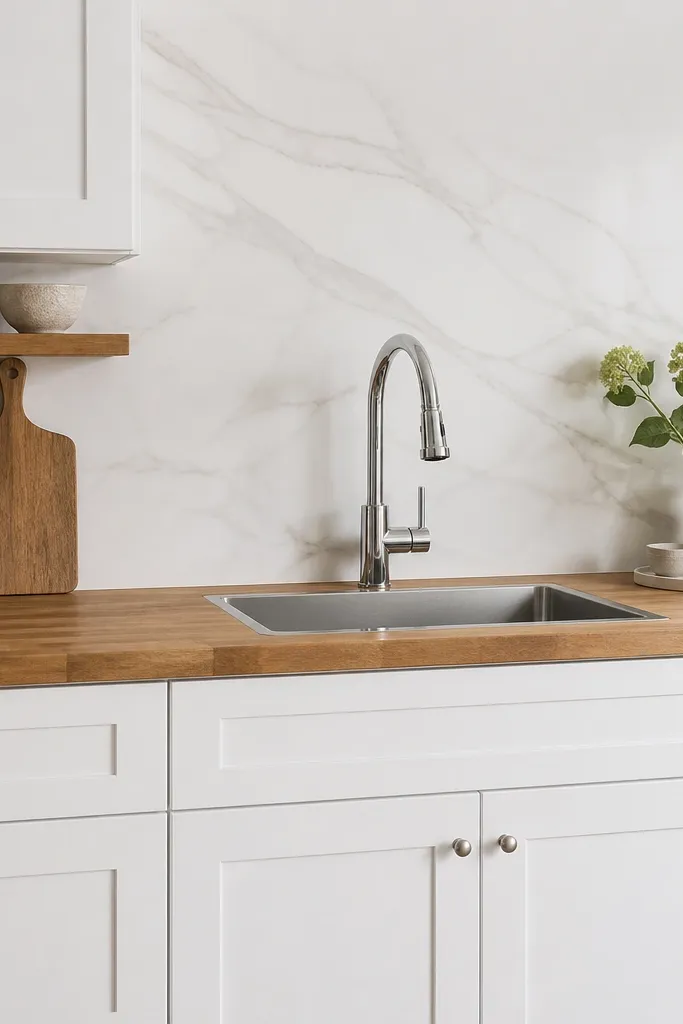
A quartz-look backsplash keeps the kitchen crisp while the butcher block keeps it from feeling cold. The faint gray veining adds dimension near the wood without stealing attention. Stainless or chrome fixtures look cleaner against the neutral background. This is a great choice when you want “bright kitchen” without going fully modern.
Pro tipPut a single runner or heat-safe tray on the counter in the same gray as the veining to tie it together.
Choose a backsplash that has subtle gray movement, not bold black veins. Seal the butcher block with a satin or matte finish so it doesn’t glare next to the glossy-looking tile. Use a stainless sink to match the kitchen’s hardware level.
Watch outDon’t use a backsplash with heavy brown/orange speckling if your butcher block is already warm — the tones fight.
5. White cabinets + butcher block island with dark bar stools
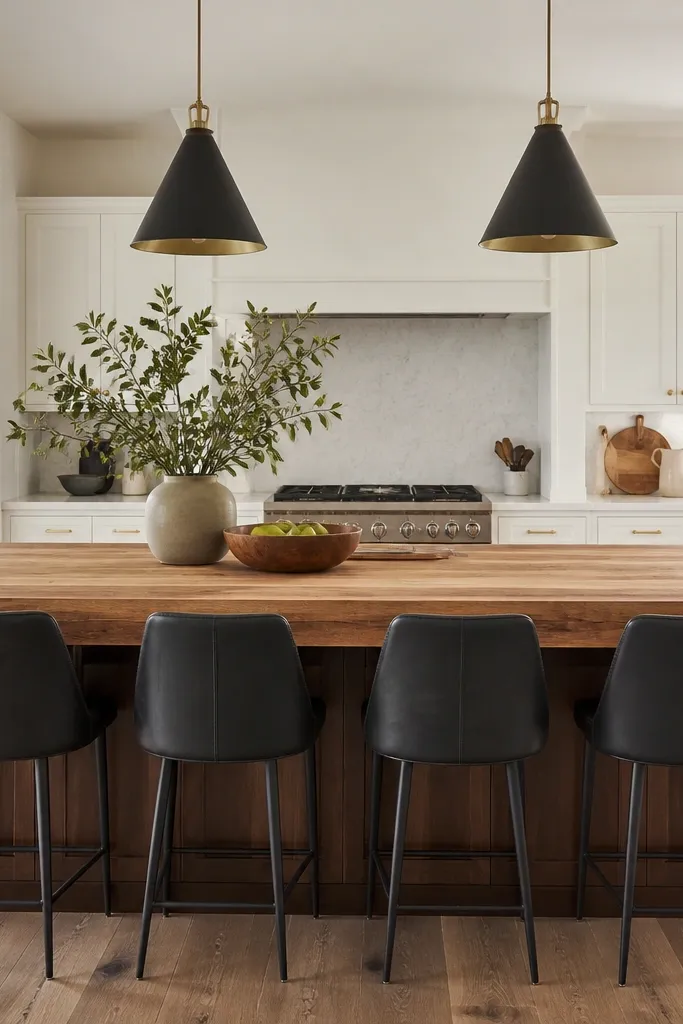
An island gives you the strongest visual payoff because the wood becomes the focal point. Dark stools add contrast so the wood reads intentional, not just “another counter.” If your rental has a boring rectangular island or none at all, you can mimic this by adding a butcher block topper or a freestanding island. The pendant light draws the eye up, which makes the room feel brighter.
Pro tipHang pendants with 18 to 22 inch clearance from the countertop edge so the light lands where you work.
Keep the island top at least 1.25 inches thick. Add a wood or metal apron panel if you’re building a topper — aim for a flush overhang so it looks like part of the unit. Choose stools in charcoal, black, or deep brown with a matte finish.
Watch outAvoid matching the island wood exactly to an existing floor stain — it can look flat and muddy.
6. Smoked glass pendant + pale birch butcher block
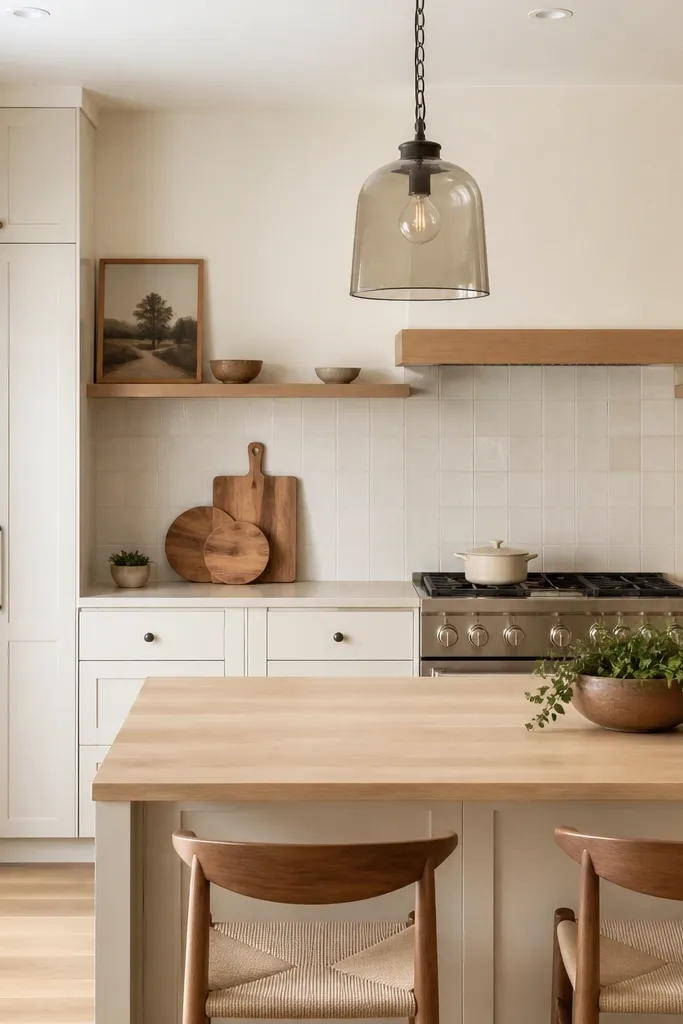
Pale birch keeps the kitchen airy, and the smoked glass pendant adds a moody contrast without overpowering the whites. The result is “bright but not sterile.” Pale wood grain also hides minor countertop scratches better than darker stains. This look is perfect when your rental has limited natural light.
Pro tipPlace a small tray near the sink with black or dark gray accents so the smoked glass has a color partner.
Pick a butcher block that stays in the blonde range and seal it with a low-sheen finish. Use a backsplash in creamy white with either simple grout lines or a small format tile. Keep your hardware in oil-rubbed bronze only if your lighting is also warm.
Watch outAvoid bright chrome pendants with pale birch — it can look too sharp against warm whites.
7. Coastal white cabinets + driftwood-toned butcher block
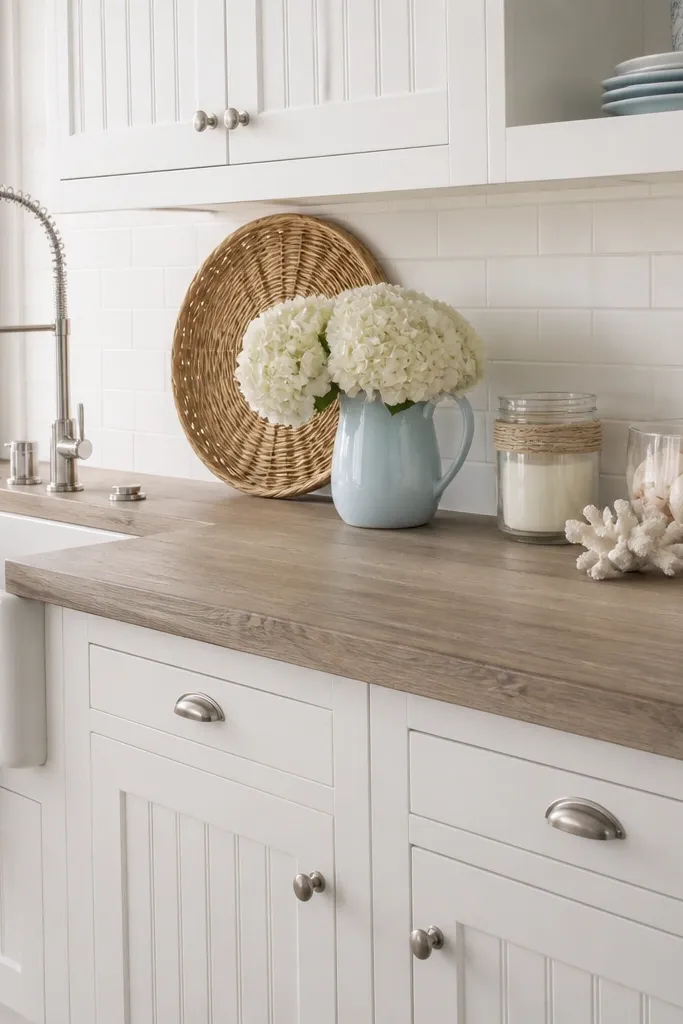
Driftwood-toned butcher block adds a beachy calm without turning the kitchen into full cottage mode. It softens white cabinets that might otherwise look too stark. The gray-brown grain reads modern when you keep the rest of the palette light and simple. It’s the “bright kitchen” look for people who don’t want traditional farmhouse.
If you’re staining, do it lightly — aim for a gray-brown wash rather than a deep stain. Seal with a matte or satin clear coat. Pair with white backsplash and light blue or seafoam accents in small doses.
Use white ceramic canisters and one blue cloth for a consistent coastal feel.
Don’t over-darken driftwood blocks — they start looking like fake wood when the grain is barely visible.
8. All-white kitchen with butcher block + brass faucet
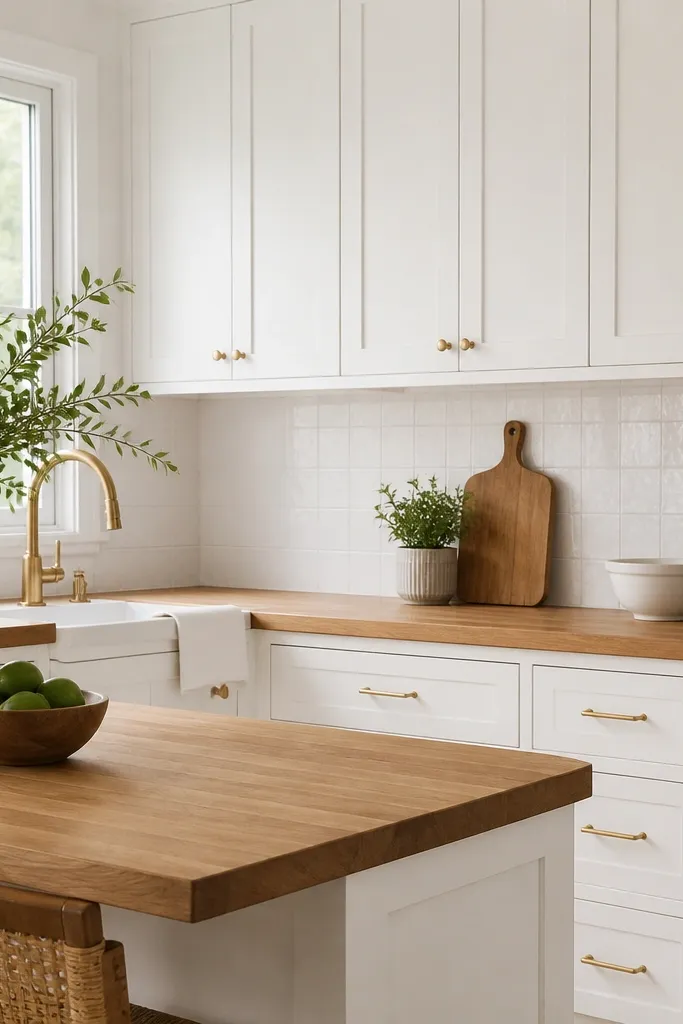
Brass warms the white cabinets and makes the butcher block feel even more intentional. This combo looks expensive without being fussy because the tones are all in the same warm family. The wood grain gives texture that brass can’t replace, so the mix looks balanced. If you want bright but not cold, this is the one I keep coming back to.
Pro tipWipe brass fixtures with a microfibre cloth weekly — fingerprints show less when the finish stays clean.
Choose cabinet hardware in aged brass or unlacquered brass so it doesn’t look neon. Seal the butcher block in satin so brass reflections stay soft. Keep backsplash white with either a subtle texture or small pattern.
Watch outAvoid mixing silver faucet hardware with brass pulls — it reads like two kitchens collided.
9. Two-tone scheme: white uppers, butcher block lowers
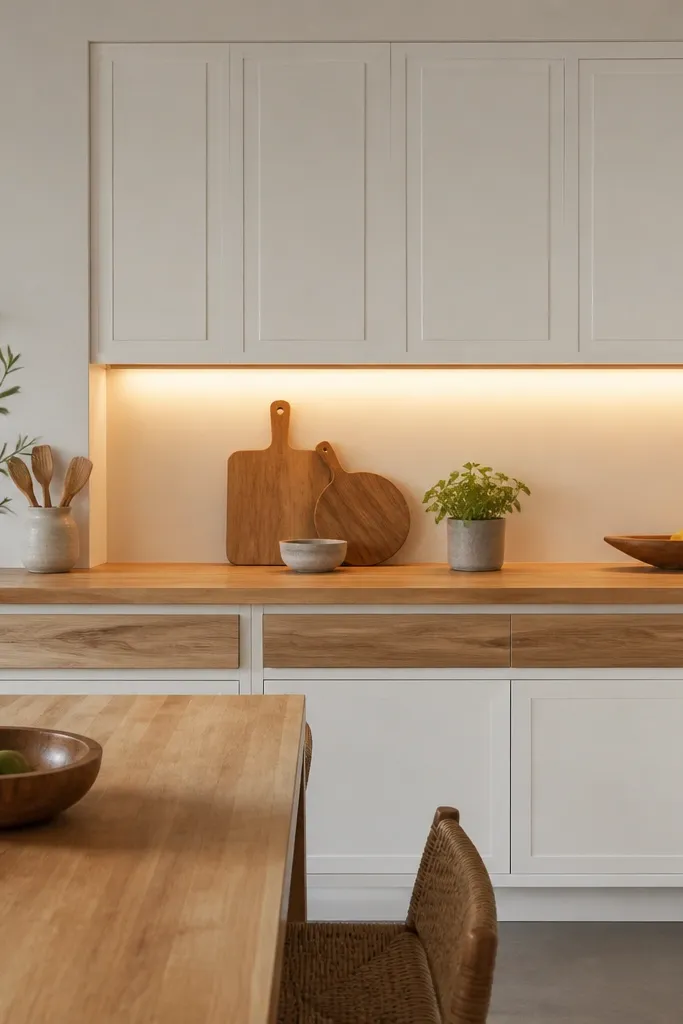
This look doubles down on warmth while keeping the top half clean and airy. The butcher block trim on the lowers pulls the grain up into the cabinetry, so the kitchen feels cohesive. Under-cabinet lighting makes the wood glow and makes the white cabinets look brighter. It’s great for renters because it still reads intentional even if you can’t change everything.
Pro tipUse painter’s tape to map the trim lines first — straight lines matter more than people think.
Add wood trim or stick-on veneer panels to the lower cabinet faces only, keeping the upper doors untouched. Use a butcher block countertop in a mid-tone warmth so the trim doesn’t look too orange. Install warm LED strips at 2700K under the upper cabinets.
Watch outAvoid uneven trim heights — even a half inch shift is obvious near the sink.
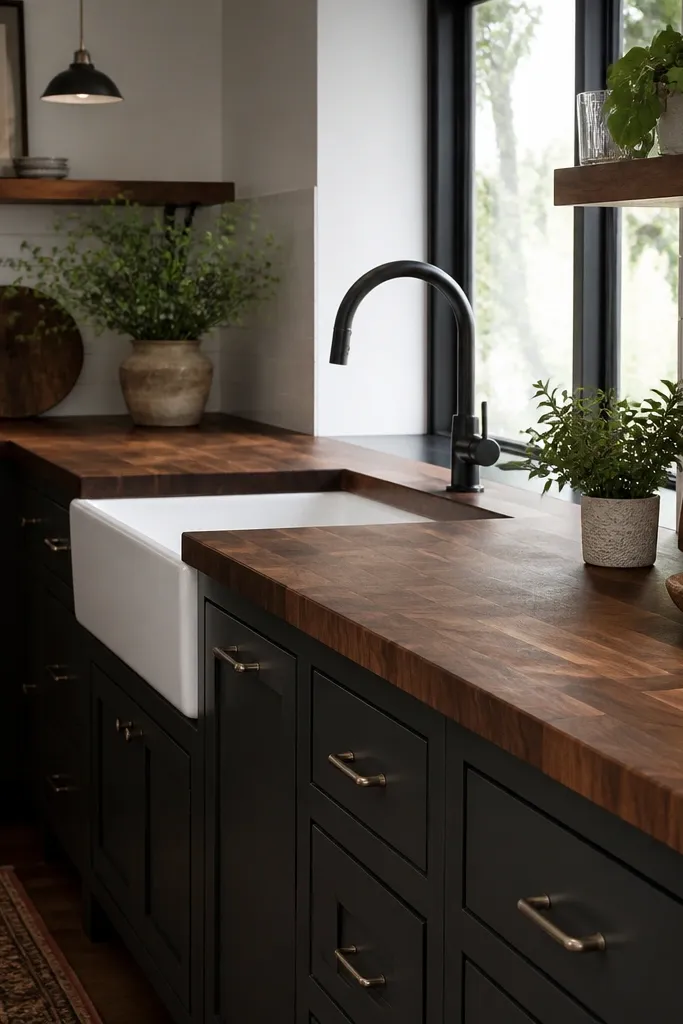
10. Butcher block with a black farmhouse sink
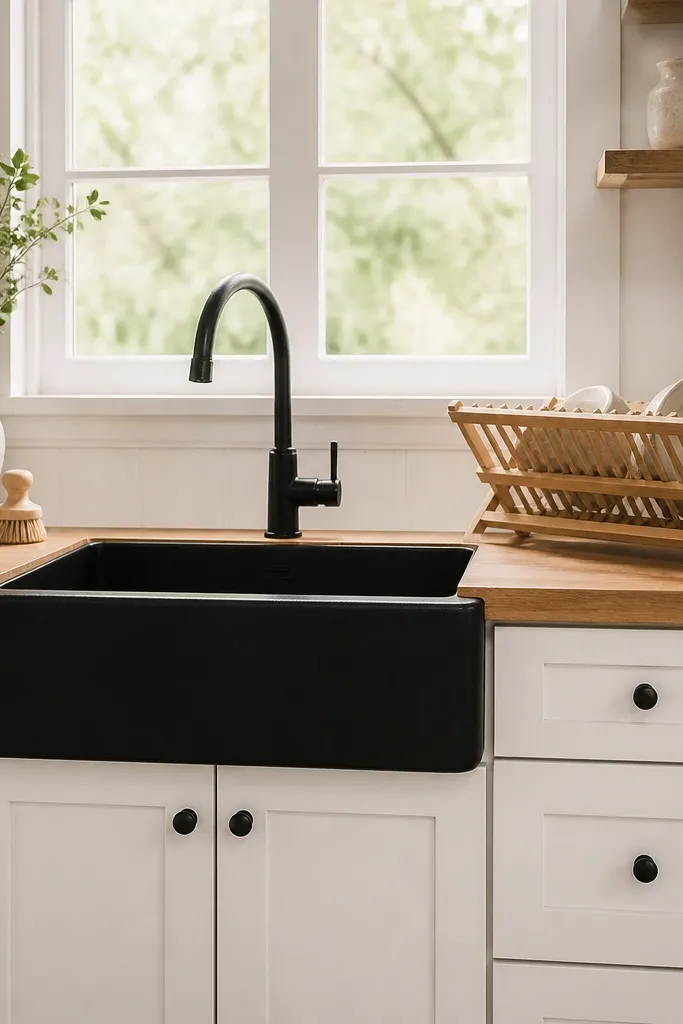
A black farmhouse sink gives you a strong anchor point, and the butcher block keeps it from looking too industrial. The sink also helps hide water spots compared to stainless in real daily use. This pairing has a “worked-in” look that still feels bright because the cabinets stay white. If your rental has a standard white sink, this is an easy style upgrade.
Pro tipKeep a small bar mat by the faucet so drips hit fabric, not bare wood.
Match the sink finish to your faucet and hardware. Seal the butcher block well around the sink — that’s where water exposure happens. Use a wood dish rack so the sink doesn’t look like it’s surrounded by mismatched materials.
Watch outDon’t skip sealing the butcher block edge by the sink — that’s where it soaks first.
11. Sage accents with white cabinets and butcher block
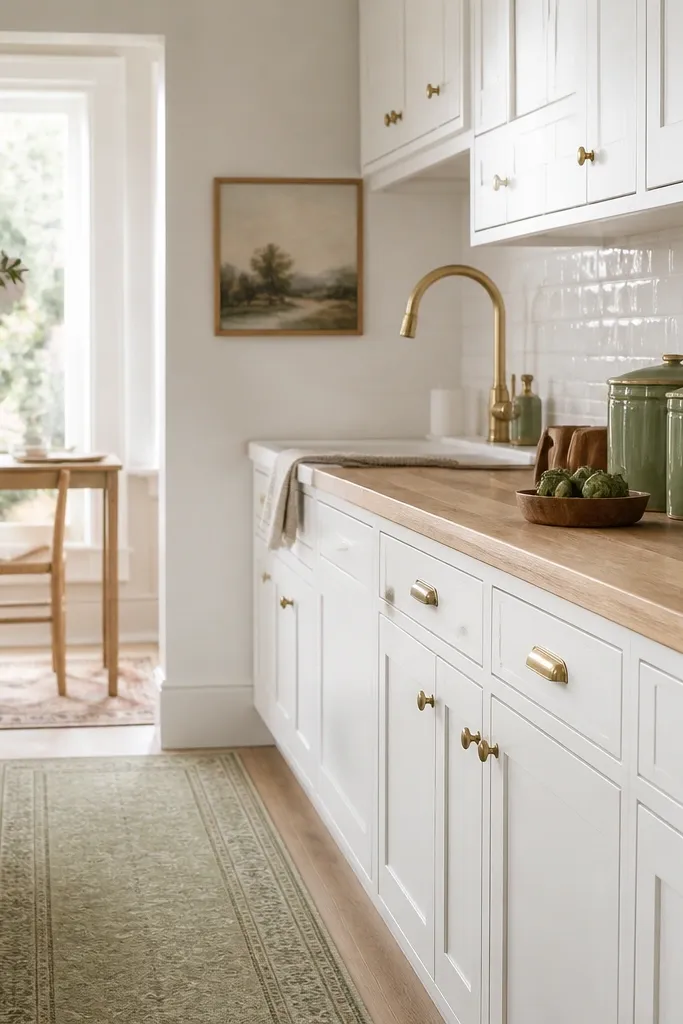
Sage adds a soft, lived-in color that doesn’t clash with warm wood grain. The kitchen stays bright because sage is muted, not saturated. This pairing is forgiving when your rental walls are off-white or beige — it makes the whole space feel calmer. Wood grain plus sage reads cozy without going full farmhouse.
Pick a runner in muted sage (not mint). Use brass or warm gold hardware so sage doesn’t look gray. Keep your backsplash white so the color shows up as an accent instead of competing.
Choose one sage item per zone — either near the stove or by the sink, not everywhere.
Avoid bright neon green decor — it makes the wood look orange.
12. White cabinets + butcher block + subway tile in warm off-white
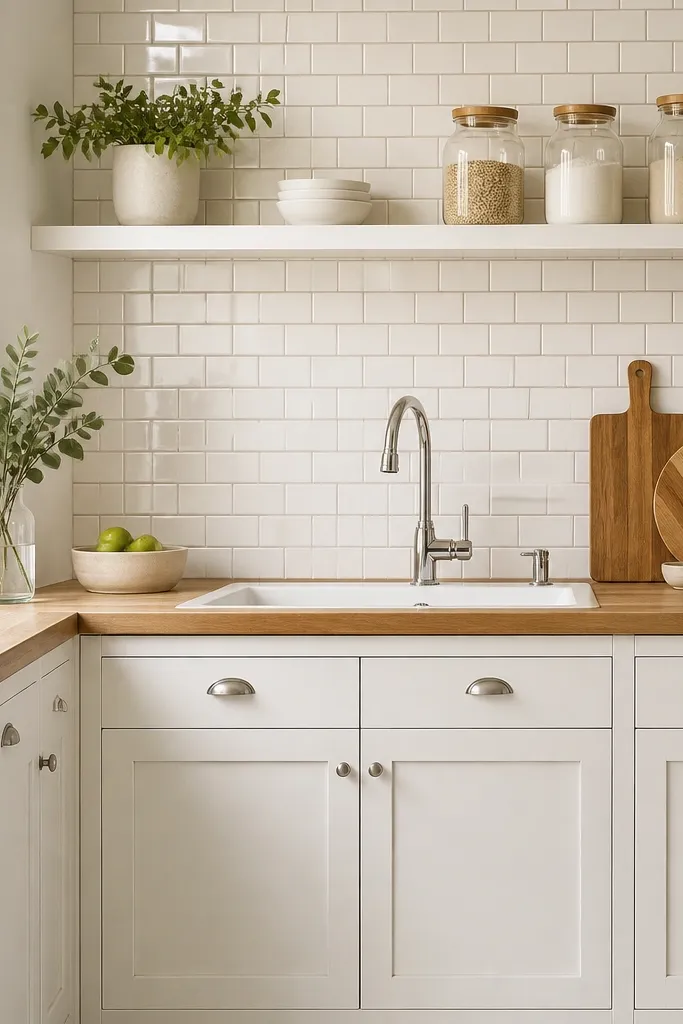
Warm off-white tile makes the kitchen glow, and it makes the butcher block look naturally finished instead of stained. Tan grout gives a softer line than bright white grout, which prevents harsh contrast. Chrome fixtures keep the look clean and rental-friendly. This is the “bright kitchen” setup that still feels cozy.
Pro tipIf you can’t change grout, add a thin heat-safe tile or tray behind the sink to create a similar warm band.
Use off-white subway tiles with a warm undertone and grout that matches the tile’s warmth. Seal the butcher block and choose a light to mid-tone grain. Keep cabinet hardware in chrome or nickel to match the faucet.
Watch outAvoid bright white grout with warm butcher block — it can look like everything is floating.