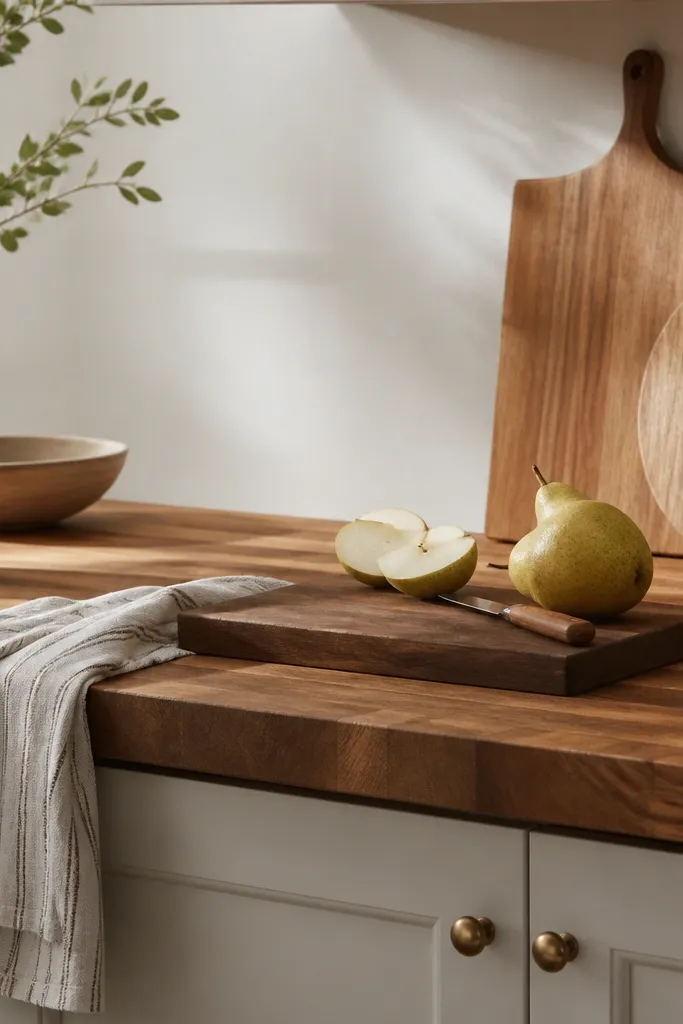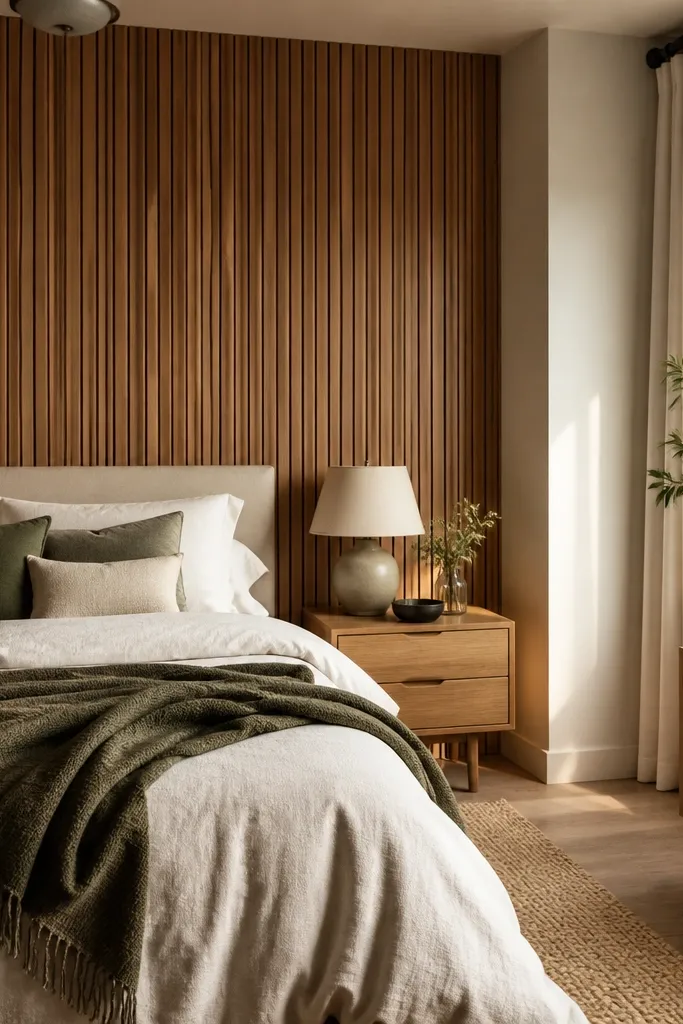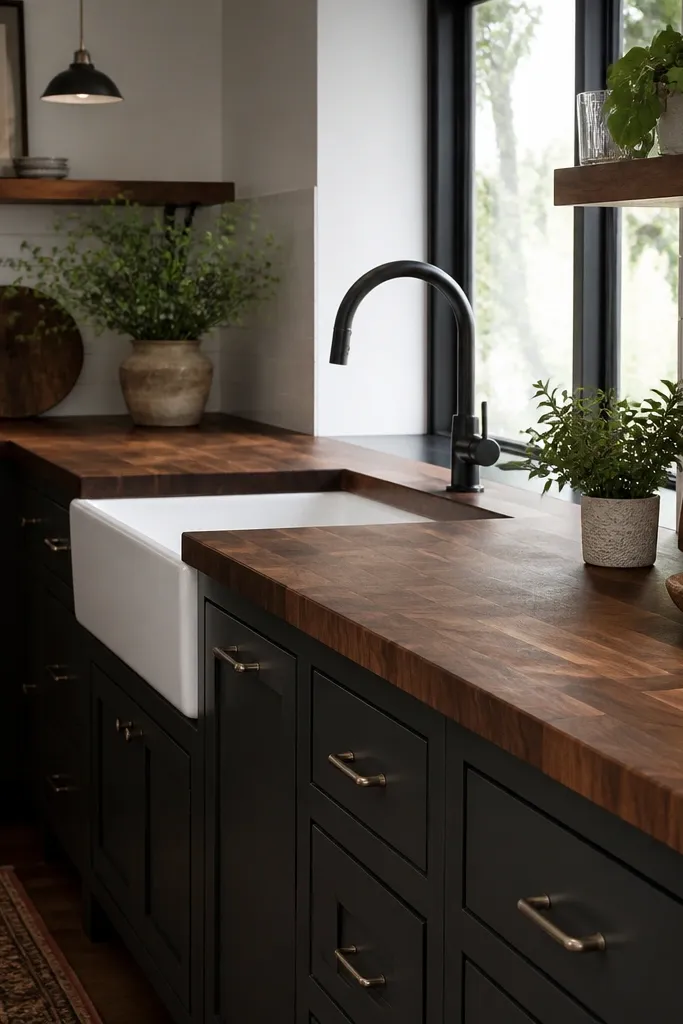
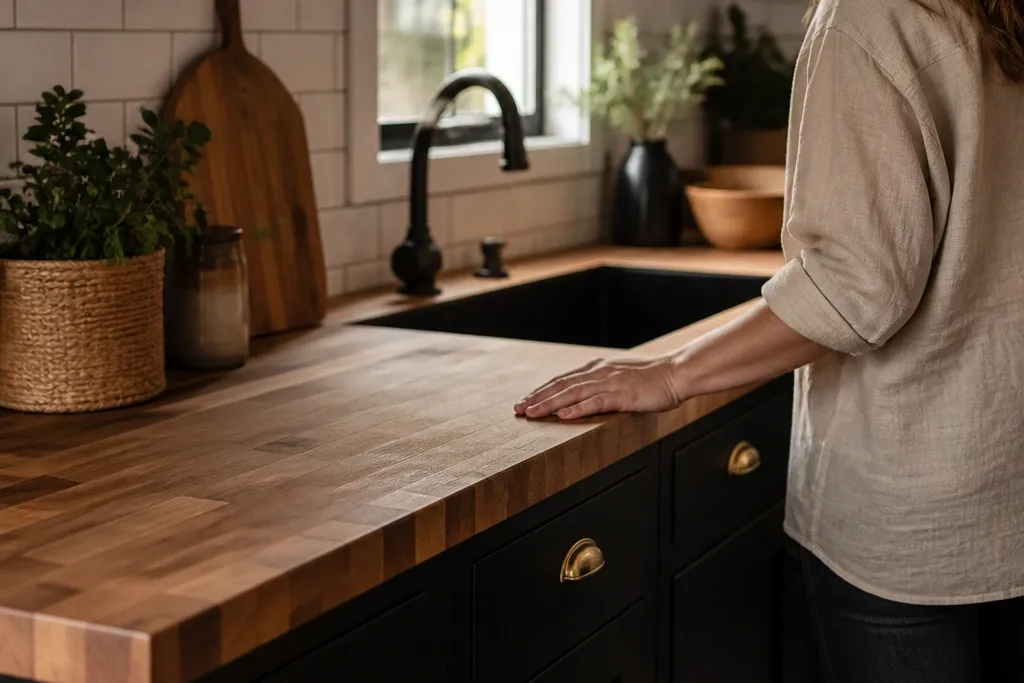
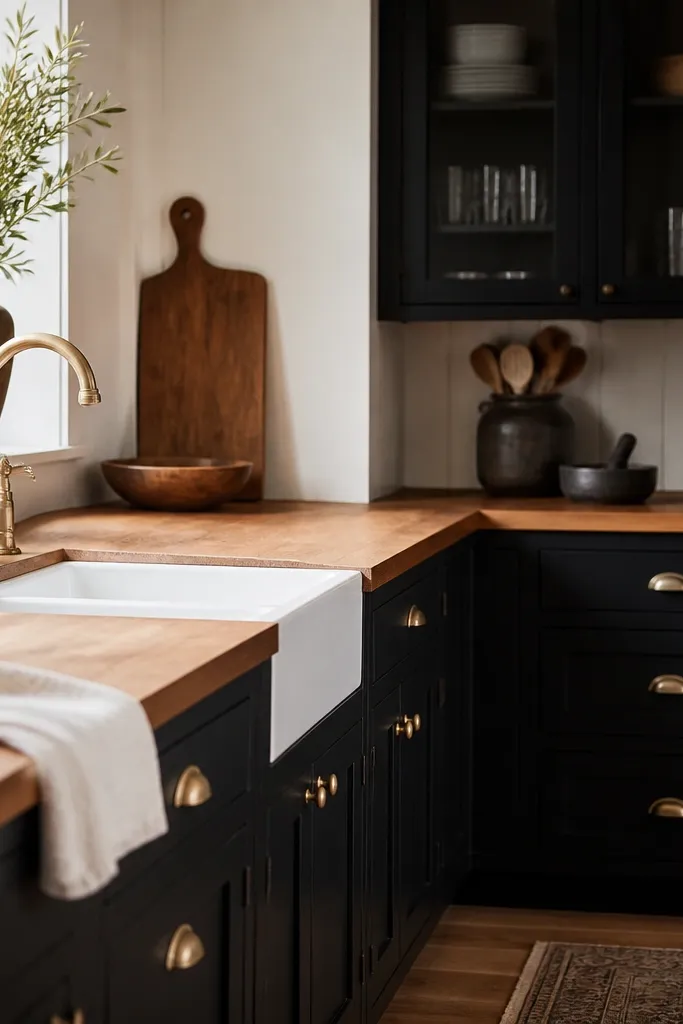
1. Matte black vanity + warm oak butcher block floating shelf look
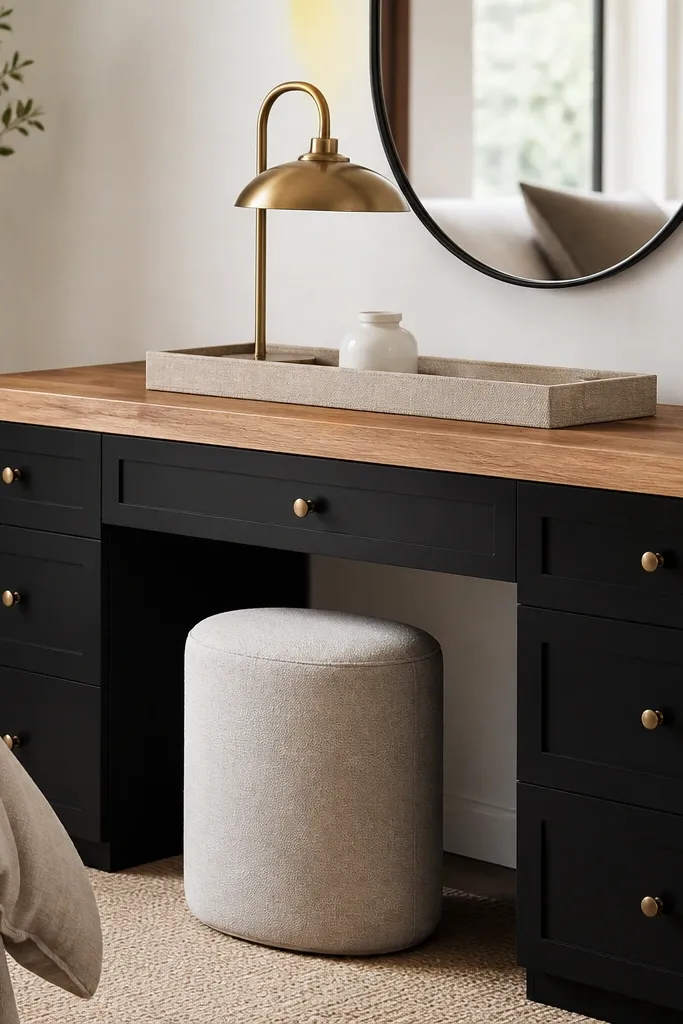
This works because matte black absorbs glare, so the butcher block’s warmth reads clean instead of greasy. Warm oak tones sit nicely against black without going orange. The floating feel — achieved by matching the countertop depth and keeping the shelf lines straight — makes the wood look like part of the furniture, not a separate insert. I like it in bedrooms because it feels airy even with dark cabinetry.
Build the look with a butcher block slab that’s 1.5 to 2 inches thick so the edge looks substantial. Keep the shelf or counter depth around 20 to 24 inches for a bedside-height feel. Finish the wood with a matte or satin clear coat so the grain stays tactile under warm light.
Repeat brass once more — a matching mirror frame or hardware — so the wood and metal feel like a set.
Avoid pairing glossy butcher block with matte black cabinets; the shine usually looks out of place under bedroom lighting.
2. Black shaker cabinets with edge-banding butcher block and linen styling
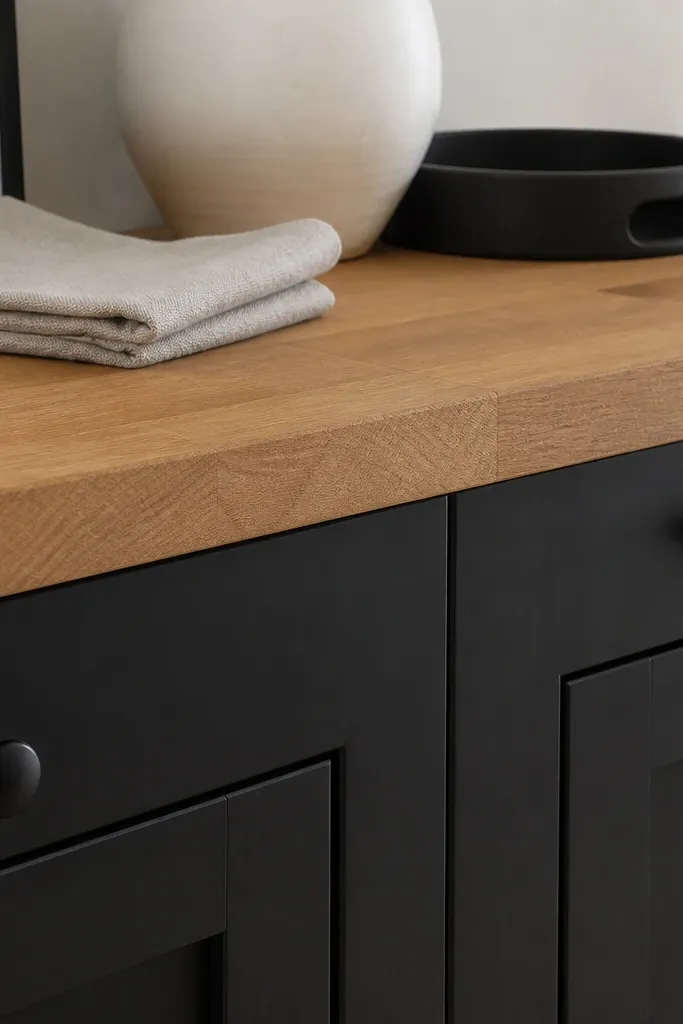
Shaker doors already have structure, so the butcher block needs a tidy edge and a calm finish. A square or lightly eased edge keeps the countertop from looking rustic in a messy way. Linen styling adds soft texture that balances the wood grain. The black tray grounds the scene so the wood doesn’t become the only visual weight.
Choose a butcher block with consistent face grain and minimal patchy knots. Use a clear coat that dries satin, not high-gloss. Style with one tall element (the vase) and one flat element (linen or books) so the surface doesn’t feel crowded.
Seal the edges well and keep the topcoat consistent across the face — uneven sheen on edges shows up in photos fast.
Avoid heavy pattern wallpaper directly behind a grainy butcher block; the two textures compete.
3. Two-tone bedroom desk: black cabinet base + toasted butcher block for a reading nook
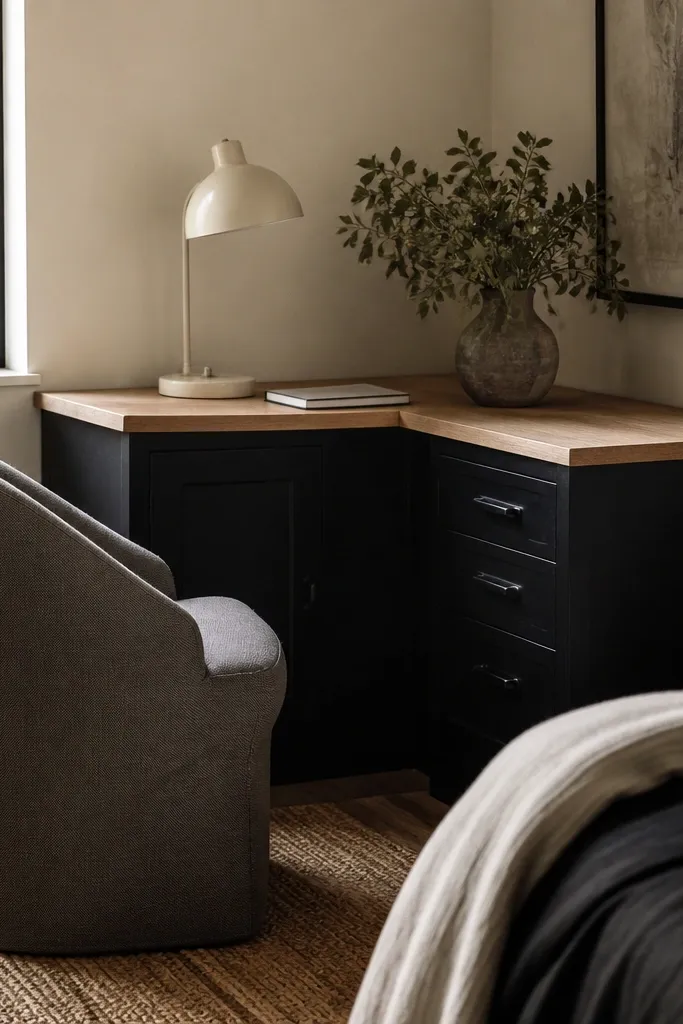
A toasted butcher block desktop turns a reading nook into something warmer without adding clutter. The black base keeps the desk from feeling too light or farmhouse-y. This pairing works because the room has softer textures — jute rug and fabric chair — so the wood grain has a place to “rest.”
Go for a desktop depth of 24 to 30 inches depending on your chair. Use a butcher block tone that’s closer to caramel than honey — it reads richer next to black. Keep the styling to three items max: lamp, notebook, and a small catch-all.
Add a desk mat in cream or tan under the notebook so the wood doesn’t get scratched and looks intentional daily.
Avoid using a very pale butcher block; it looks washed out next to black cabinetry and makes the whole desk feel unfinished.
4. Black cabinets + butcher block nightstand top with a waterfall edge look
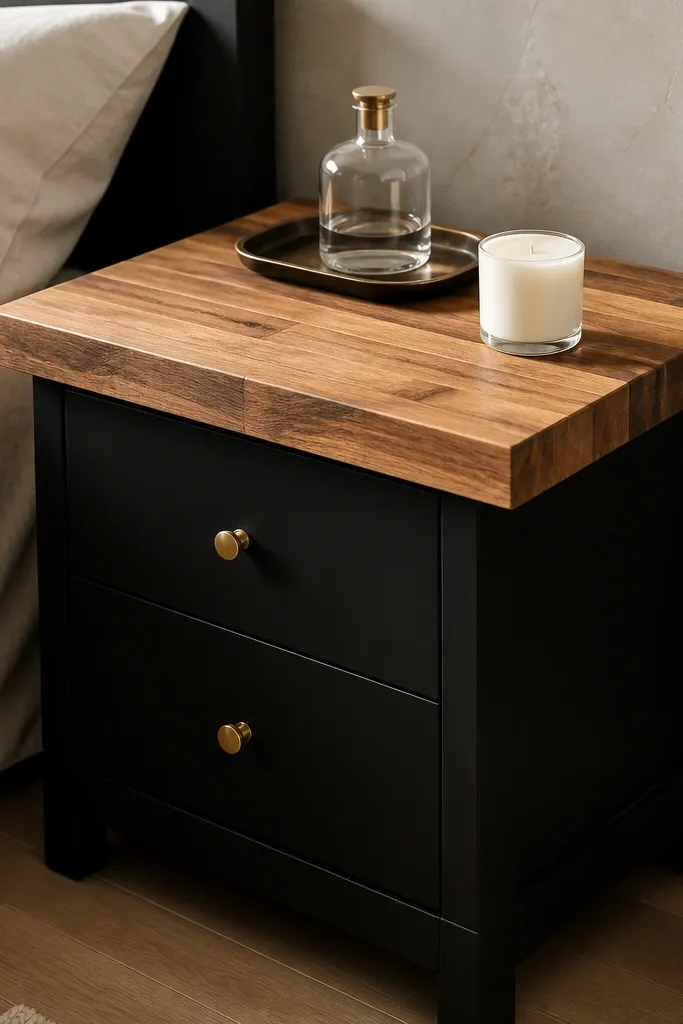
A waterfall edge makes the butcher block feel custom and heavier, which matters in bedrooms where nightstands sit in your line of sight. The overhang gives the wood a sculpted look, even with simple décor. The black cabinet keeps the whole unit grounded, so the wood feels like the centerpiece instead of the whole room.
Plan the overhang to be about 1 inch past the cabinet face so it reads balanced. If you’re building from scratch, use a thickness around 1.75 to 2 inches so the edge doesn’t look flimsy. Seal the top and edges with the same finish system for consistent color.
Use a soft-touch nightstand lamp shade (cream fabric) so the wood’s warmth and the shade’s texture match.
Avoid leaving the underside unfinished; the raw end grain shows and cheapens the waterfall effect.
5. Matte black dresser with butcher block top and brass bar pulls
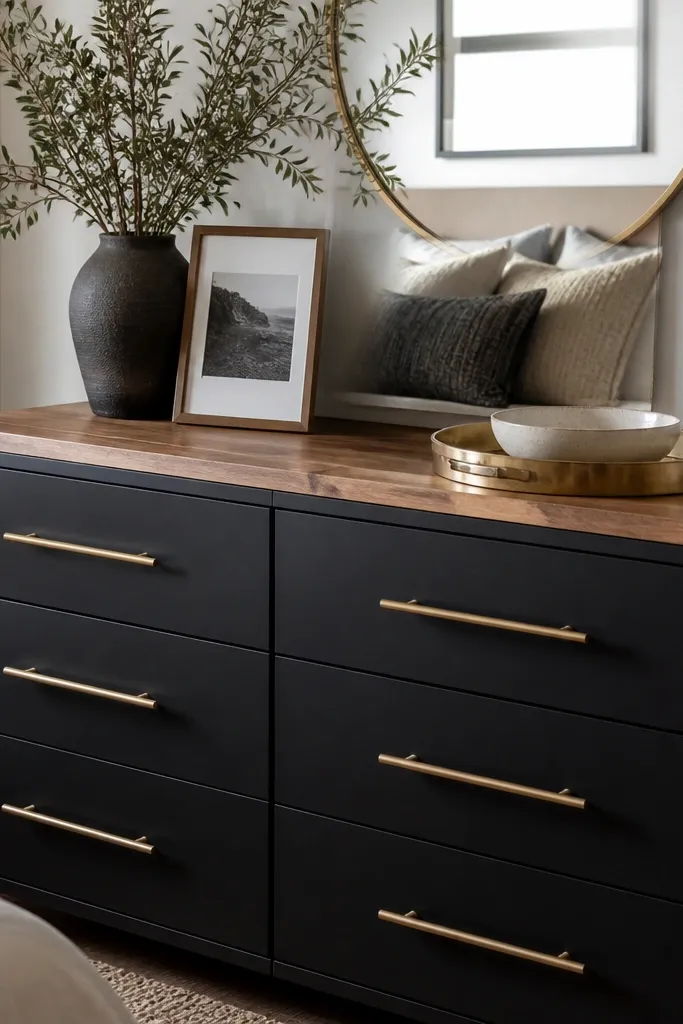
Brass is the bridge. It warms the black so the butcher block doesn’t feel like a separate material. Satin butcher block keeps the grain visible without turning into a mirror. This look works because the brass hardware repeats a warm metal note that your eyes expect near wood.
Match the bar pull length to the drawer height so the hardware scale looks deliberate. Use a butcher block tone that’s medium-warm, not too red, because red can fight with brass. Keep the top clear enough for morning light to hit the grain.
Wipe the top with a dry microfiber after you apply any conditioner or topcoat so it stays even and doesn’t streak.
Avoid silver hardware with warm butcher block; the mismatch shows up immediately in bedroom lighting.
6. Black cabinets + butcher block countertop with a black-framed mirror and cream rug
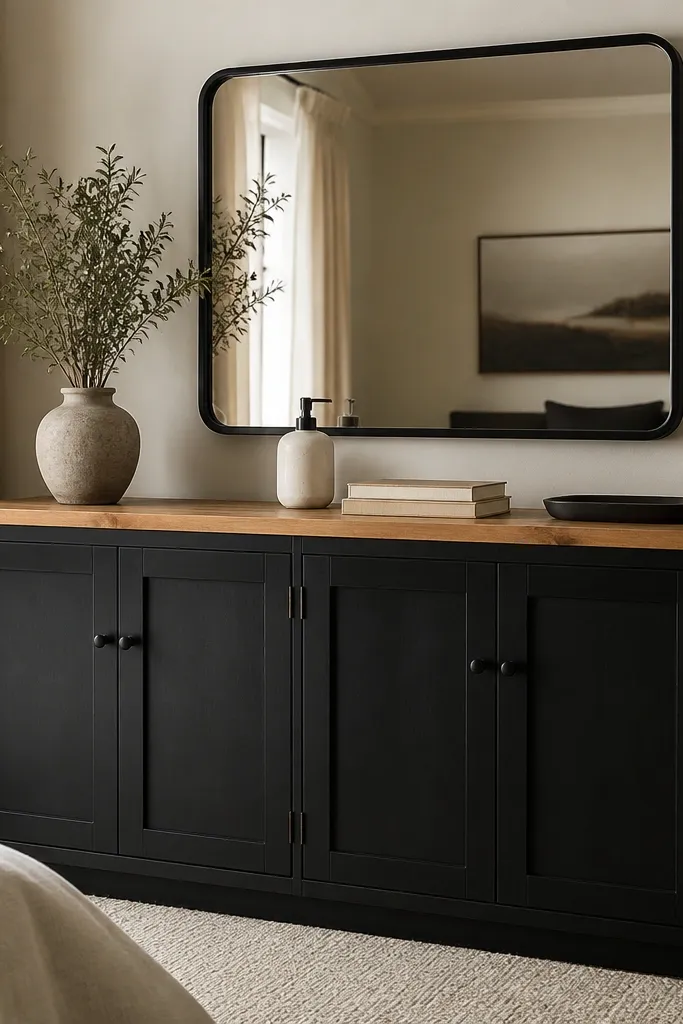
This is a clean, photo-friendly setup because the mirror adds vertical lines and the rug adds softness under the heavy cabinet. The butcher block warms the black without adding clutter. I like cream accessories because they don’t compete with the grain — they let the wood stay the star.
Hang the mirror so its bottom edge sits about 6 to 10 inches above the countertop. Use a tray with straight sides to keep the styling crisp. Choose a butcher block finish with satin sheen and avoid thick, glossy film.
Pick one accent color from your rug (sand or oatmeal) and repeat it in a small object on the counter.
Avoid colorful knickknacks on the butcher block; the surface already has movement from the grain.
7. Dark walnut vibe: black cabinets with deeper stained butcher block
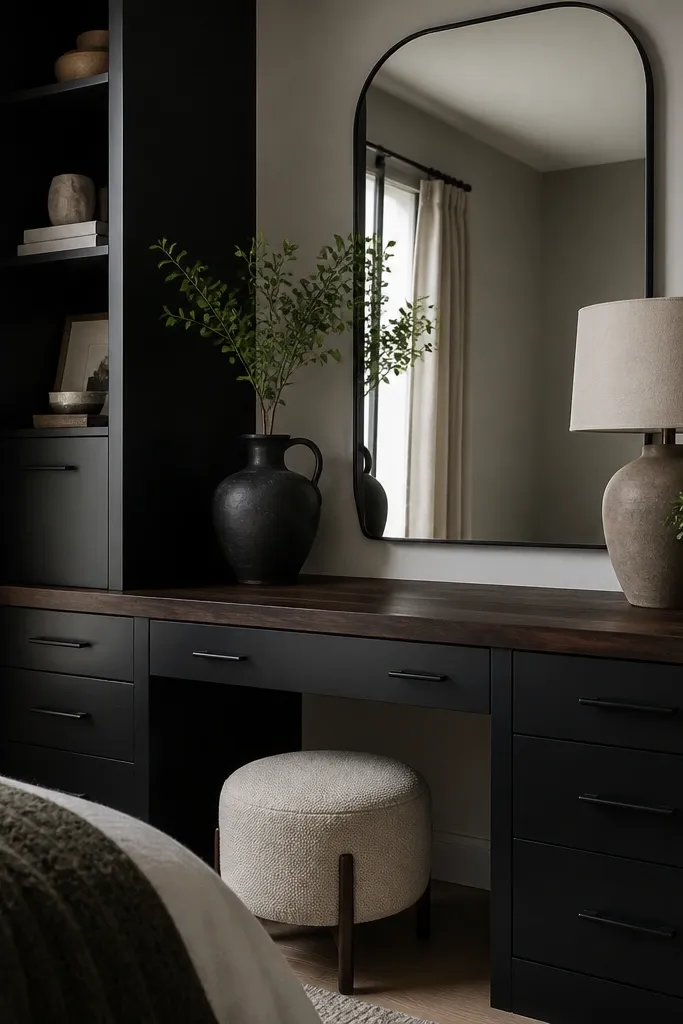
If your bedroom has warm beige or tan walls, a deeper stain makes the wood feel expensive and cohesive. The key is to keep the stain consistent across the slab so you don’t get blotchy sections. A darker butcher block also hides small day-to-day water marks better than a light board.
Use a darker stain like walnut or espresso-leaning brown, then finish with satin clear coat. Keep your accessories neutral — beige, cream, and one dark accent — so the countertop doesn’t fight the room. If you have a lot of black already, add one light reflective element like a white lamp shade.
Test the stain on a scrap of the same butcher block before you commit; butcher block absorbs stain unevenly by species.
Avoid going too dark with glossy finish; it turns into a dark puddle look instead of a warm wood surface.
8. Light linen + honey butcher block: gentle contrast with black cabinets
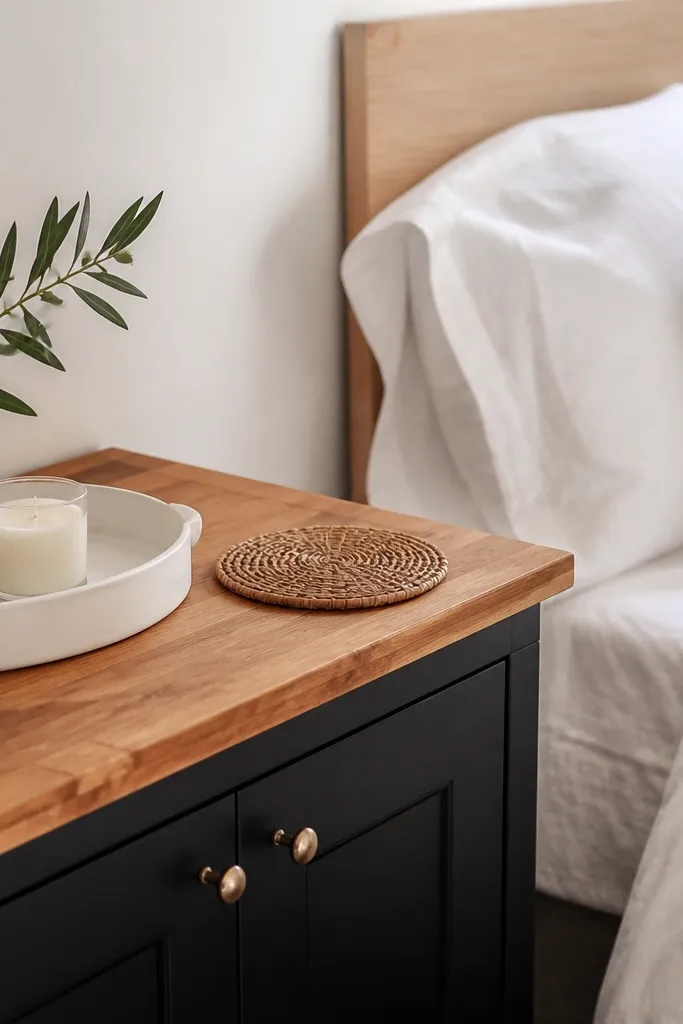
Honey butcher block gives you warmth without the heavy brown feeling. Pair it with linen and off-white pieces so the contrast stays soft. This combo works best when your walls are warm white and your bedding is light, because the wood can glow without looking yellow.
Choose a honey tone that still shows grain and doesn’t turn chalky. Keep the countertop finish satin so the honey color looks like stained wood, not plastic. Use woven textures like coasters or a small basket to echo natural fibers in the bedding.
Use a light-colored tray to prevent the grain from clashing with your accessories.
Avoid mixing honey butcher block with gray-washed furniture; the undertones will fight.
9. Black cabinet + butcher block countertop with subway tile backsplash strip
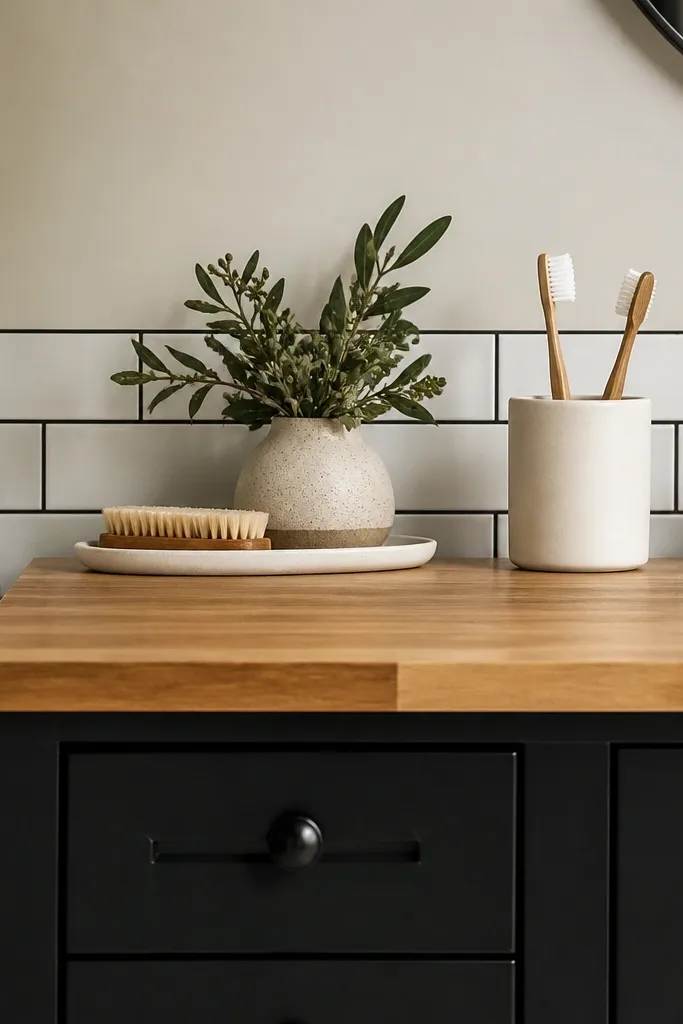
A tile strip makes the wood feel intentional and finished, especially in a bathroom-adjacent bedroom setup or a dressing area. The white tile brings crispness that keeps the butcher block from feeling too “kitchen-like.” Black grout pulls the look back to the cabinet color so everything stays tied together.
Run the tile strip to match the cabinet width and keep it 12 to 18 inches tall above the countertop. Use a simple grout color that reads true black, not charcoal. Seal the butcher block so water from a sink splash doesn’t dull the sheen.
Keep the countertop accessories minimal and matte (ceramic, matte glass) so the tile and wood both stay the focus.
Avoid using bright, glossy tile with a satin butcher block; the mismatch in sheen looks messy.
10. Butcher block as a headboard shelf: black cabinets meet wood above the bed
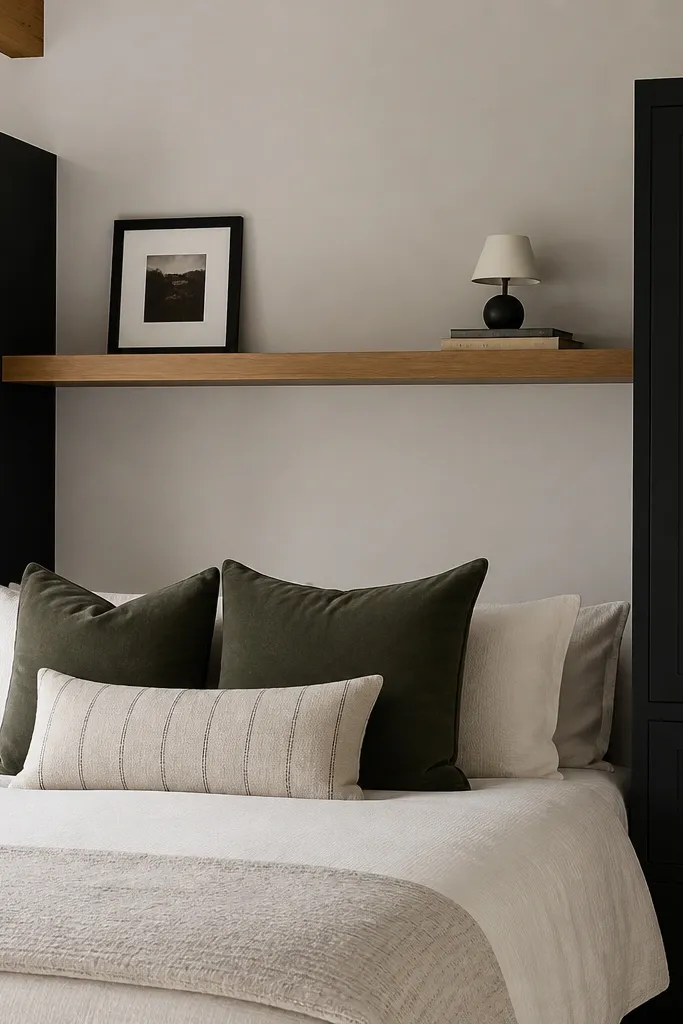
This is the most satisfying version when you want the butcher block to feel built-in, not like a countertop you dragged in. The wood above the bed adds warmth right at eye level, which makes the room feel calmer. The black built-ins frame the wood and keep symmetry, so the shelf doesn’t look accidental.
Use a shelf thickness around 1.5 to 2 inches so it doesn’t look like a decorative board. Keep the shelf depth around 10 to 12 inches for a bedroom-safe footprint. Finish with satin and seal the top thoroughly since it will catch dust and cleaning water.
Place a small lamp on the shelf and aim the light toward the wall; the wood grain looks better when it’s side-lit.
Avoid over-styling the shelf; three items max keeps the grain from competing with your bed linens.
11. Black cabinet + butcher block with a built-in charging station tray
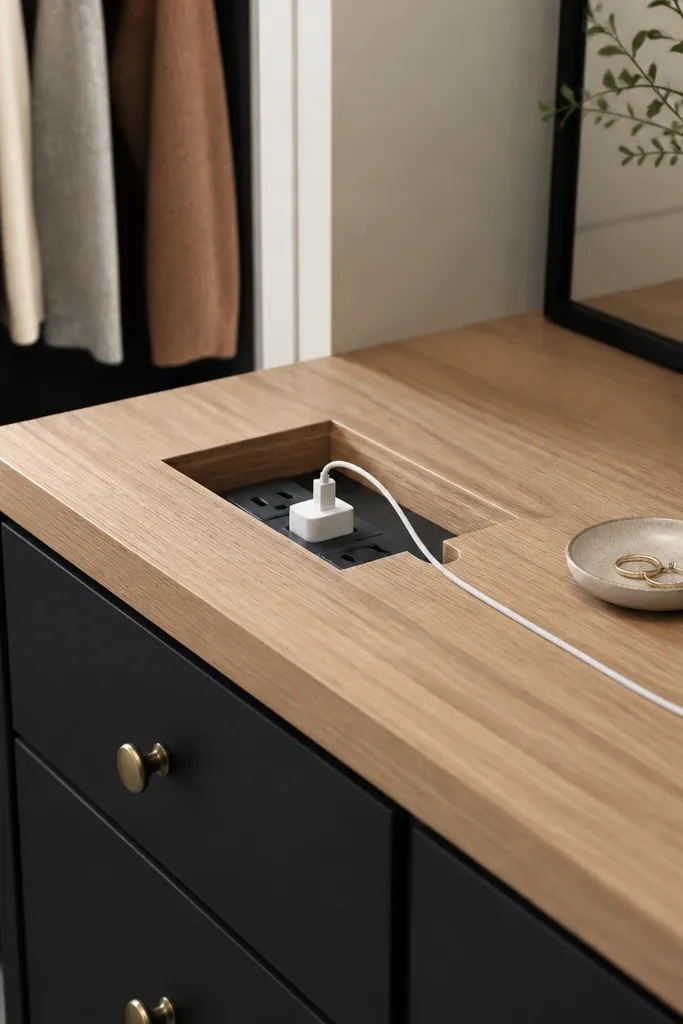
This is one of the few ways I like butcher block in a bedroom that gets daily mess. A recessed tray keeps cords from laying across the grain, and it makes the countertop look designed. The black cabinet hides the clutter below, so the wood stays clean and visually calm. It works well if you use your dressing area every night.
Install a recessed power module with a cutout sized to the manufacturer’s template. Seal around the cut edges with a compatible wood sealer before you attach the module. Keep the charging tray finish matte so it doesn’t reflect light like a plastic insert.
Use a fabric cable sleeve in black or dark brown so cables disappear against the cabinet and wood.
Avoid leaving raw edges around any cutout; the end grain will drink moisture and dull quickly.
12. Black cabinets with butcher block countertop and a smoked glass apothecary set
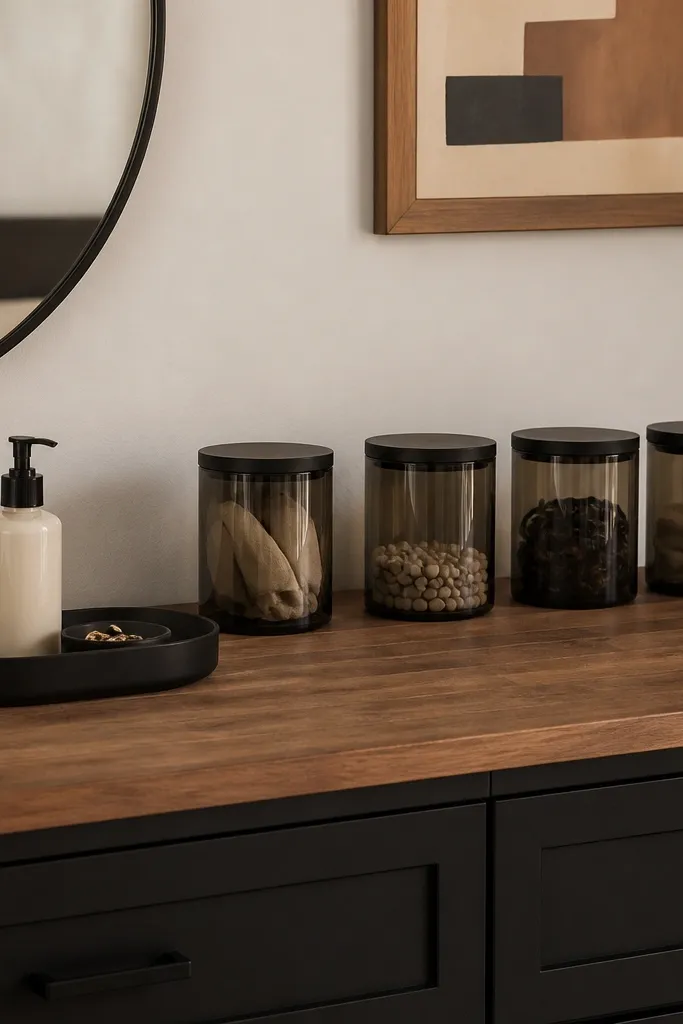
Smoked glass adds depth without adding color chaos. It sits between black and wood visually, so the countertop doesn’t feel like it’s stuck in the middle of two extremes. This look works best when your butcher block is medium warm and your glass lids are matte black. The result is a curated, grown-up vibe.
Pick canisters that are the same height and style so the line looks intentional. Leave 2 to 3 inches between the canisters and the countertop edge so the wood edge still shows. Keep the rest of the décor minimal to let the glass catch light softly.
Wipe the smoked glass with a microfiber and a tiny bit of glass cleaner so the reflections look clean, not streaky.
Avoid mixing canisters in different finishes (chrome, gold, and black) on the same butcher block top.