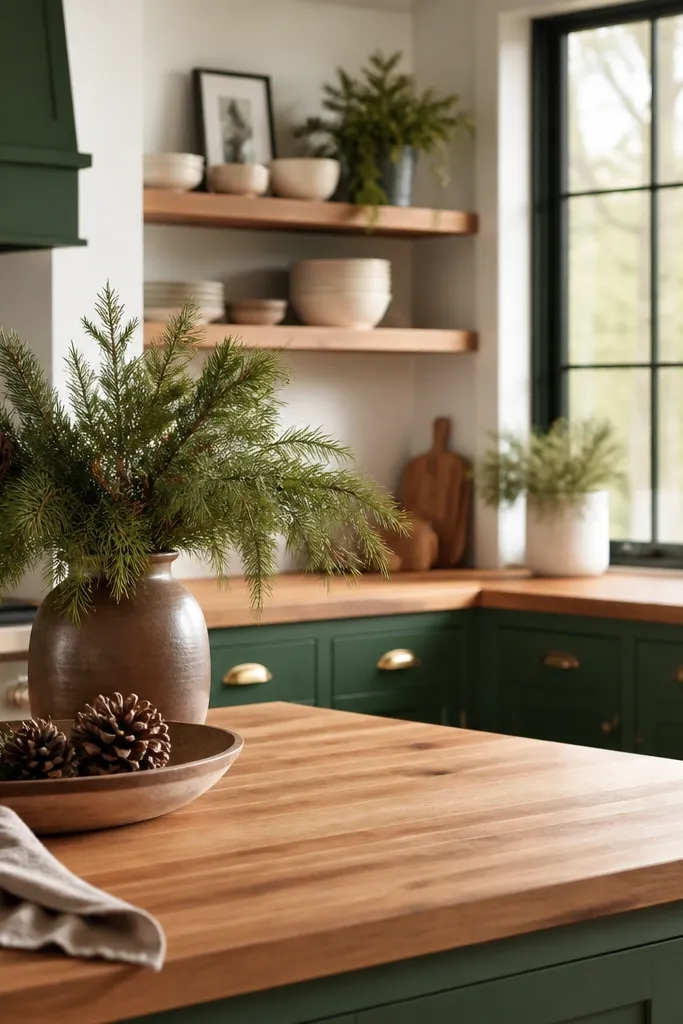
1. Honey butcher block with sage + cream breakfast station
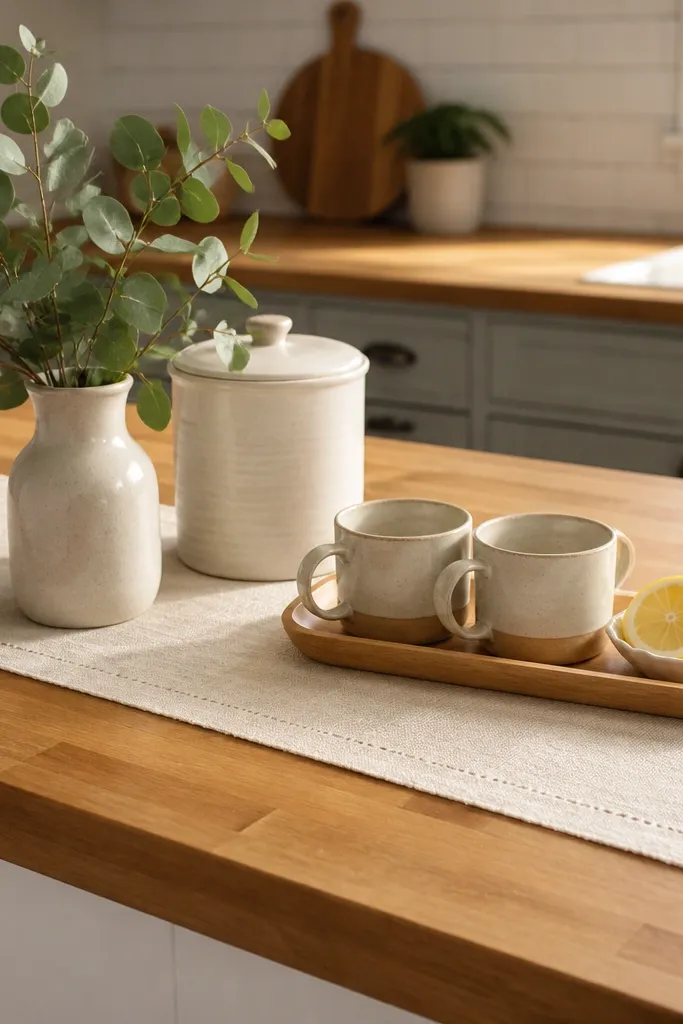
Honey-finished butcher block reads bright and friendly, so sage looks grounded instead of harsh. Cream dishware keeps the wood from turning too yellow. The eucalyptus stems add vertical lines that make the counter feel taller, even in a narrow kitchen. This combo stays pretty from late winter through spring.
Use a runner that’s off-white or oatmeal, not bright white. Keep greenery in pale sage or grey-green. Choose ceramic in matte cream or light speckle to avoid shine that can clash with the wood grain.
Mist the eucalyptus lightly with water before styling so the leaves look fresh for the whole day, then remove it at night if your kitchen gets humid.
Avoid bright neon greens — they make honey block look orange.
2. Walnut-brown butcher block with black + white winter prep zones
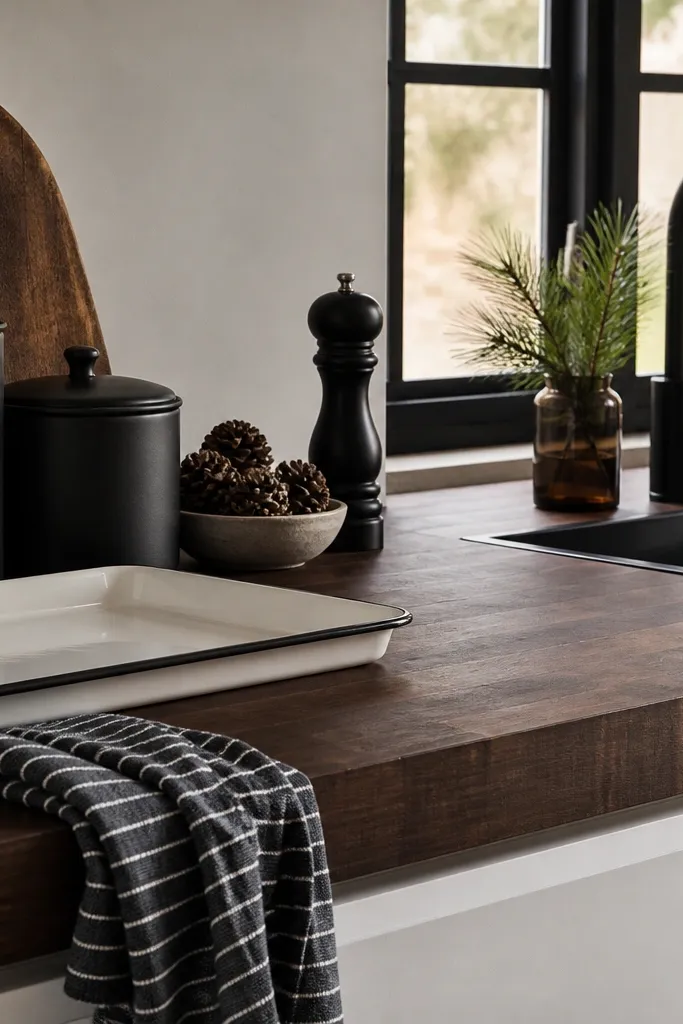
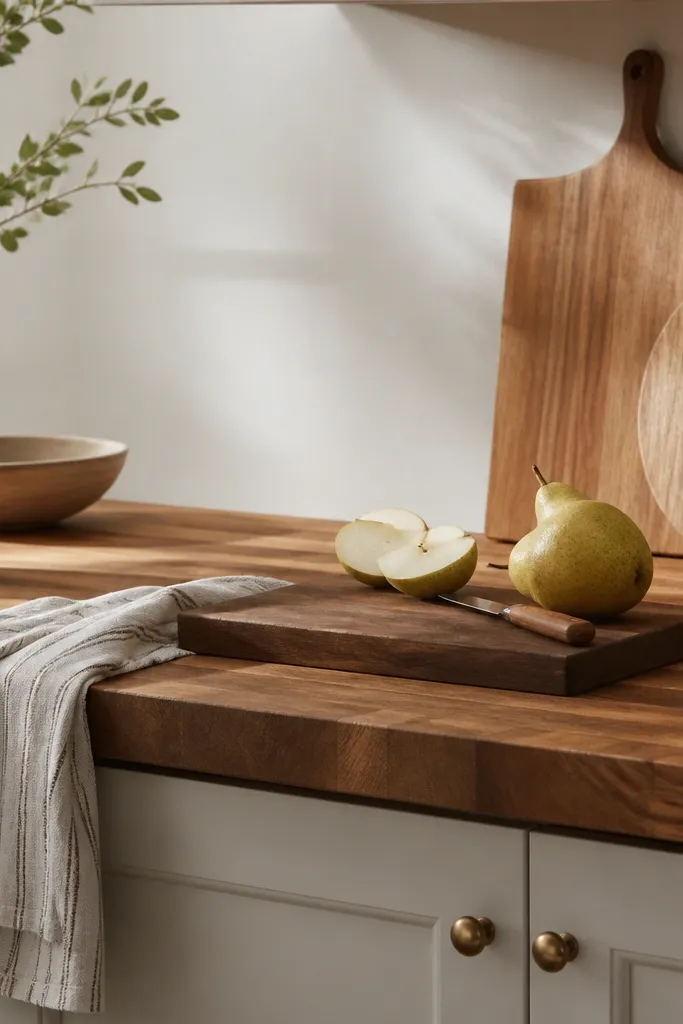
Walnut-brown butcher block already has depth, so matte black adds shadow without fighting the wood. White enamel lightens the surface and makes the countertop look cleaner. The striped towel adds pattern without color overload. This look feels crisp in winter and still works when you’re cooking daily.
Pick two black items max (like canisters and a towel) and keep the rest white or natural. Use a white enamel tray with a slightly raised lip so items don’t slide. Place the pinecones in a shallow bowl so the scale doesn’t look heavy.
Swap your fruit bowl in winter for a white bowl of clementines or pears — the orange tones warm the wood without going loud.
Avoid all-black decor that covers the whole counter, or the wood will disappear.
3. Greyed aged butcher block with navy linen + brass accents
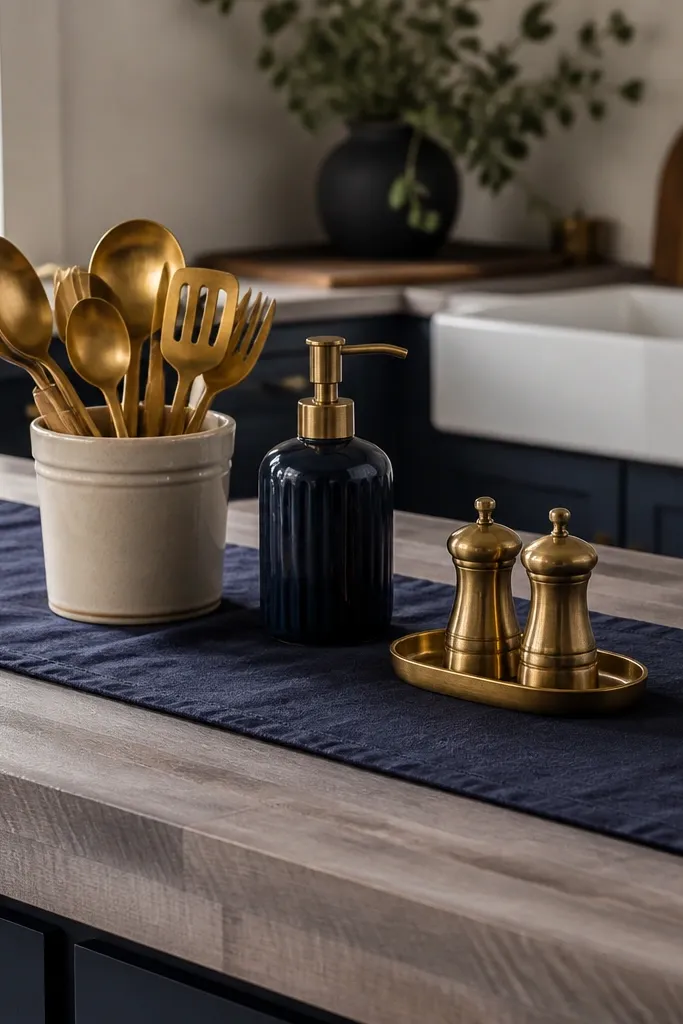
Greyed aged block looks calmer and less yellow, so navy linen gives it structure. Brass adds warmth but stays controlled because the palette is mostly cool. This styling reads “intentional” without needing a lot of objects. It’s a great bridge from fall to early spring.
Choose linen with visible weave, not smooth polyester. Keep brass items brushed, not mirror-polished, so they don’t reflect harsh highlights off the wood. Limit the brass to one tray and one utensil container.
Use a navy towel with a natural edge stitch and fold it into a narrow roll so it looks styled, not tossed.
Avoid pairing grey block with bright turquoise — it makes everything look off.
4. Island butcher block with layered trays for a fall-to-winter transition
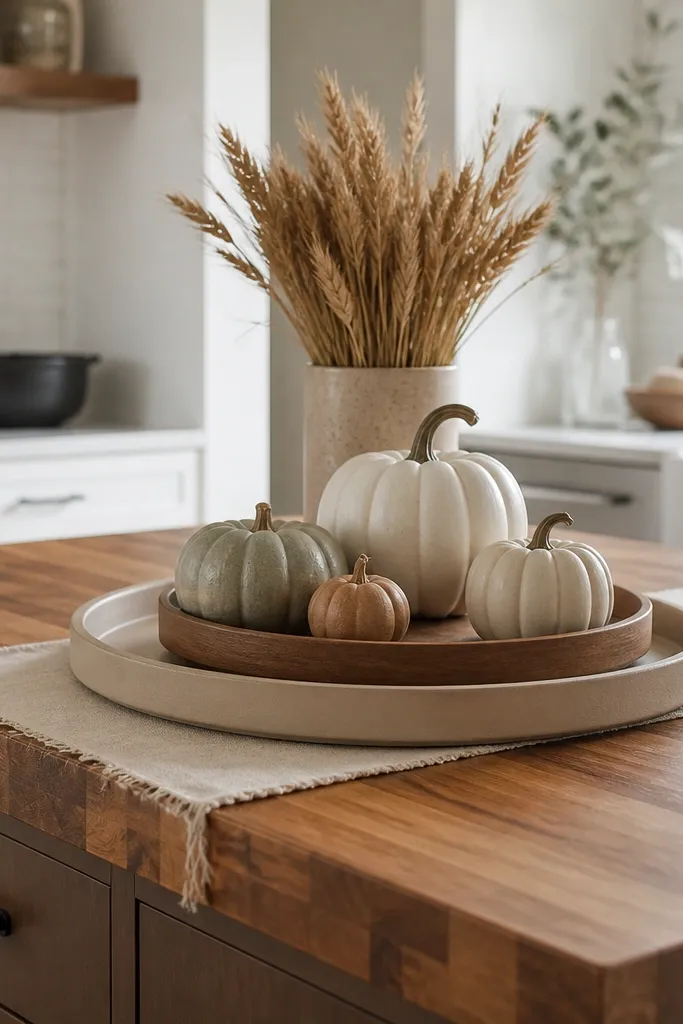
Trays let you “stage” the counter without covering the whole surface. Layering a neutral tray over a second tray creates height and makes the wood look richer. Muted ceramic pumpkins keep the seasonality subtle, so the look doesn’t scream Halloween. Dried wheat adds texture that matches butcher block grain.
Use one large tray in linen-wrapped wood or matte stone. Add a smaller tray in the same temperature as your block (warm with honey, cooler with greyed). Keep the seasonal items to 3-5 objects so the counter still reads clean.
Swap the seasonal pieces, not the trays — trays stay the same and you change the mood by moving only the top layer.
Avoid stacking too many small objects; it makes the wood look cluttered.
5. Spring herbs on butcher block with white speckle + clear glass
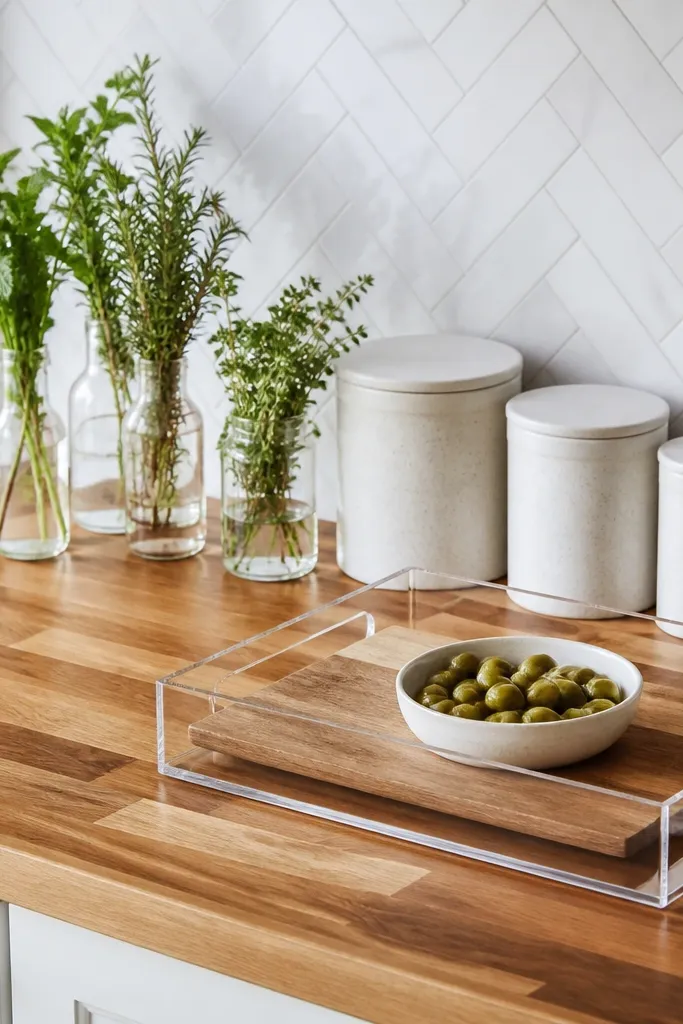
Clear glass makes the counter feel airy and keeps the focus on the wood grain. White speckle adds warmth without turning into cream-only monotone. Fresh herbs bring a green note that looks good against butcher block all the way through spring. This setup also makes your cooking station feel like a workspace, not a display.
Pick herbs with different shapes like flat-leaf parsley and rosemary sprigs for visual variety. Use matching clear bottles in two sizes, not a random mix. Keep containers low so the counter doesn’t feel crowded.
Use a damp paper towel inside the bottle necks to keep herbs upright for longer between refills.
Avoid foggy, cloudy glass if your kitchen light is already warm — it makes the whole counter look dull.
6. Summer citrus with a narrow runner and a single color bowl
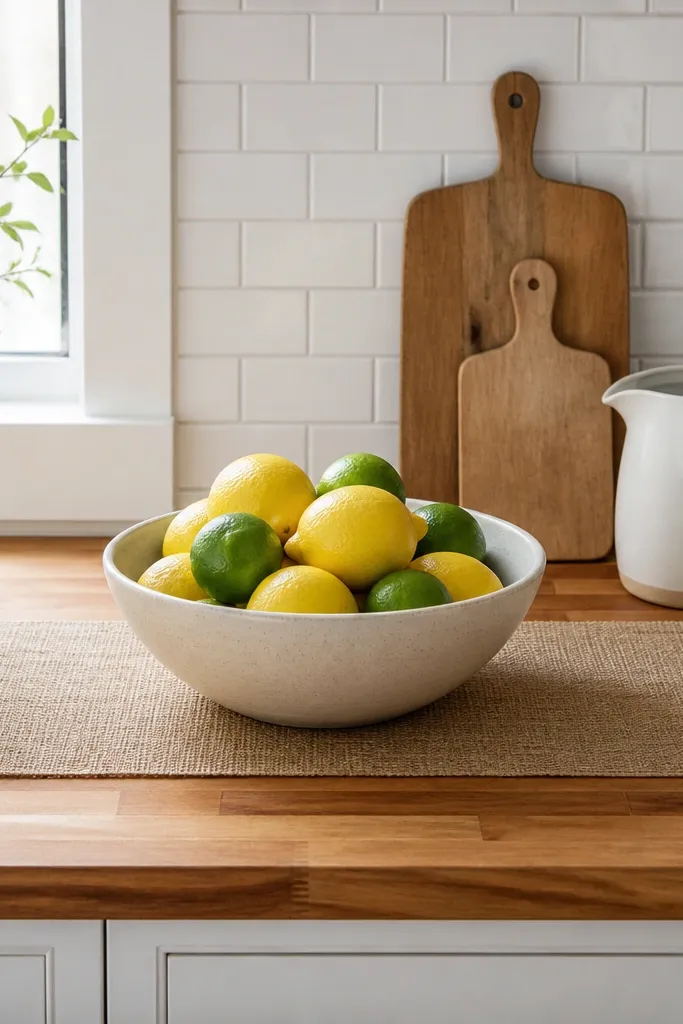
Summer decor works best when you pick one “seasonal color” and let everything else stay neutral. Citrus in one bowl gives you a bright pop that doesn’t fight the wood. The narrow runner defines the styling area while leaving most of the countertop visible. It keeps the wood from looking stained by too much decor.
Choose a runner that’s woven cotton or linen in tan, natural, or light oat. Pick a bowl glaze that matches your cabinet undertone — warm cabinets pair with creamy glazes, cool cabinets pair with matte whites. Keep cutting boards in natural wood or a light color, not dark stained.
Pro tipWipe the counter after you refill citrus — fruit juice residue makes butcher block look darker fast.
Watch outAvoid mixing oranges and bright reds together; it turns the whole counter into a color dump.
7. Monochrome kitchen with butcher block and textured black pottery
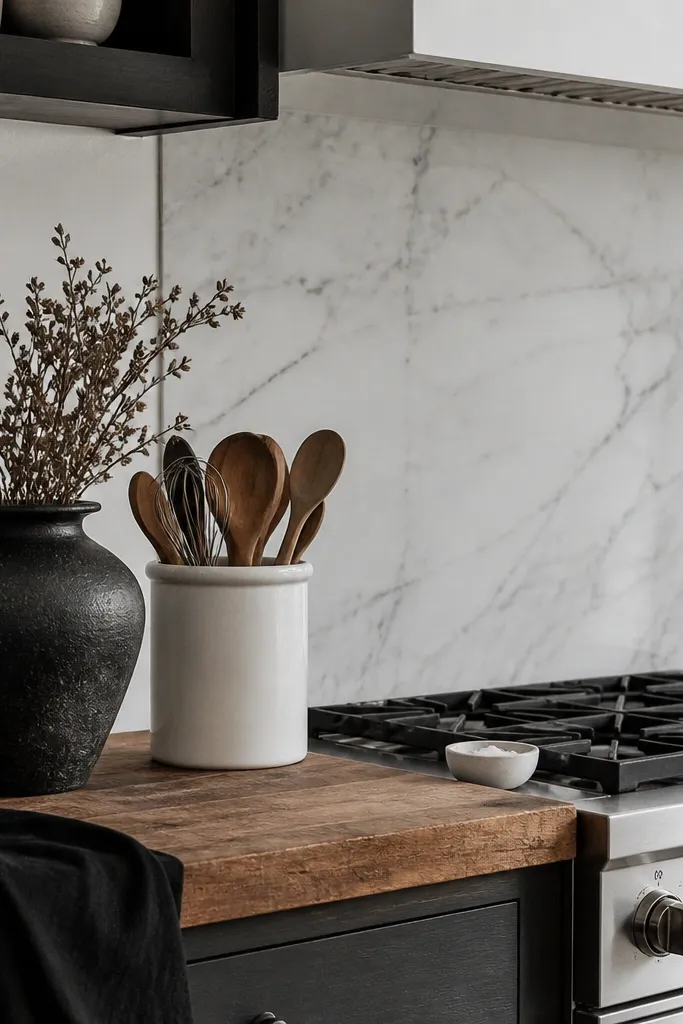
When your kitchen is already monochrome, butcher block needs texture, not more color. Textured black pottery catches light differently than smooth black, and that makes the countertop feel dimensional. Keeping items mostly black and white keeps the wood tone consistent across seasons. This look also hides everyday mess better because the palette is forgiving.
Use one rough-texture piece like a speckled or matte black vase. Add one white crock and one white tray. Keep the towel pattern subtle, like stripes or tiny checks in black and white.
Pick one “signature” item you like and keep it out year-round — mine is a textured black vase placed near the sink.
Avoid shiny lacquered black decor; it looks plasticky next to wood grain.
8. Coastal farmhouse with butcher block and driftwood-toned accessories
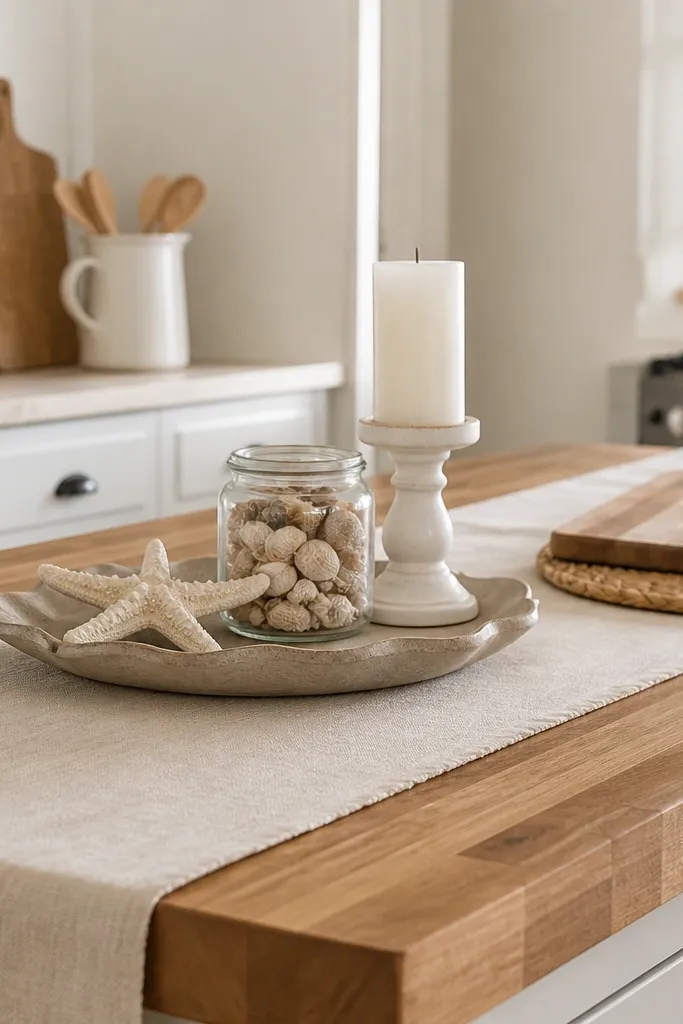
Coastal styling looks best when it stays sandy and matte. Butcher block already has the organic feel, so you don’t need bright blues everywhere. Driftwood-toned ceramics and sand-colored shells match the wood grain and keep the look soft. It reads summer without going beach-party loud.
Choose beads or shells in pale sand, not bright white. Use matte candlesticks or simple glass holders. Keep the runner in beige or oatmeal so it doesn’t compete with the counter.
Pro tipSwap shells seasonally for dried hydrangea or wheat — the palette stays coastal but the season changes.
Watch outAvoid glossy ocean-blue decor; it can make butcher block look yellow.
9. Thanksgiving prep counter with a maple-toned board and linen runner
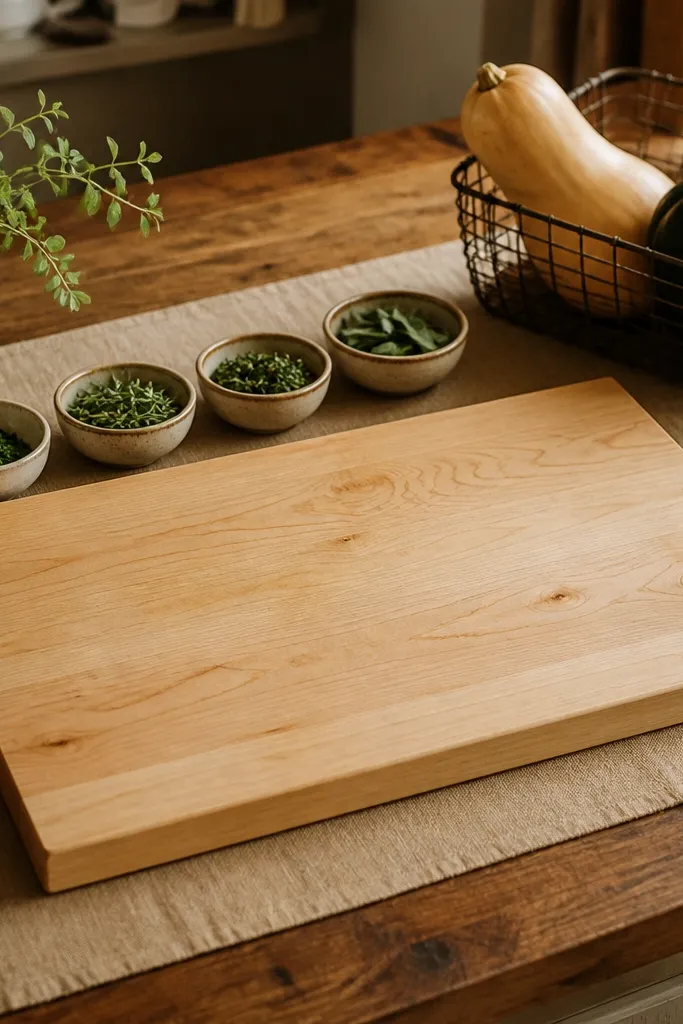
A maple-toned board on top of butcher block sounds risky, but it works when you keep the tones close. It brightens the surface and gives you a clear “prep zone” for herbs and spices. Linen in warm tan ties the board to the countertop without adding new colors. It’s practical because you can actually prep on the board.
Use a board that’s lighter than the counter by about one shade, not white. Make the runner long enough to cover at least the front half of the island or main counter. Keep bowls small and grouped so they read intentional.
Pro tipIf you want the look to last all winter, choose squash in muted cream or deep green, not bright orange.
Watch outAvoid placing a board that’s too dark; it makes your butcher block look patchy.
10. Christmas minimal with butcher block and a single evergreen branch
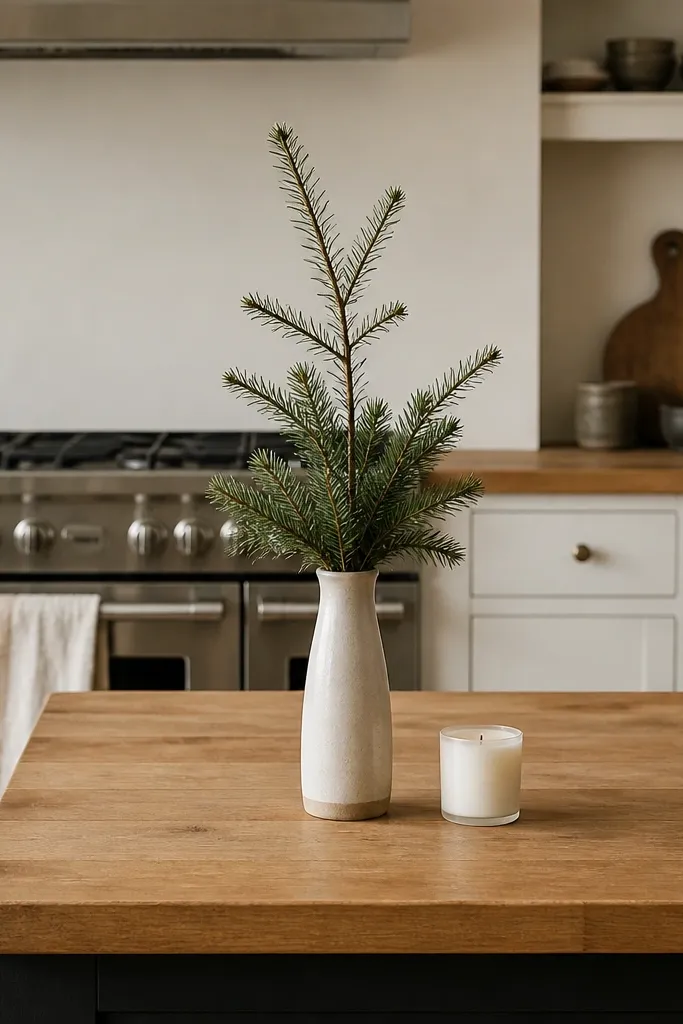
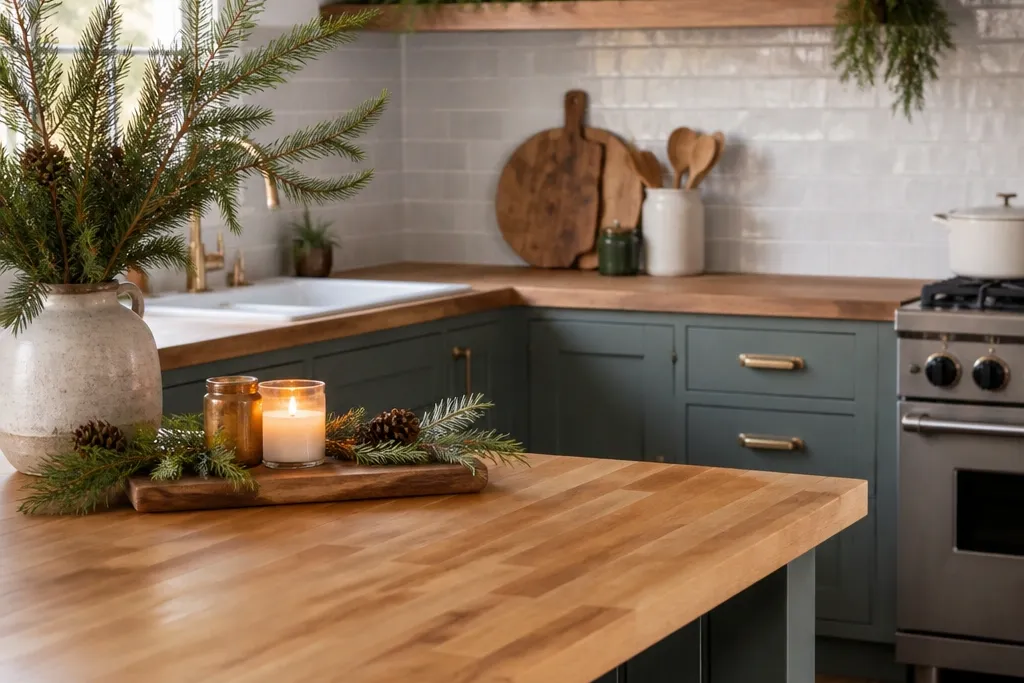
Minimal Christmas decor looks best on butcher block because the wood already has warmth. One evergreen branch gives the season a clear signal without turning the counter into a holiday table. A plain white candle keeps the palette calm and makes the wood look clean. This setup also works in small kitchens where big decor feels cramped.
Use a slim vase that doesn’t crowd the counter. Keep the evergreen in deep green with a couple of pine cones if you like, but keep it to one cluster. Choose a cotton towel in white or cream, not patterned.
Pro tipWrap the stem end with damp paper towel before placing in the vase to keep it looking fresh longer.
Watch outAvoid stacking multiple mini decorations around the candle; it looks busy fast.
11. New Year's clean slate with white stoneware and a black tray
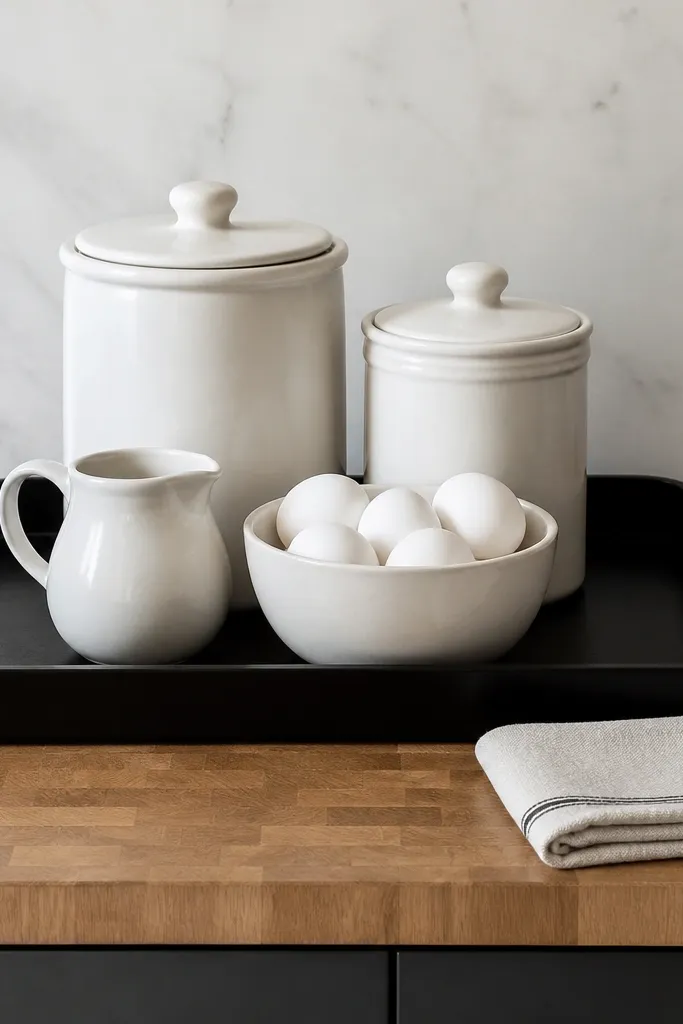
After the holiday rush, this look makes the counter feel reset. A black tray creates a defined boundary, and white stoneware keeps the wood from looking too warm. The bowl of eggs is subtle seasonal styling that still reads “new beginnings.” It also hides fingerprints because the stoneware is matte.
Pick stoneware in true white or soft ivory. Keep the tray size big enough to hold everything without overflowing the edges. Use one folded towel rather than hanging multiple towels.
Clean the counter with a damp microfiber cloth right before styling so the wood sheen is even.
Avoid glossy stoneware — it reflects overhead lights and can make wood look uneven.
12. Autumn baking counter with cinnamon tones and olive accents
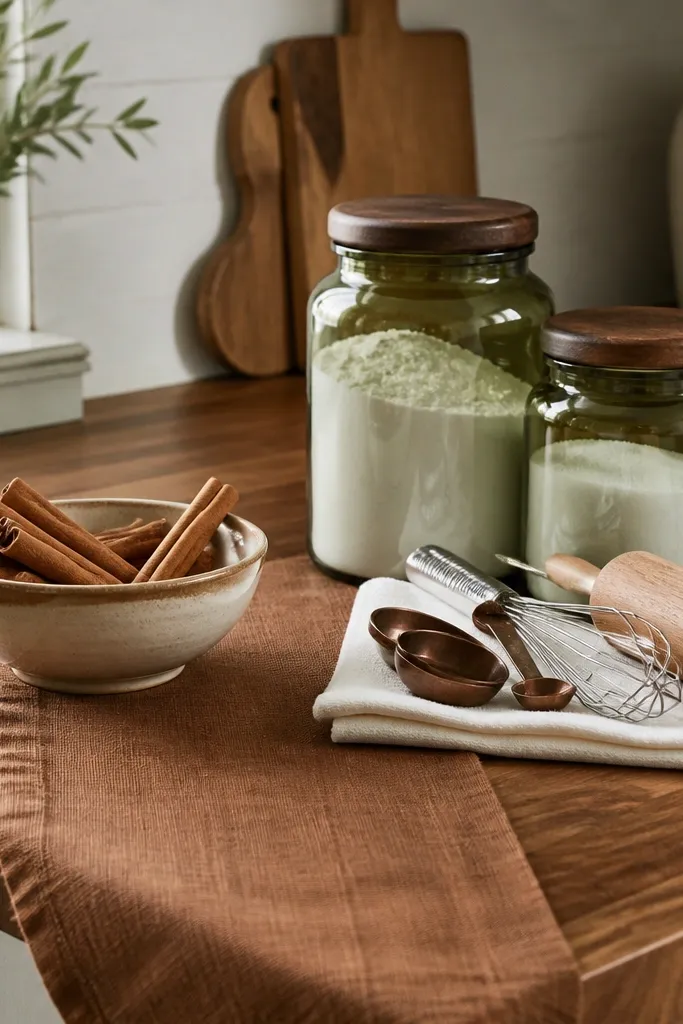
Cinnamon and olive look natural next to butcher block because both sit in the warm-green family. The cinnamon-brown runner makes the counter feel cozy without going orange overload. Olive jars bring a muted seasonal color that doesn’t fight the wood grain. This is a great look for fall baking weeks.
Use jars with the same finish (matte glass or thick clear) so the set looks intentional. Keep flour and sugar labels simple or use plain kraft paper tags. Place baking tools in a small pile so you can grab them quickly.
If your wood is darker, choose a lighter runner so the counter doesn’t look like one big brown block.
Avoid bright red decor; it looks too holiday and too loud on warm wood.