1. Back-to-Back White Oak Bookcases with a 12-Inch Center Gap
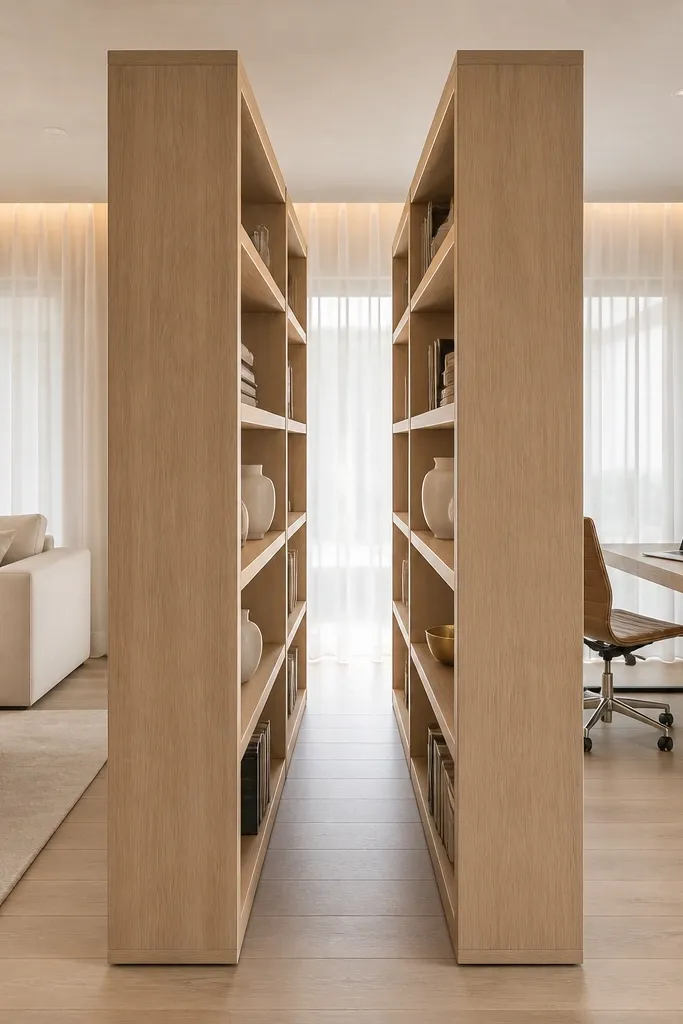
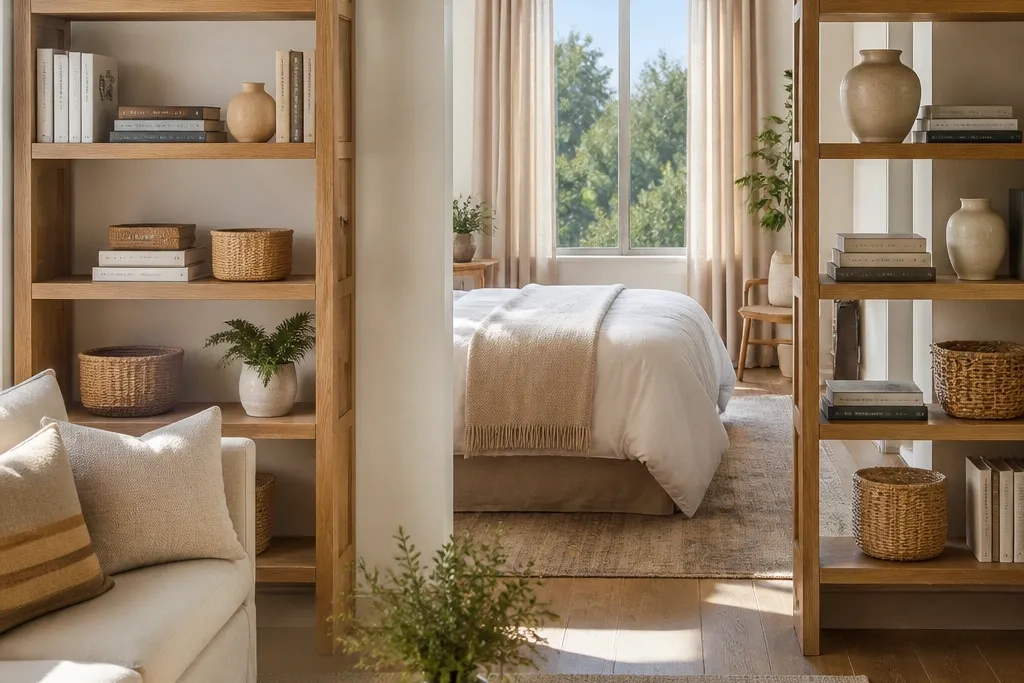
This is the divider look that makes a small room feel designed, not boxed in. Back-to-back bookcases create real separation, and the 12-inch center gap keeps the space airy so you still get light and sightlines. Choose white oak shelves with a warm matte finish so the wood doesn’t glare under overhead lighting. Style the left side for books and the right side for decor — the gap becomes a visual “breathing point” that stops the unit from feeling heavy. It’s especially good for studios where you need a living zone and a sleep or work zone without a full wall.
Start by measuring your divider run and choose a total width that leaves a clear walkway — leave at least 28 inches behind the unit for comfortable passes. Buy or build two matching bookcases and confirm the depth is 10-14 inches so the room doesn’t feel squeezed. Then place them with a 12-inch gap centered to the room’s focal point (usually the TV wall or the bed). Style after placement: heavy books on the bottom two shelves, baskets in the middle, and a repeating pair of decor items on the top shelf.
Use the same basket color on both sides (linen or natural rattan) so the gap reads intentional instead of accidental.
Don’t fill every shelf — empty space in the middle gap makes the divider look lighter.
2. Tall Black Metal + Wood Shelving with Open Middle for Light
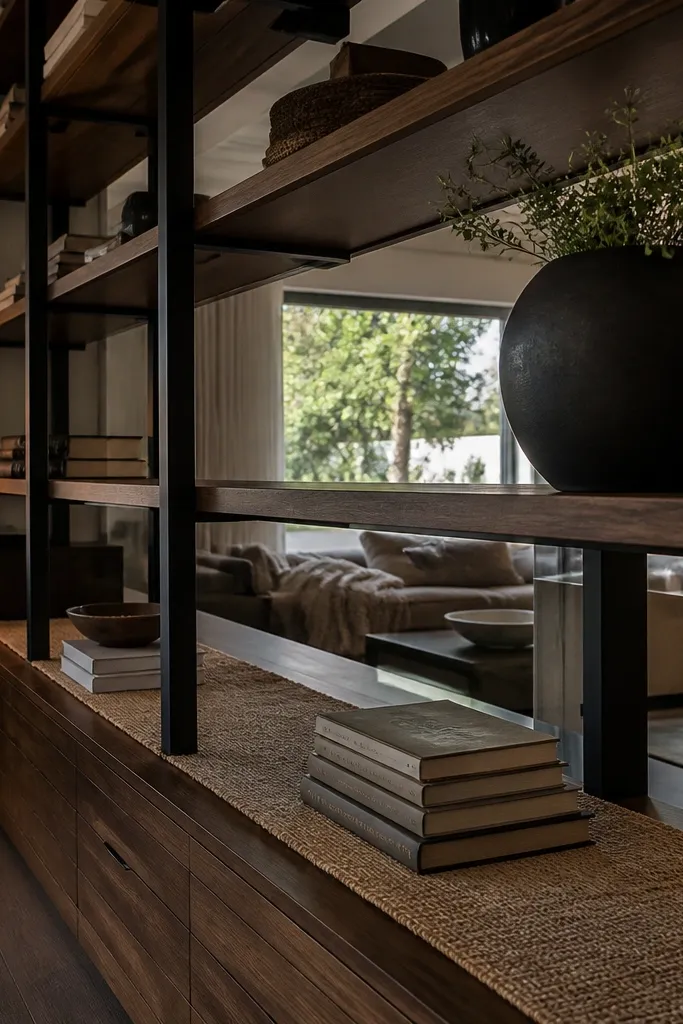
If your room is dark or narrow, this divider style keeps the lighting airy while still carving out zones. Black metal frames look crisp and modern, and the wood shelves add warmth so it doesn’t feel harsh. The open middle section is key: it gives you a visual pass-through so the room doesn’t feel walled off. Use it in entry living combos where you want the divider to separate coats/storage from the rest of the room without blocking windows. Keep the shelf spacing consistent so books and boxes look orderly.
Pick a shelving system with a metal frame and wood shelves, and confirm the depth is around 12 inches. Choose a height between 72 and 84 inches, then decide where the open middle goes — keep it centered. Place it perpendicular to your main pathway, leaving enough clearance for doors and foot traffic. Style with a strict color plan: black spines + neutral covers, or white books + tan storage boxes; repeat the same palette on both sides.
Add a thin floor runner in front of the divider; the line helps the black frame look “architectural.”
Avoid mismatched shelf heights filled with random clutter — the metal grid shows everything.
3. Woven Basket Inserts in a Light-Finish Bookcase Divider
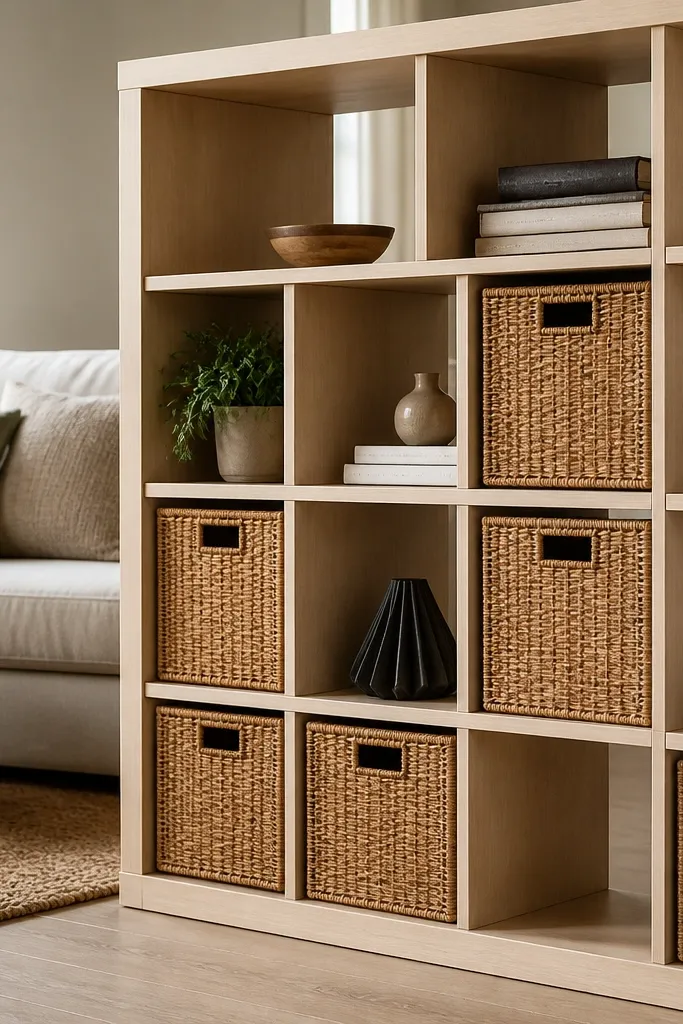
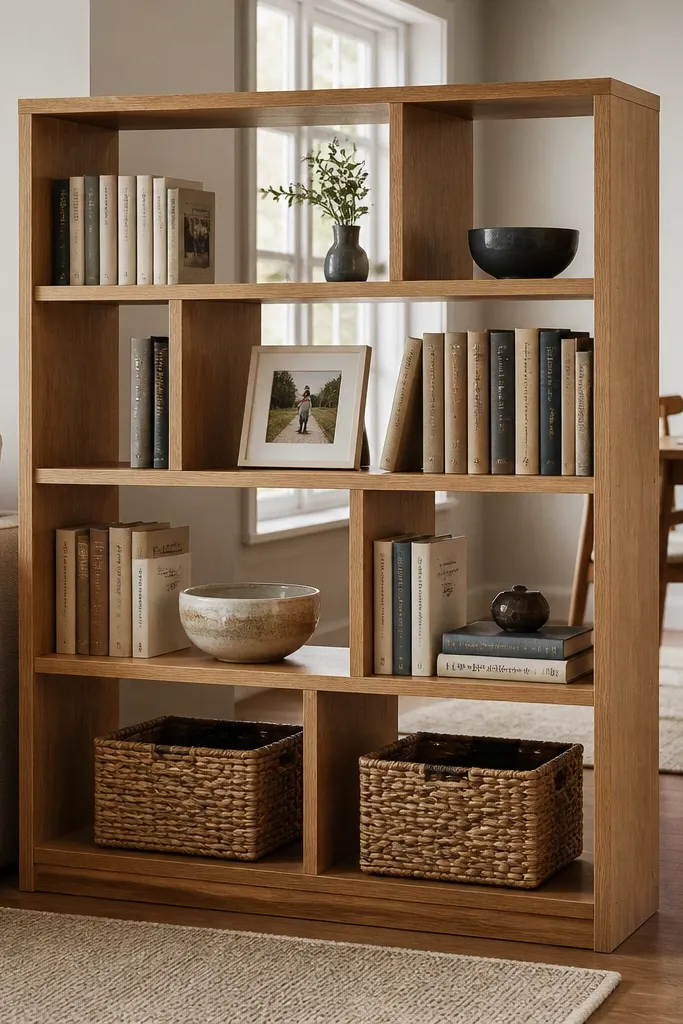
Choose a bookcase with adjustable shelves so baskets fit without gaps. Measure one basket width and height, then use that as your repeat unit across the divider — aim for baskets that fill roughly 80-90% of the shelf opening. Place books only on a few shelves, then let baskets carry the rest. Install the unit and style from the bottom up: heavy items in the lowest baskets, medium storage in the middle, and two or three decor pieces on top.
This divider idea is for when you want storage that looks calm. A light-finish bookcase (white oak, pale birch, or painted cream) with woven basket inserts hides mess while keeping the unit photogenic. Woven textures read warm and layered, so the divider looks like decor even when the shelves hold laundry, kids' supplies, or extra linens. Because the baskets match in size and color, the divider looks cohesive from both angles. Put it in a living room-dining split where you need storage but don’t want visible clutter.
Watch outDon’t mix basket sizes on the same shelf level — the rhythm is what makes it look intentional.
Pro tipPick one weave color family (natural, honey, or charcoal) and stick to it across every shelf.
4. Sliding Door Bookcase Divider for Quiet Privacy
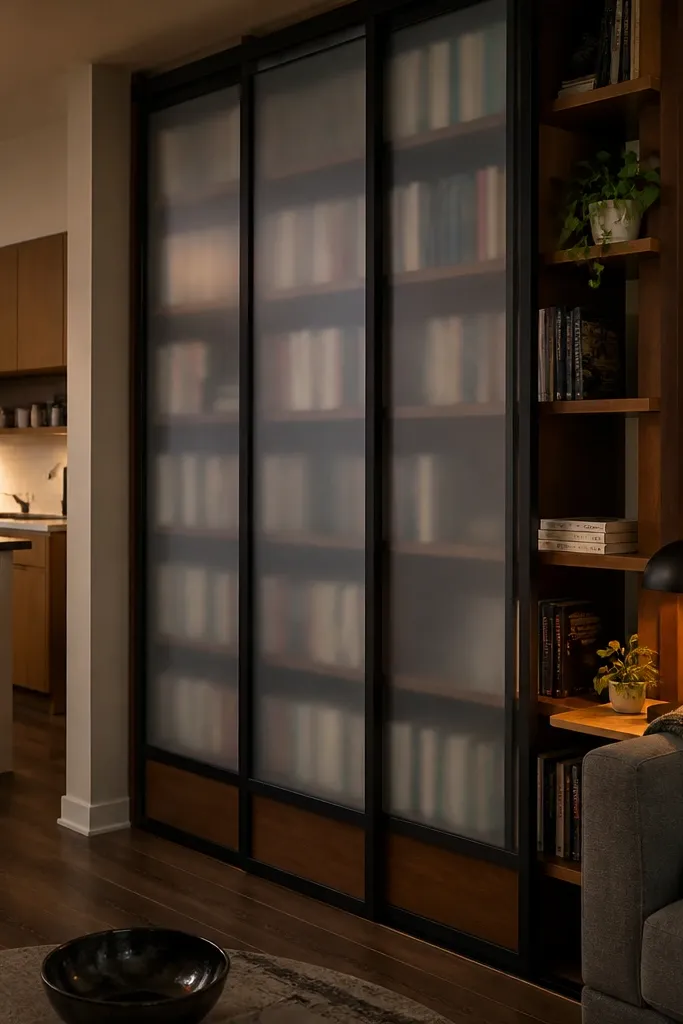
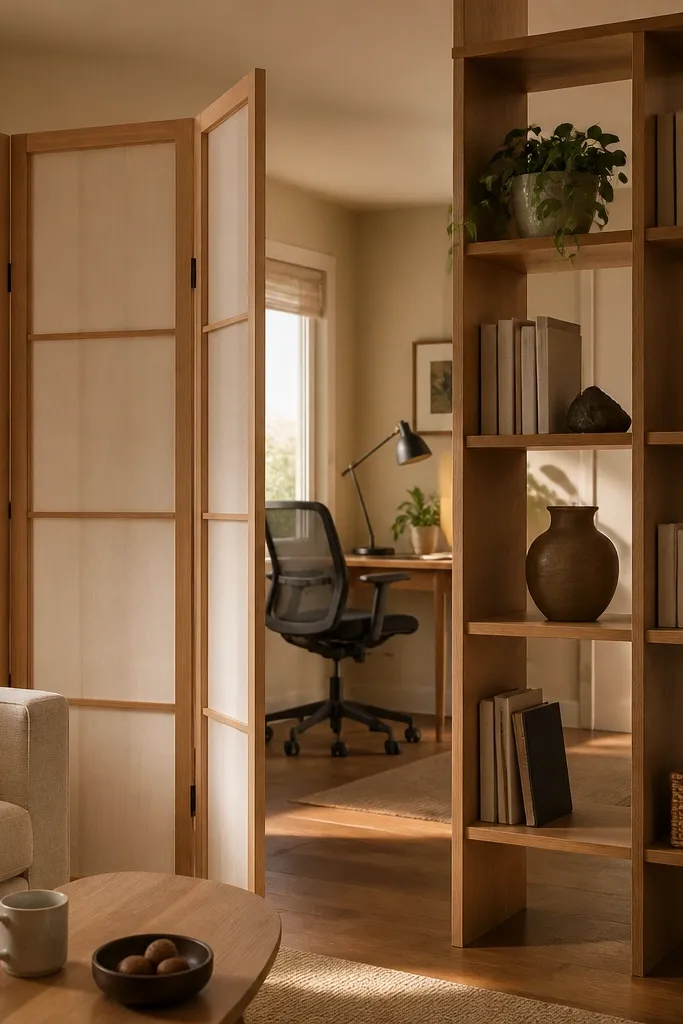
Select a bookcase divider that has real sliding tracks and secure door alignment, not just decorative panels. Measure the clearance needed for the door travel and keep at least 2 inches of breathing room on each side. Place the unit where you want the boundary, then load shelves before final styling so you can see what needs hiding. Style with a few “show” items behind the open sections and keep the rest behind doors using uniform bins.
If you share space and need visual quiet, a sliding door bookcase divider is the smartest aesthetic upgrade. It still gives you storage, but you can hide the busy shelves when you want the room to feel calm. Choose doors with translucent or frosted panels if you want light to pass through, or solid doors if you need a clean “wall” look. This works well in small apartments where the work area sits near the living room. The divider reads sleek because the doors create a flat surface instead of a busy grid.
Watch outDon’t leave one or two shelves totally exposed with random items — it defeats the privacy look.
Pro tipUse matching bin colors behind the doors too; when the doors slide open, it should still look cohesive.
5. Short Console-Height Divider with Stacked Books on Top
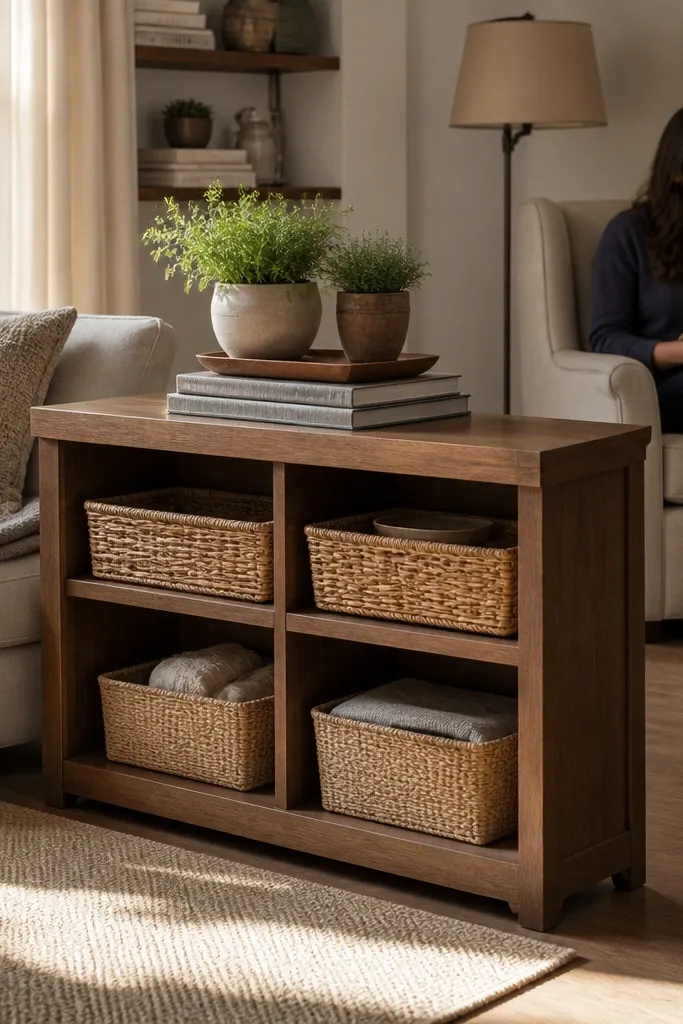
Choose a low bookcase with a stable base and a depth under 12 inches. Place it parallel to the furniture line you want to separate, leaving a clear path between the divider and the nearest seating. Style the top first: a long tray centered, then book stacks that vary in height by about 2-3 inches. Fill shelves with flat bins and vertically leaning books, using the same neutral bin color for a clean look.
This is the divider for small rooms that need flow. A console-height bookcase (around 30-36 inches tall) creates a boundary at eye level without blocking walking lanes or light. The top surface matters: stack books in a deliberate height range, add a tray, and use a pair of small lamps or planters to make it look like furniture. Choose a slim depth (10-12 inches) so it doesn’t feel like a barrier. It’s perfect for open-plan spaces where you want a dining zone to feel separate from the living zone.
Watch outAvoid cluttering the top with too many small objects; low dividers show every visual mess.
Pro tipKeep the top decor symmetrical — one tall item and one short item on each side reads polished fast.
6. Corner L-Shaped Bookcase Divider with a Display Nook
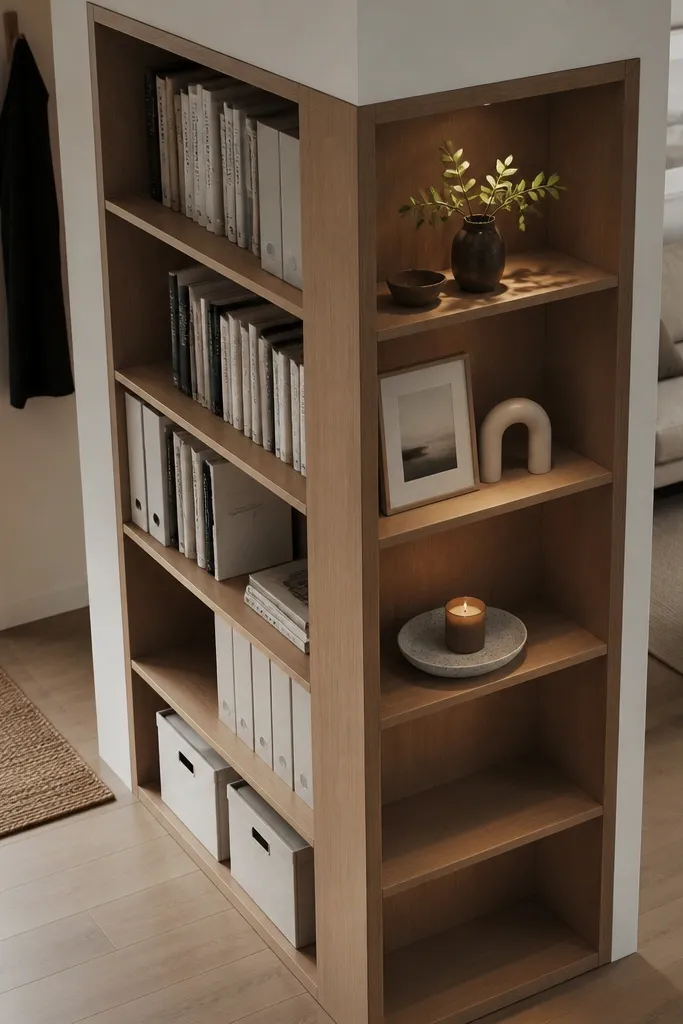
Measure the corner carefully and plan the L shape so it doesn’t block doors or radiators — keep at least 2 inches of clearance. Use two matching units or one L-shaped system with consistent shelf depth around 12 inches. Place the long side first, then position the shorter side to create the nook. Style with a strict rule: the nook gets 3-5 items max, and the rest of the shelves get bins or books in repeating patterns.
Corners are wasted space in small homes, and an L-shaped bookcase divider fixes that while still looking stylish. The divider wraps into the room, which creates stronger zoning than a straight unit. Use one side for storage and the other for a display nook with a few framed photos or a small art piece. The display nook is what makes the divider feel intentional instead of purely functional. This works great in living rooms with a couch that sits near a corner and needs a visual boundary.
Watch outDon’t leave the entire corner open with loose items; the corner catches clutter visually.
Pro tipPaint or stain the back panel of the display nook a darker tone (charcoal or deep green) to make decor pop.
7. Bookcase Divider with Built-In Pegboard Back for Styling
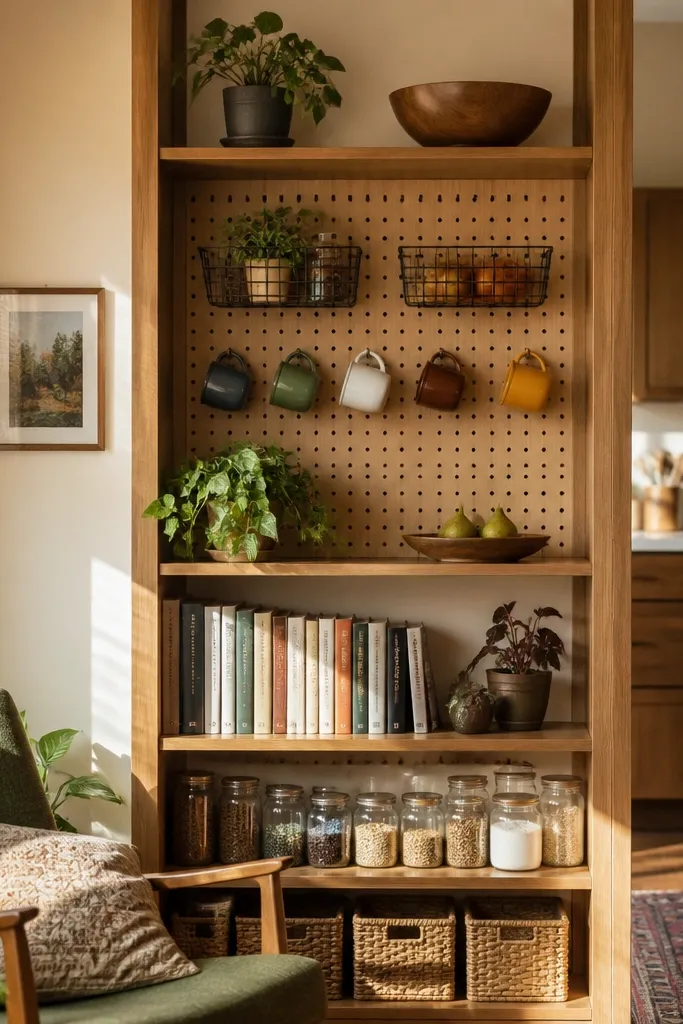
A pegboard-backed bookcase divider gives you a “styling wall” feel while still storing books. You can hang small baskets, wall organizers, or even a row of mugs, then keep books and larger items on the shelves. It looks great in a kitchen-adjacent living area where you want functional storage that still looks decorative. The pegboard also solves the small-space problem of surfaces being taken over by everyday stuff. Go for a light pegboard with a warm wood frame so it reads cozy rather than workshop.
Choose a divider that has a pegboard back panel or add one panel cut to size if you’re building. Install pegboard hooks and organizer accessories before you load books so you can route everything neatly. Place the unit with the pegboard side facing the area you use most (kitchen side or entry side). Style shelves with two categories: books on one side, baskets and small decor on the other; keep hanging items in one vertical line per section.
Use only two hook styles — for example, cup hooks for mugs and straight hooks for small bags — so the wall looks designed.
Don’t hang heavy items across the whole board; balance weight and keep the board looking tidy.
8. Half-Height Bookcase Divider with Curtains for Soft Separation
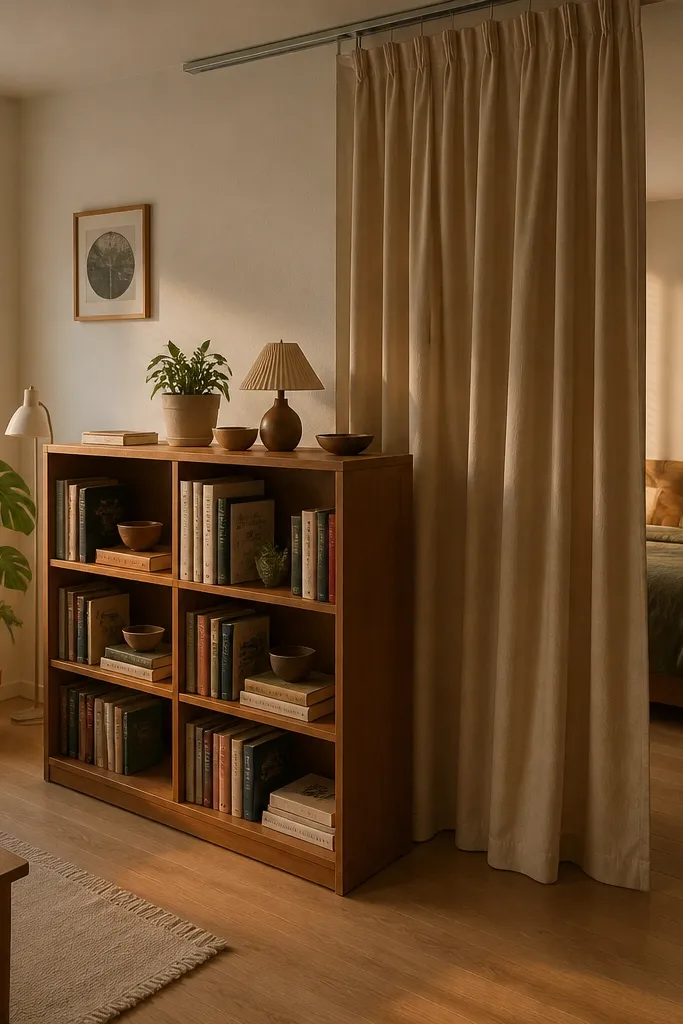
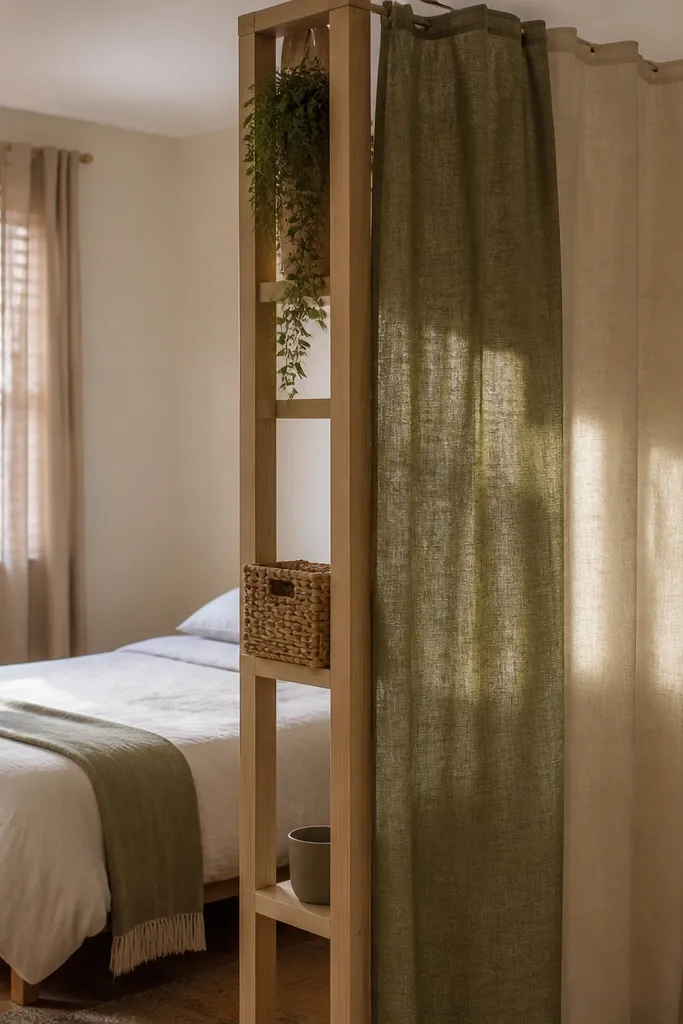
Pick a half-height bookcase with a depth around 12-13 inches so you still get storage without swallowing the room. Install a ceiling-mounted or wall-mounted curtain rod across the width of the divider, leaving the curtain to hang 1-2 inches off the floor. Fill the bookcase with baskets and a few book stacks, then hang the curtain to overlap the edges by at least 4 inches each side. Use curtain tiebacks or magnets so you can open it cleanly when you want light.
This divider idea mixes storage with softness. A half-height bookcase (around 36-42 inches) splits the room, then a curtain panel creates privacy when you want it. Choose a bookcase in a warm wood tone and a curtain in a heavy linen or cotton twill. The curtain hides visual clutter while keeping the room cozy, which is great for bedrooms in studio apartments. It also looks great in photos because it adds fabric movement and softness compared to straight shelves.
Watch outAvoid thin, shiny fabric; it reads cheap and the divider looks messy when it catches light.
Pro tipMatch the curtain color to your sofa or rug undertone, not your wall color — it looks more intentional.
9. Floating Shelf Bookcase Divider with Vertical Frames
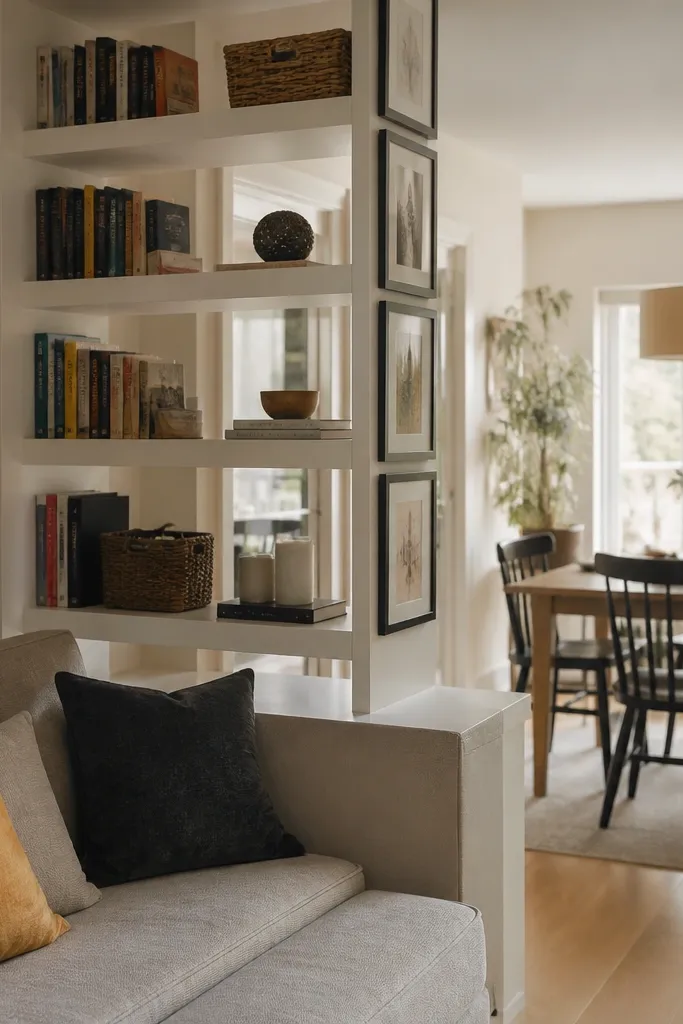
If you want the divider effect without a bulky piece of furniture, a floating shelf layout does it. Build a vertical “bookcase” with floating shelves and add framed art on the vertical sections so it reads like a gallery wall plus storage. This is best for narrow rooms where a freestanding unit would block circulation. Use a consistent wood color for shelves and keep the frames in one finish (black frames or natural wood). The shelf spacing should match book heights so the books look like they belong there.
Measure your wall span and choose shelf lengths that create a balanced center — aim for 24-48 inches of total width for a strong visual block. Install floating shelves with a level line and use a stud finder; for a stable divider feel, place supports into studs every 16-24 inches. Space shelves so books fit without bending — leave 10-12 inches between shelf surfaces. Style in layers: books on most shelves, framed art on two shelves, and one small tray on the bottom.
Use bookends that match your frame finish so the whole divider looks like one system.
Don’t cram books onto every shelf; floating shelves show gaps and crowding quickly.
10. Reclaimed Wood Bookcase Divider with Interior Lighting
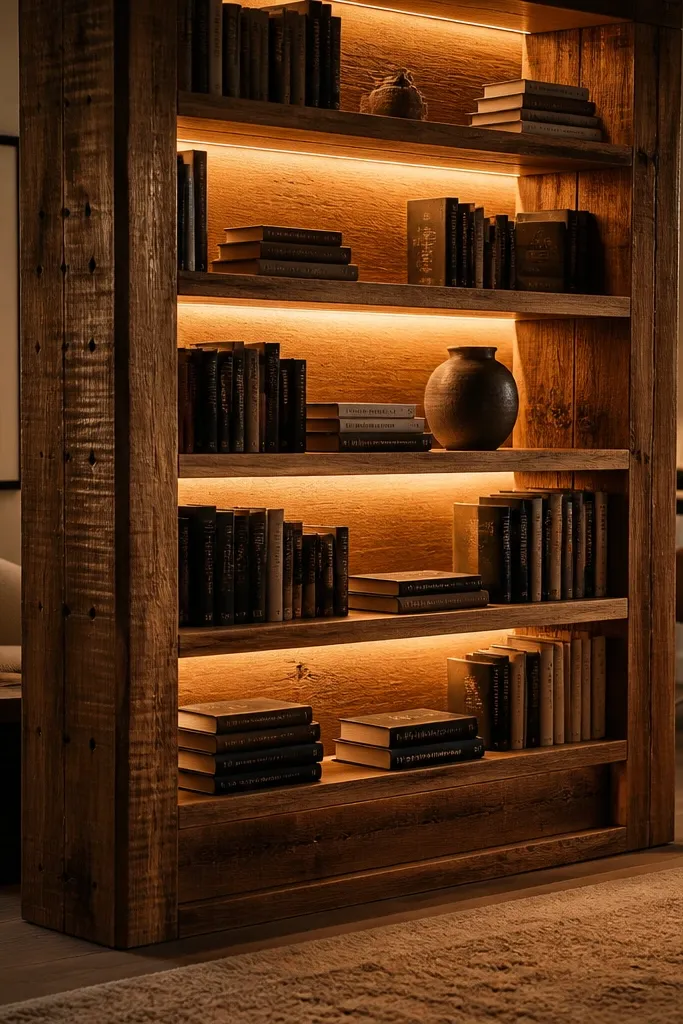
This one is for mood. A reclaimed wood bookcase divider looks warm and lived-in, and adding subtle interior lighting turns it into a focal point instead of just storage. The lighting makes the wood grain pop and gives you soft illumination at night, which helps small rooms feel less harsh. Choose warm LEDs around 2700K so it doesn’t look blue. Keep the shelf styling minimal: a few books with matching spine colors, one ceramic vase, and a basket or two. It’s perfect for living rooms where the divider sits near a lamp-free corner.
Choose reclaimed or reclaimed-style wood shelves with a consistent thickness so the unit doesn’t warp visually. Install LED strip lights inside the shelf cavities before final loading; route the wire to a hidden power point or plug location. Place the divider where it can be seen from two angles, then style with a repeat pattern: one tall item, one medium item, and one low item per side. Use baskets only where you need them so the lighting still highlights wood texture.
Turn the lights on during styling — you’ll see exactly which shelves need fewer items.
Avoid bright white LEDs; they make reclaimed wood look washed out.
11. Modern White Bookcase Divider with Hidden Storage Bins
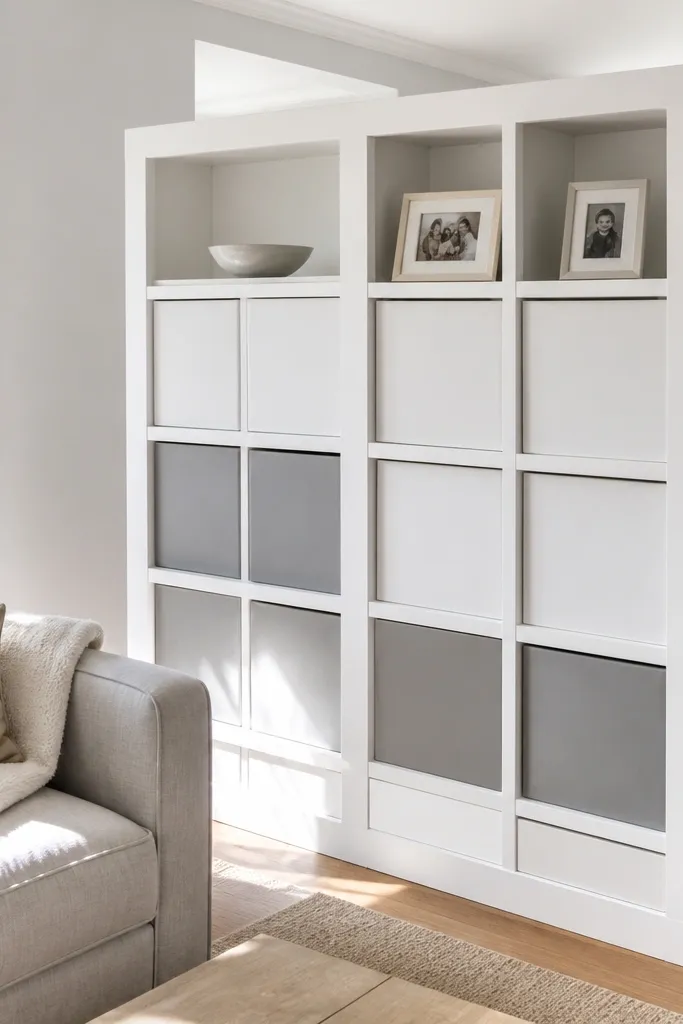
White bookcases make small rooms feel cleaner, especially when the divider has a uniform storage system. The look depends on hidden bins: choose matte white or light gray fabric bins so everything looks cohesive. Use open shelves sparingly for decor and keep most storage behind bins. This divider works best for families or shared spaces where you need to contain visual mess — toys, remote controls, kids' school items. The divider still looks styled because the bins create consistent blocks of color.
Buy a white bookcase with adjustable shelves and measure bin dimensions before you commit. Choose bins that fill most of the shelf width so you don’t get awkward gaps. Place the divider to face the mess-prone zone, then load bins first so you know your shelf heights. Finish with decor only on the top shelf and one mid shelf per side — a framed print and a small plant look better than lots of little items.
Keep bin labels off the front; use tags on the inside of the bin so the outside stays clean.
Don’t mix bin colors with white shelves; it turns the divider into a storage dump.
12. Dark Denim Style Divider Look with Deep Blue Shelf Styling
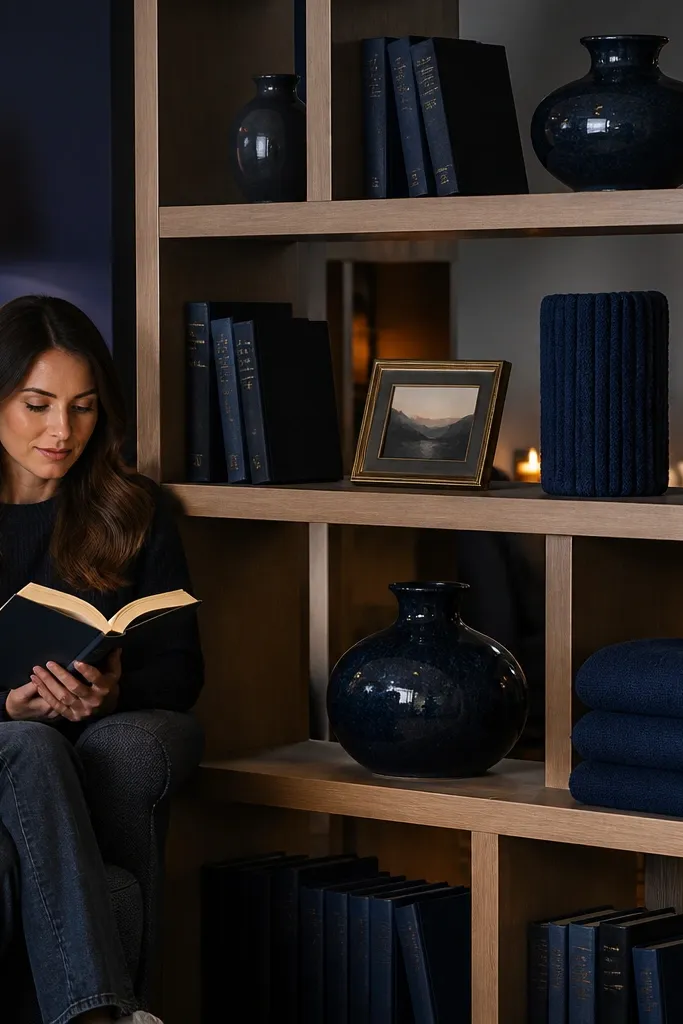
Pick a bookcase base first — natural wood or light oak keeps the blue from getting too heavy. Gather 6-10 items that share the deep blue range (navy, indigo, denim blue) and limit other colors to cream or black. Place the divider where it can act like a backdrop for your seating, then style shelves in a repeating rhythm: two blue items, one neutral book stack, one basket. Keep the top shelf minimal: one larger item and one small supporting piece.
This is the moody divider look that still feels cohesive. Use a neutral bookcase (natural wood or light oak) and style with a deep blue theme that echoes denim. Put deep blue ceramics, a navy throw folded upright on a shelf, and books with similar spine colors. The result looks intentional because the divider has a color story, not a random mix of objects. It’s a great match for small living rooms with tan walls, cream sofas, or light floors where you want contrast without going dark everywhere.
Watch outAvoid adding bright red or neon accents; they break the denim palette and make the divider look busy.
Pro tipUse book spine contrast: keep white or cream books as “negative space” between blue objects.
13. Tall Narrow Bookcase Divider for Hallways and Tight Spaces
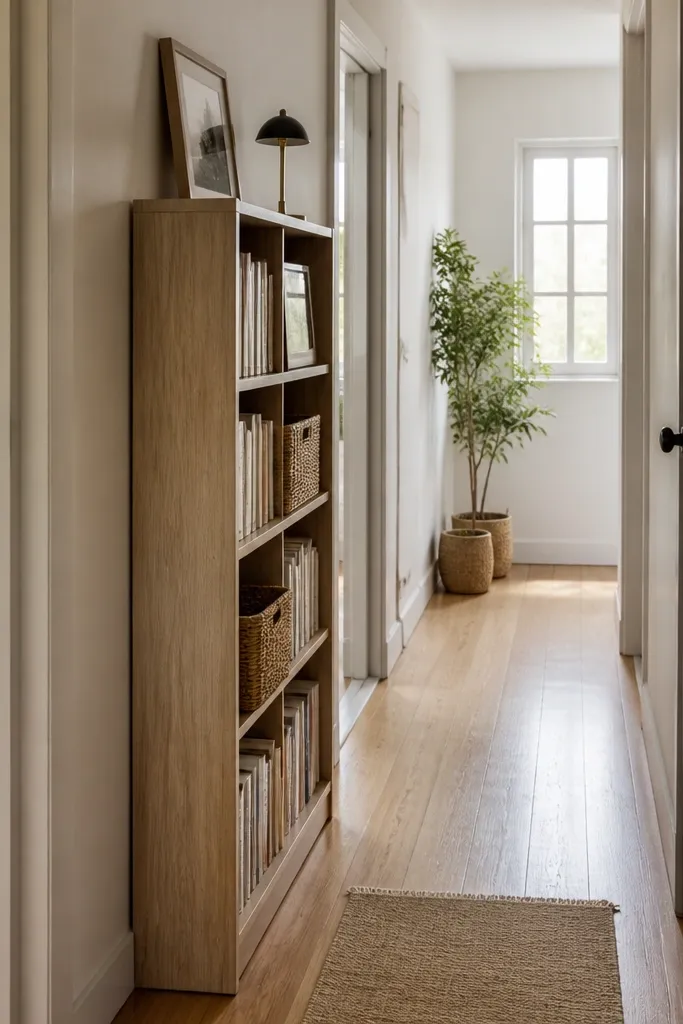
Hallways don’t have room for wide dividers, so go tall and narrow. A narrow bookcase around 8-10 inches deep can still separate zones visually, especially if you load it with vertical items like books and slender baskets. Keep the styling high and clean: top shelf gets a small lamp or framed print, middle shelves hold books in tight stacks, and bottom shelves keep supplies in slim bins. This divider idea works when you need separation between a foyer and living space without blocking the path. It’s also great around a small home office nook.
Choose a tall narrow unit and confirm it’s stable enough for freestanding use; look for an anti-tip option. Measure your hallway width and keep the unit from blocking door swing — leave at least 30 inches clearance for comfortable traffic. Place it perpendicular to the path only if you have room; otherwise, angle it slightly to create a visual barrier without pinching the walkway. Style from top down: one statement item on top, tightly grouped books in the middle, and slim bins at the bottom.
Use slim bins the same color as the shelf — a matching set makes the narrow divider look built-in.
Don’t use bulky baskets; narrow shelves make thick bins look awkward fast.
14. Corner-to-Room Divider with Books on One Side and Mirrors on the Other
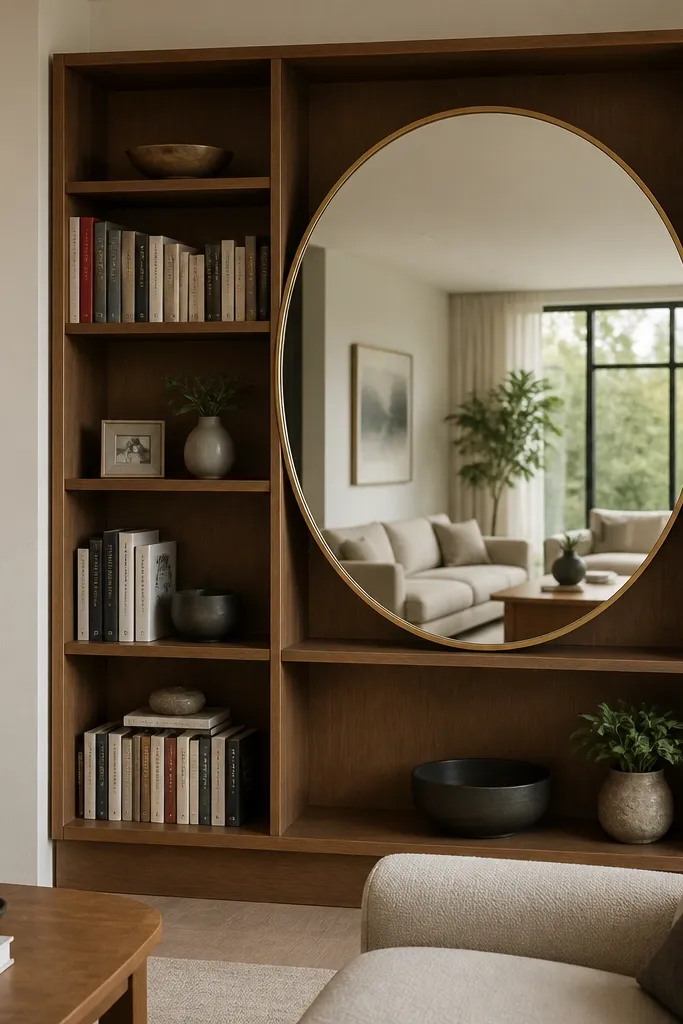
Find or build a divider with open shelving on both sides, then commit to a two-zone approach: books on one side, mirrors on the other. Use mirrors in sizes that fit the shelf openings — for example, 10-12 inch mirrors for smaller shelves and 18-24 inch mirrors for larger openings. Place the divider so the mirror catches natural light from a nearby window. Style books with consistent orientation and keep mirror shelves clean so the reflections don’t look cluttered.
This idea gives you storage plus the illusion of more space. Put books on one side of the divider and use mirrors on the other side so the room looks larger and brighter. Mirrors also make the divider feel less like furniture and more like a design element. Choose a mirror shape that matches your room style: round mirrors soften angles, and rectangular mirrors look crisp in modern rooms. This works well in small living rooms where you want the divider to brighten a darker corner.
Watch outAvoid mixing mirrors with lots of small decor on the same shelf; reflections multiply clutter.
Pro tipAngle the divider so the mirror reflects a lamp or window, not a blank wall; the reflection should look useful.