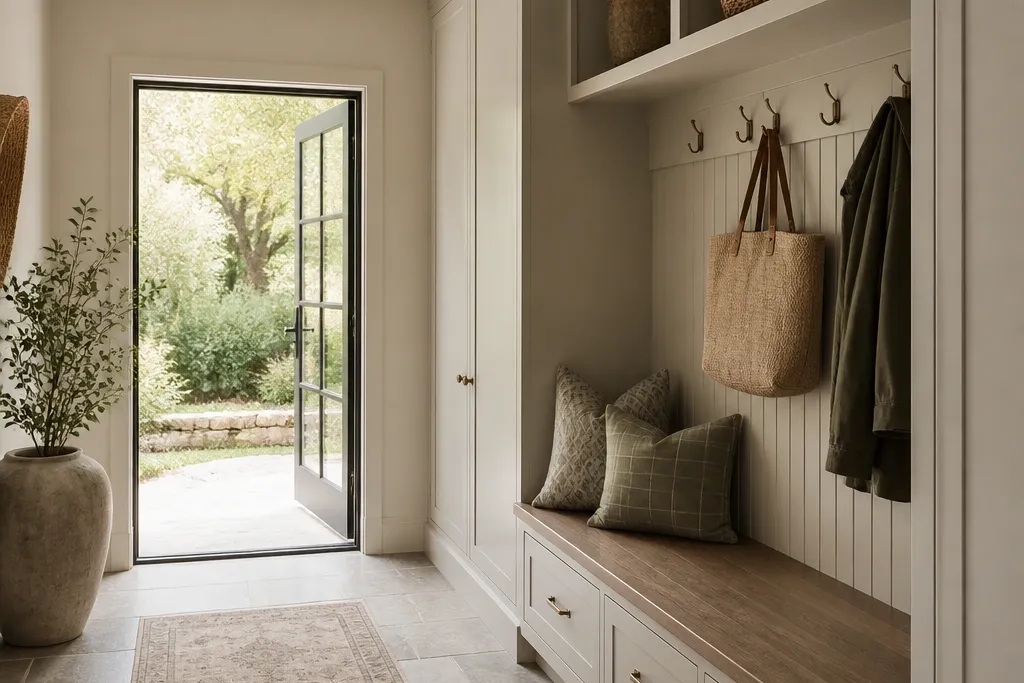
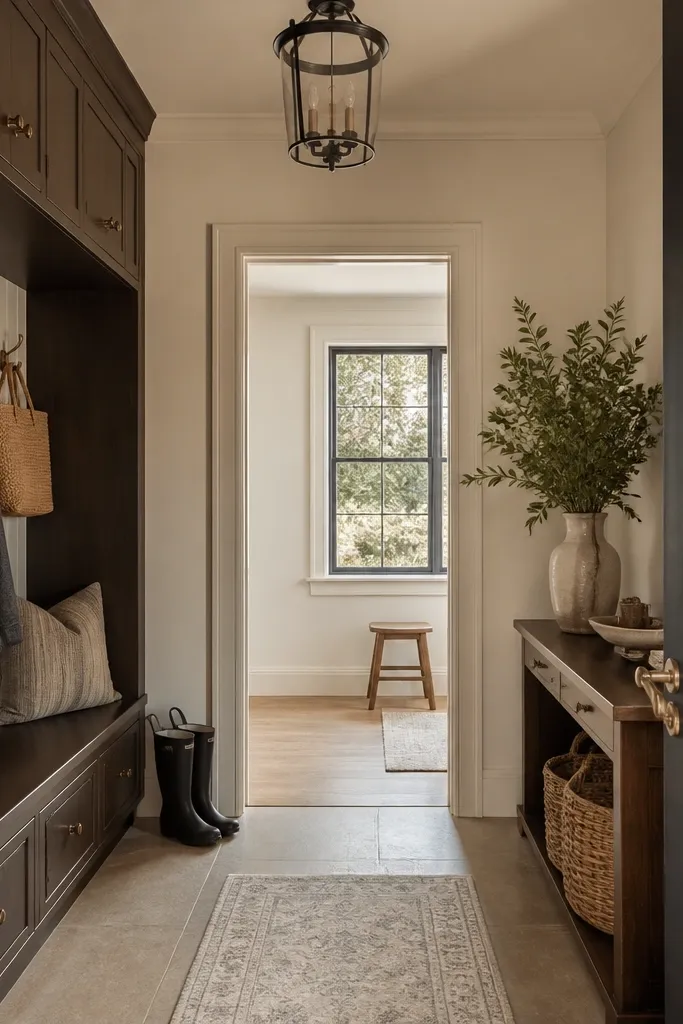
1. Warm White Bench with Hidden Shoe Drawer
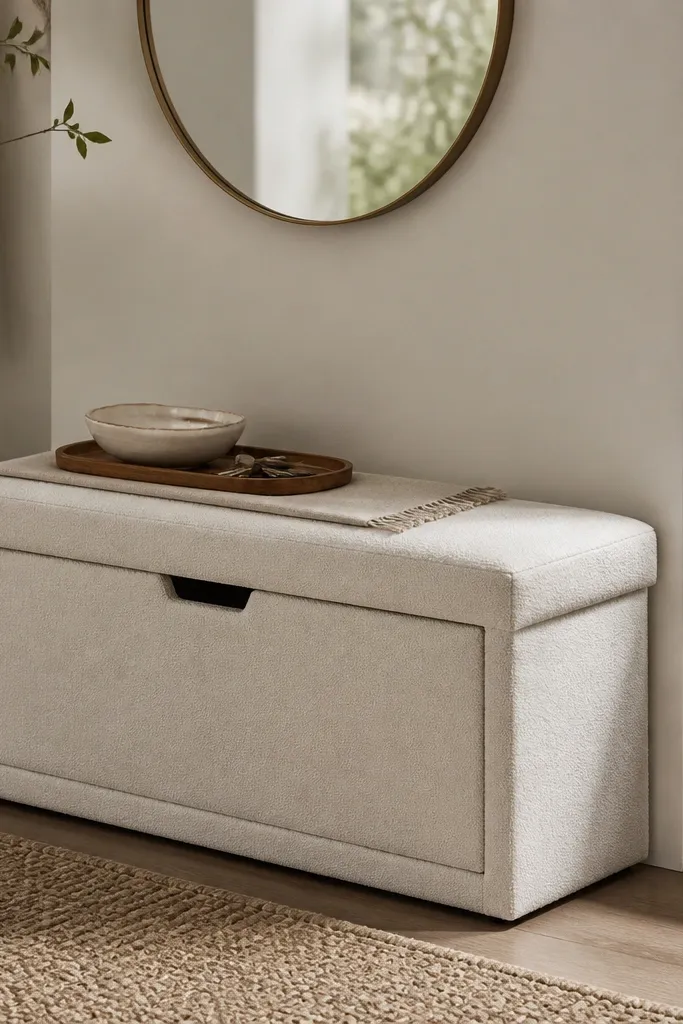
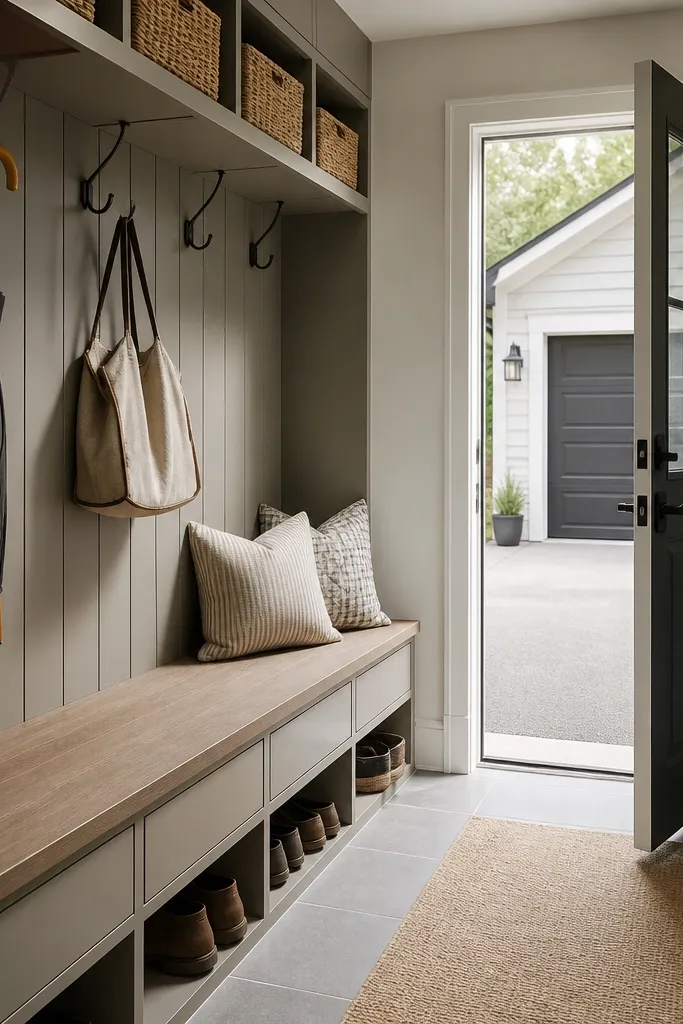
This setup looks expensive because the seating surface stays clean and the shoes disappear below the line of sight. A warm white bench softens the space and makes hooks, baskets, and wall art feel calmer. Upholstery on top adds texture, so the whole entryway looks finished instead of “storage shoved against a wall.” The tray keeps the daily clutter in one place so it doesn’t spread across the floor.
Aim for a bench height around 17 to 19 inches and a length that fits your wall run, even if it’s only 36 inches. Use a fabric with a tight weave, like linen-look or performance cotton, in oatmeal or warm white. Pick one hardware finish for the mirror and bench pull (brushed brass or matte black) so it looks coordinated.
Add a thin felt pad under the tray so keys and small items don’t clack and slide around.
Avoid open cubbies for daily shoes — they look crowded in two weeks.
2. Matte Black Hook Rail + Woven Basket Stack
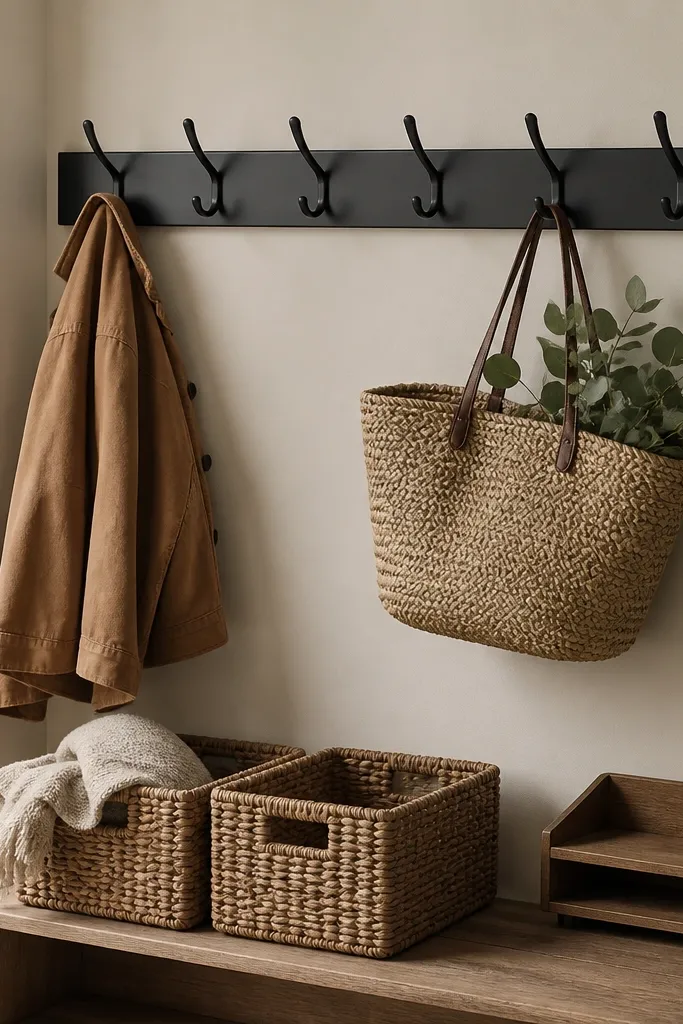
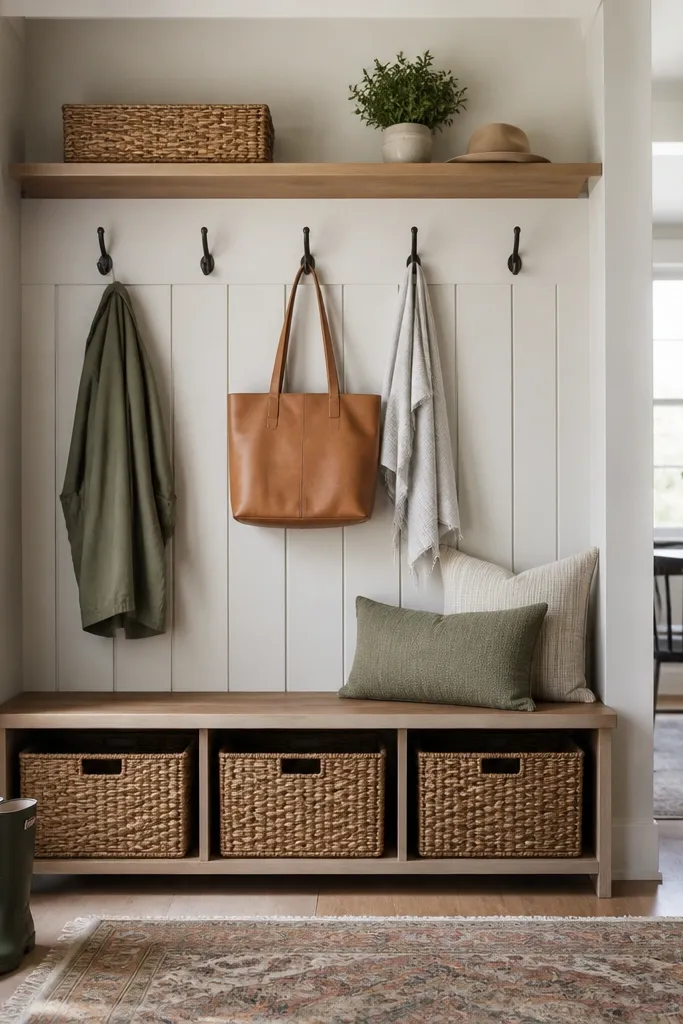
The hook rail gives you order immediately, and matte black reads crisp against light walls. Woven baskets bring softness and hide the “stuff you don’t want to see” without needing doors. I like stacking baskets because you can separate categories — one for hats and scarves, one for gloves or pet items. This is a mudroom ideas entryway aesthetic that looks styled, not utilitarian.
Mount the rail so hooks land around 48 to 56 inches from the floor for adult coats. Use baskets with similar color and weave so they look like a set, not random thrift finds. A narrow wall shelf above or beside the baskets holds mail and keeps the wall from looking empty.
Use black-and-white labels on the underside of basket lids so you can label without adding visual clutter.
Don’t mix three hardware finishes — it reads messy even if everything is “clean.”
3. Tall Cabinet with Glass Door for "Pretty Storage"
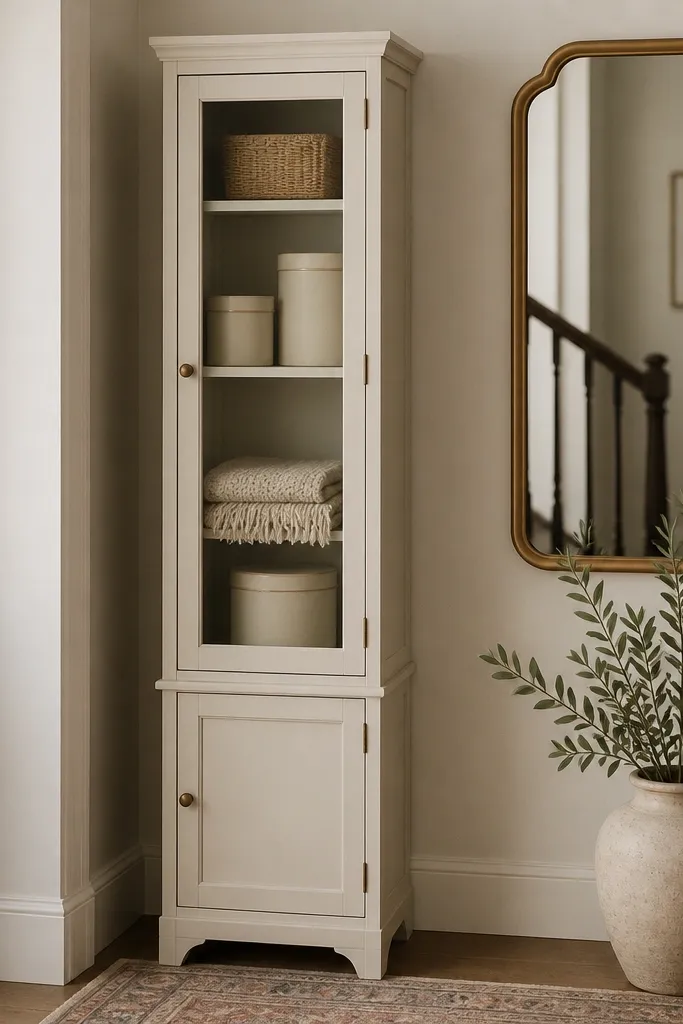
Closed storage makes the entryway feel calm, and the glass door gives you that expensive look because you’re choosing what’s visible. I use matching tins and folded neutral textiles inside so the cabinet contents look like decor, not storage. The glass also adds depth, which helps small entryways feel less flat. This works especially well when you have a wall that can handle a tall unit.
Choose a cabinet depth around 12 to 16 inches so it doesn’t stick out into the walkway. Put the most photogenic items at eye level inside the glass, and keep the lower drawers closed for bags and seasonal items. Match the mirror frame to the cabinet hardware so the whole corner feels designed.
Pro tipWipe glass daily for a week and then weekly — smudges kill the “clean” look fast.
Watch outAvoid clear clutter inside glass — mismatched items look like you’re hiding a mess.
4. Rattan Shelf + Curtain Shoe Hideaway
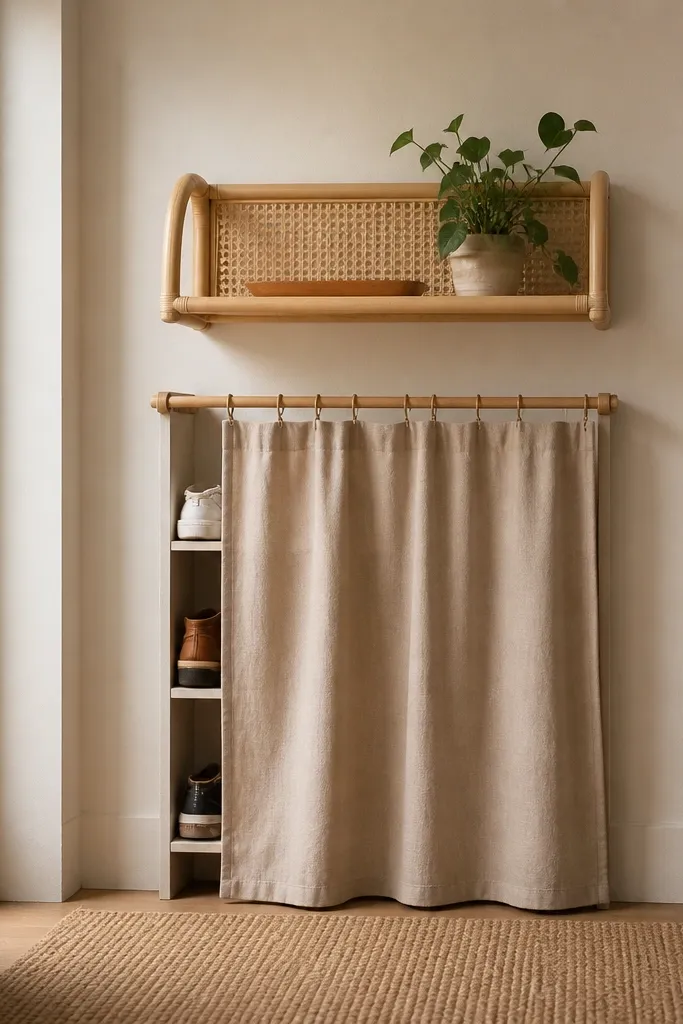
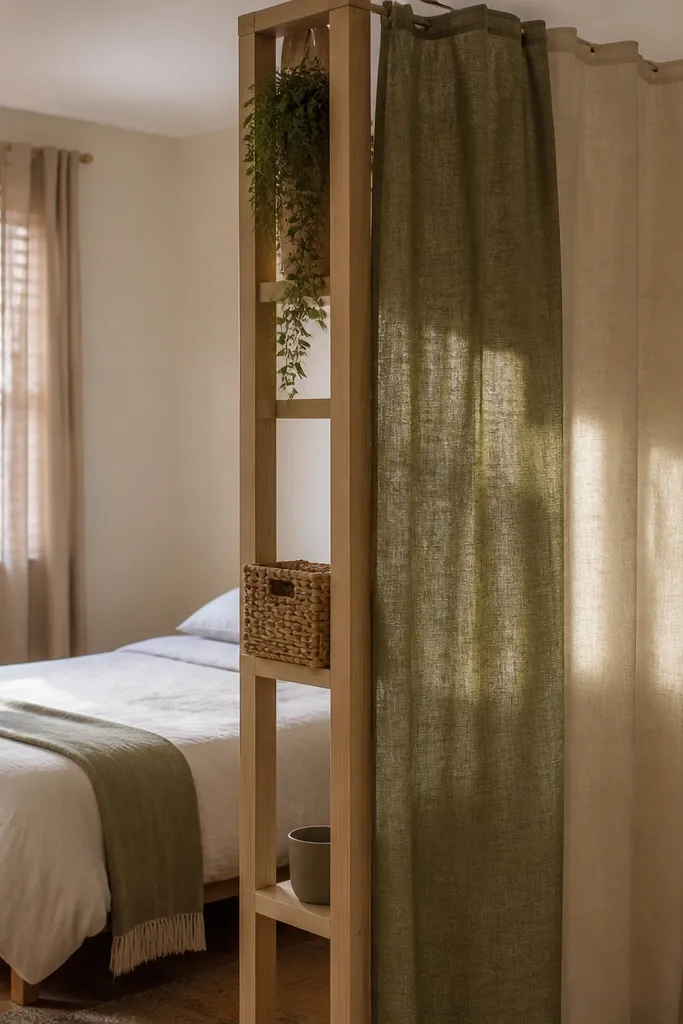
This is one of my favorite budget tricks for mudroom ideas entryway aesthetic because it hides shoes without building a full cabinet. Rattan adds texture and looks intentional with warm neutrals. The curtain gives you a “soft door” look, so the space feels cozy instead of harsh. I also like that you can swap curtain colors seasonally without changing the main setup.
Mount the rattan shelf so it’s above the curb of the shoe zone, usually 6 to 10 inches higher than the top of shoe bins. Use a tension rod or a small wall-mounted rod for the curtain, and choose a medium-weight fabric in sand or oatmeal. Put shoes in two short bins so the curtain doesn’t billow around random pairs.
Pro tipSteam the curtain before hanging so it falls flat and crisp.
Watch outDon’t let the curtain drag on the floor — it looks worn and cheap.
5. Pegboard in a Paint-Color Match (Yes, Really)
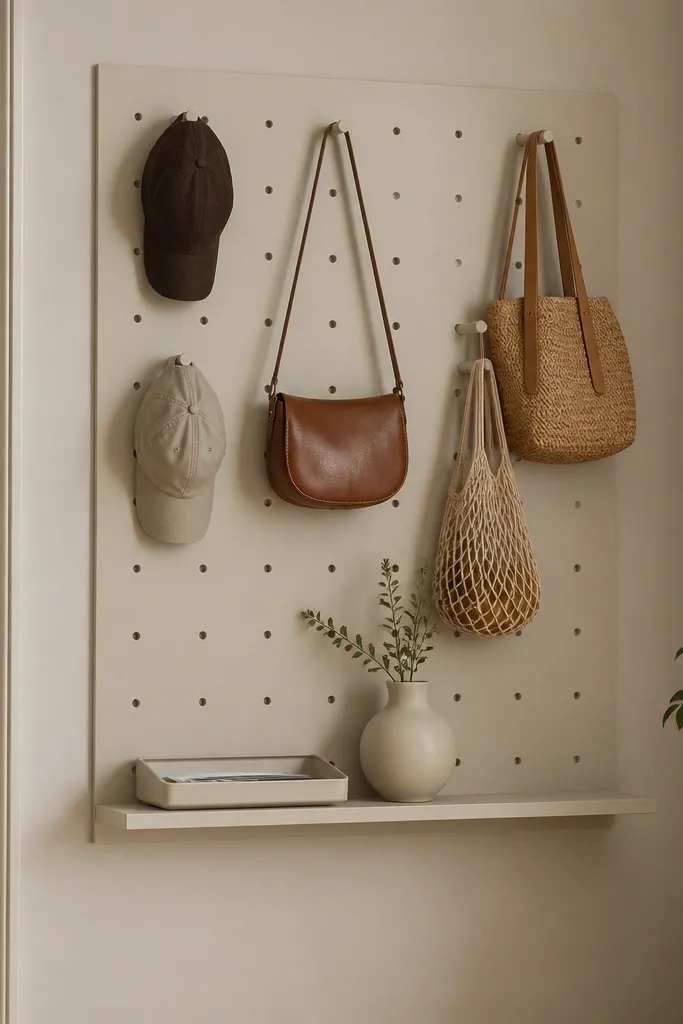
Pegboard looks industrial, but painting it the same color as the wall makes it disappear and lets the accessories do the styling. I’ve done this in entryways where the wall is the only blank space and it instantly looks curated. The small hooks let you customize daily items without cluttering the floor. It’s also easy to reconfigure when your family’s routine changes.
Use a pegboard thickness that holds screw-in hooks securely (a sturdy board, not flimsy). Paint with the same finish as your wall — if your wall is satin, use satin. Build a small ledge shelf out of a single wood tone so it looks cohesive and not like random hardware.
Keep your hook count realistic — start with 4 to 6 and add only when you see actual overflow.
Avoid leaving pegboard bare. One shelf and a few hooks makes it look designed; empty pegboard looks neglected.
6. Oversized Round Mirror + Bench with No-Show Storage
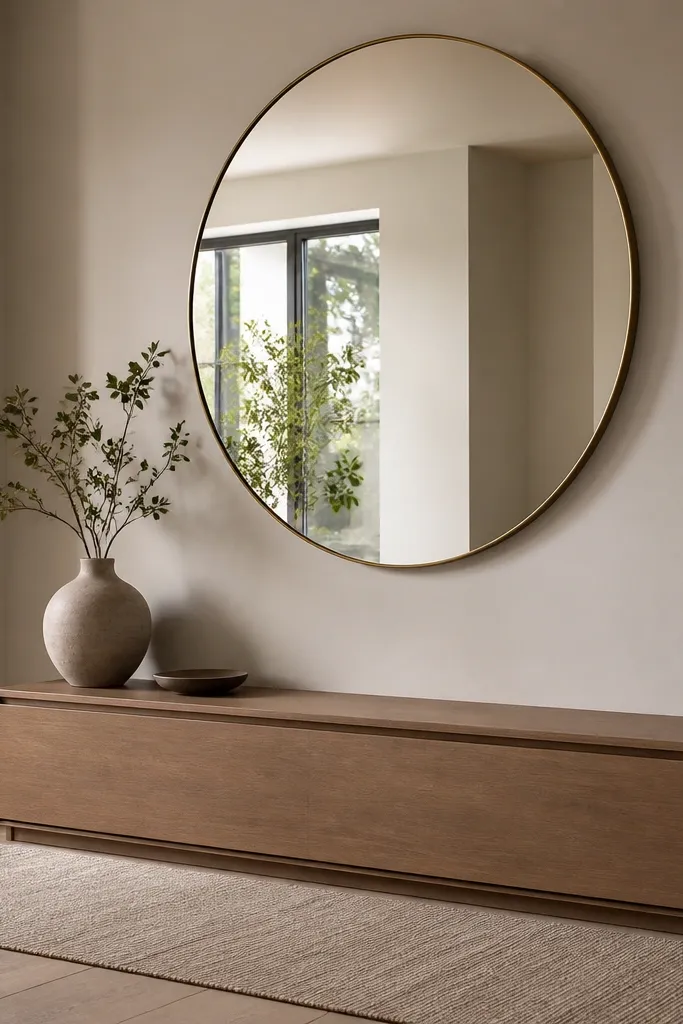
A big round mirror expands the visual space and makes the mudroom ideas entryway aesthetic feel brighter instantly. The bench front hiding storage keeps the “mess line” low and clean. I like adding a runner behind the bench so the wall doesn’t look bare and so the bench reads like part of the decor, not a separate item. Round shapes also soften entryway corners that feel sharp with rectangular furniture.
Choose a mirror diameter at least 24 inches for small entries. Bench length should match the mirror width or be slightly shorter, and keep the bench color neutral. Add one slim runner (not a thick rug) in a textured weave like cotton or jute blend so it looks like styling, not floor covering.
Pro tipHang the mirror so its bottom edge is about 6 to 8 inches above the bench — it looks balanced without crowding.
Watch outAvoid mirrors that are too tall and too narrow — they distort coats and make the corner look off.
7. Two-Tier Drop Zone Table with Drawer
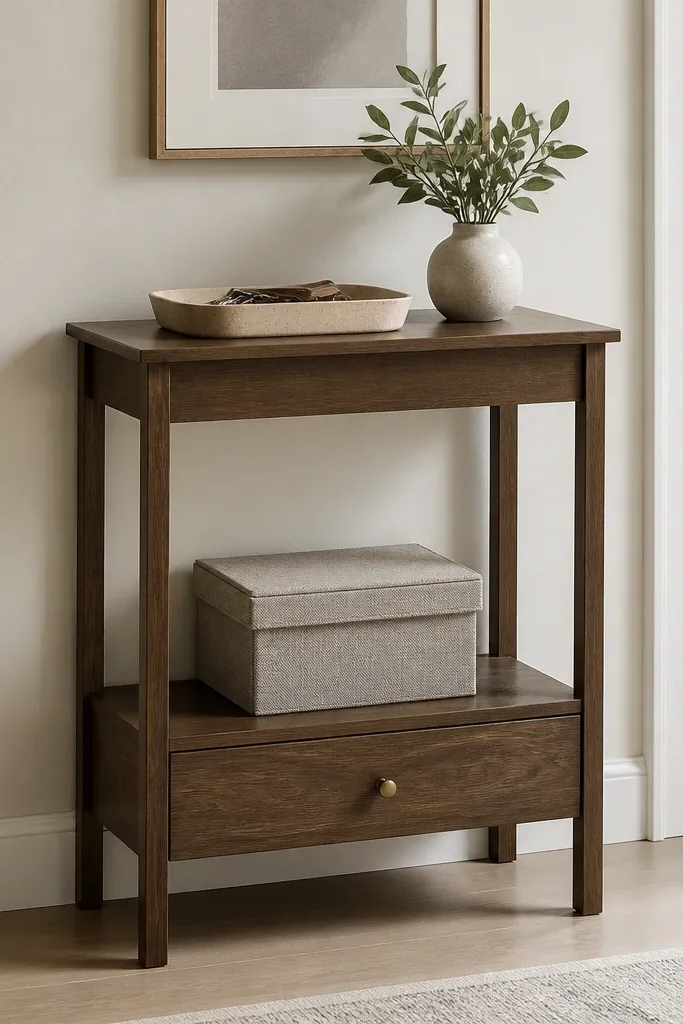
A two-tier table solves the daily clutter problem because you get a place for keys and a place for overflow without letting it spill across the floor. The drawer hides charging cords, extra leashes, and seasonal items. The lower shelf is where you keep one closed bin so shoes and bags don’t become public. This look feels expensive because the top surface is curated and the storage is controlled.
Look for table depths around 12 to 16 inches so it doesn’t eat your walkway. Choose a finish that matches your hardware elsewhere — if you have brushed brass, pick a warm wood or brass-tone metal. Use one tray only, and keep it centered so the table reads intentional.
Pro tipPut a small dish for change inside the tray so loose coins don’t scatter around the room.
Watch outAvoid multiple small decor pieces on top — it turns into visual noise.
8. Built-In Look Using Narrow Wall Cabinets
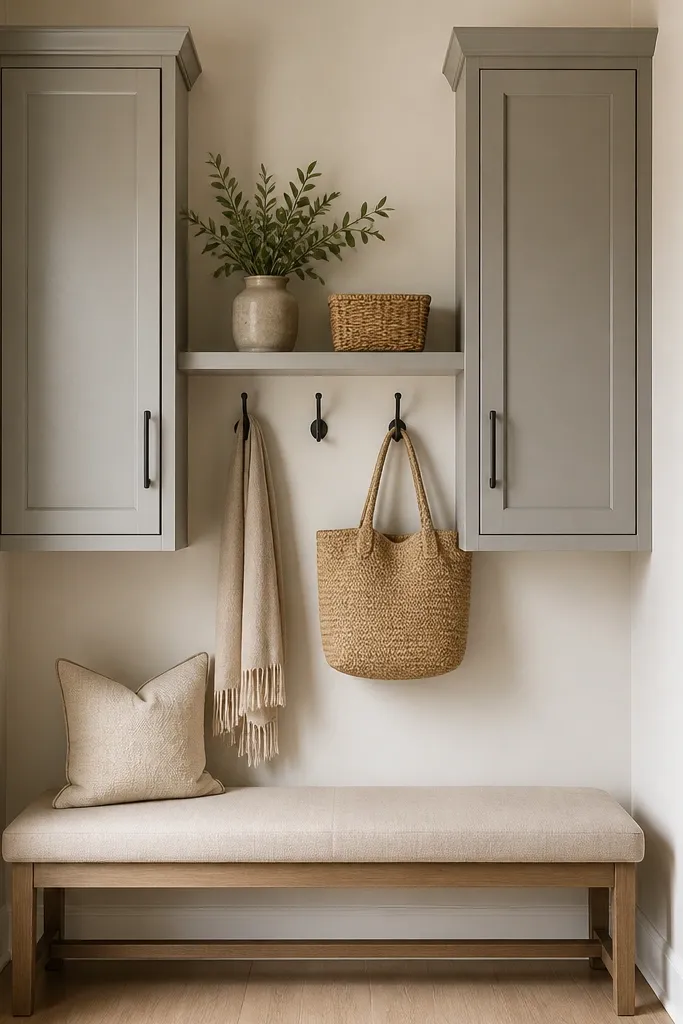
Wall cabinets give you the built-in look without actual construction. You can hide all the “in-between” items like extra hats, cleaning sprays, and spare gloves. The open shelf area under the cabinets is where hooks and a mail tray live, keeping daily items accessible. When everything is aligned, the entryway aesthetic reads clean and designed even on a budget.
Pick cabinets with the same door profile and finish, and space them so there’s a narrow open strip for hooks. Keep the open shelf depth around 5 to 7 inches so it doesn’t look bulky. If you add a bench, keep it simple and let the cabinets do the heavy visual work.
Pro tipUse the same knob style on every cabinet and bench — even if you’re mixing furniture, the hardware makes it look like one set.
Watch outAvoid mismatched cabinet heights — it makes the whole wall look crooked.
9. Neutral Linen Curtains for a Shoe Nook
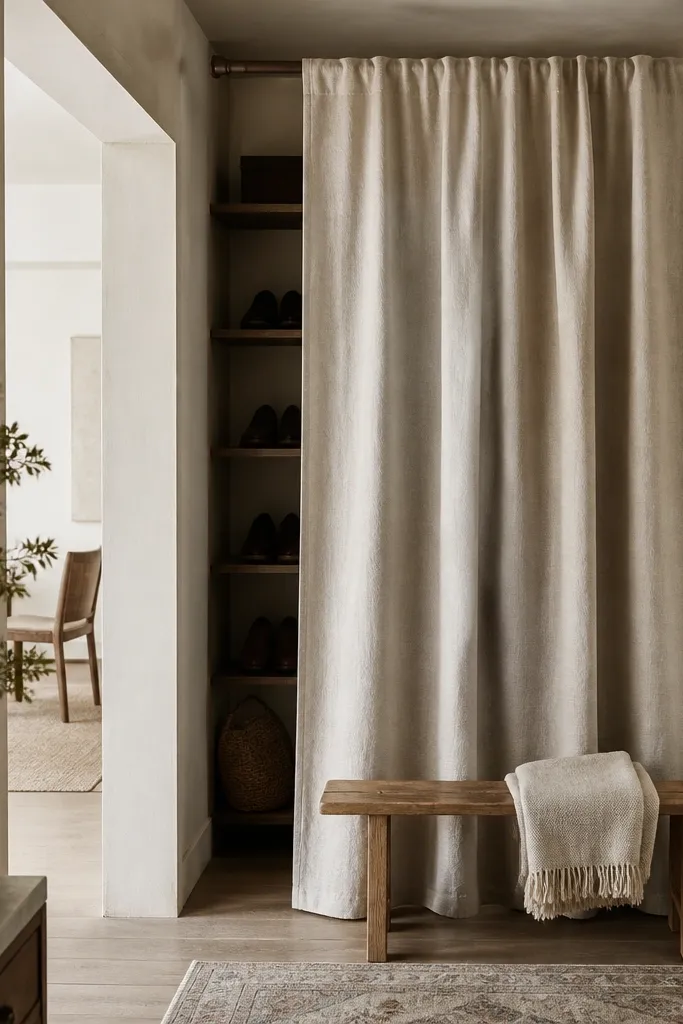
A curtain turns a shoe nook into a “soft room feature.” Linen looks expensive because it has texture and doesn’t shine like polyester. This is a great mudroom ideas entryway aesthetic when you want storage but hate the look of doors and bins. The bench in front adds function — you can sit to switch shoes without staring at footwear.
Use a rod that extends 4 to 6 inches past the nook edges so the curtain frames the space. Choose a linen blend heavy enough to fall straight. Put a shoe rack inside the nook with two height levels so pairs don’t collapse and the curtain stays smooth.
Hang the curtain so it just kisses the bench top height when closed, not dragging low.
Avoid thin, see-through curtains — you’ll see the shoes and it defeats the purpose.
10. Floating Shelf + Matching Tray System
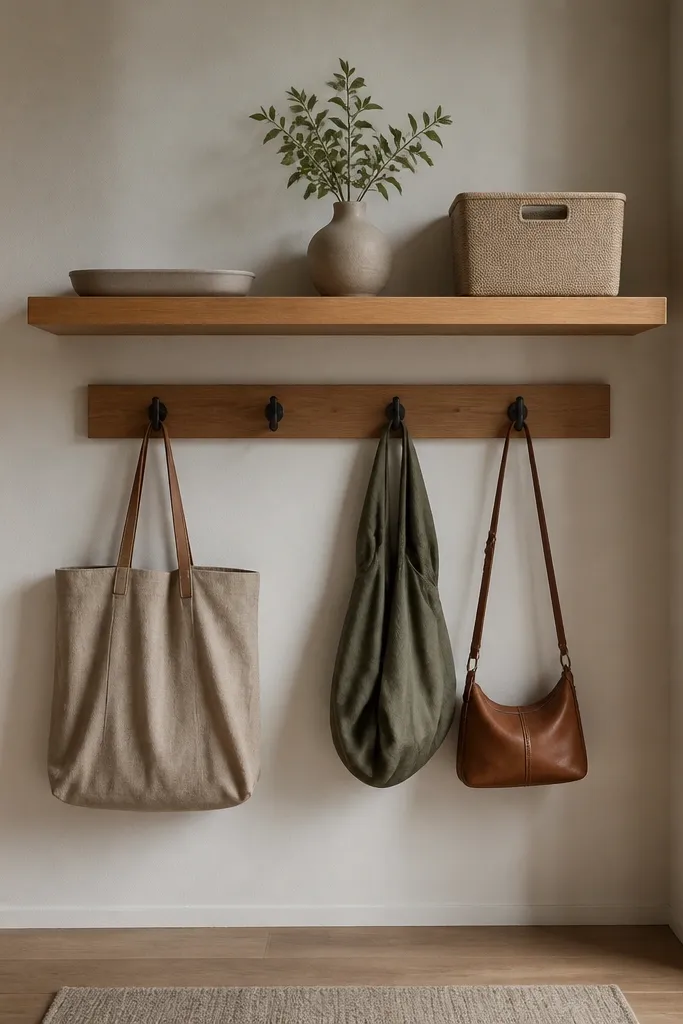
This works because it forces everything into a single “station” on the wall. Floating shelves make small entryways feel lighter, and a matching tray system keeps the surface from turning into a junk magnet. I like using one matte ceramic tray and one small bin with a lid so you can store sunglasses, dog treats, and charging items out of sight. The aesthetic stays clean because the shelf is styled daily, not weekly.
Mount the shelf 44 to 50 inches high so it’s easy to drop items. Use a tray that fills about half the shelf width, not a tiny one — tiny trays look like you’re trying to hide clutter. Keep the bin color in the same family as the tray.
Put a small felt pad under the tray so it doesn’t slide when keys hit it.
Avoid random decor on the shelf. If it doesn’t belong in the drop zone, it doesn’t go up there.
11. Bench + Tall Basket for Seasonal Bags
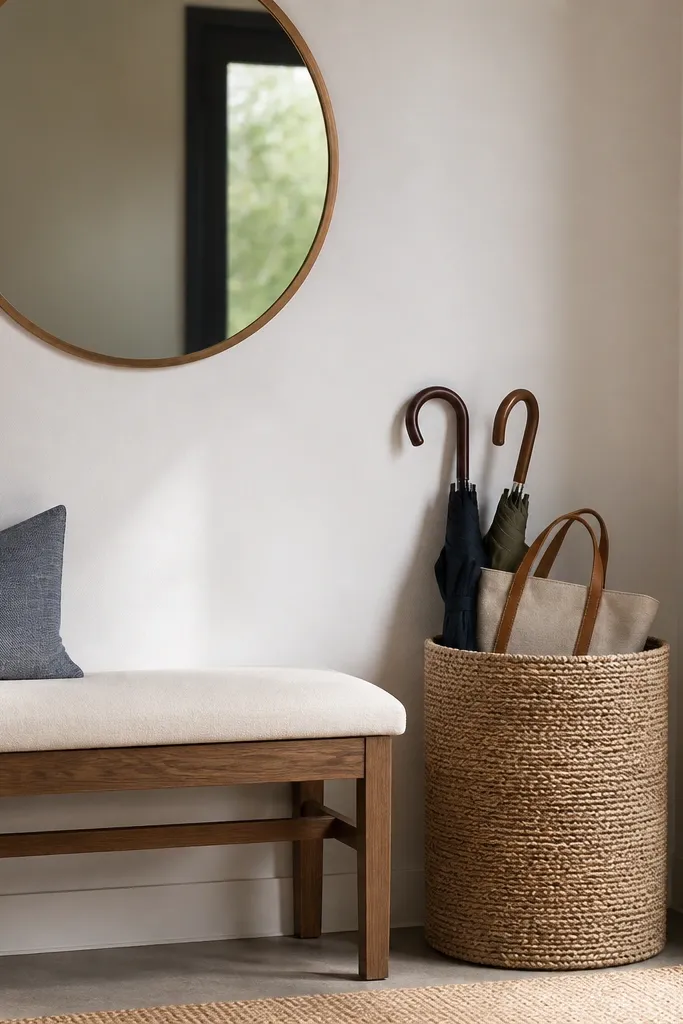
A tall basket gives you vertical storage, which matters when your entryway is narrow. I like it for seasonal bags because you can pull it out fast and it doesn’t look like a random pile. Pairing a bench with one tall basket creates a clean “two-shape” composition — horizontal seating and vertical storage. It’s an easy mudroom ideas entryway aesthetic that stays tidy because you’re not spreading bags across the floor.
Choose a basket height around bench height plus 8 to 12 inches so it reads purposeful next to the bench. Keep the basket weave color consistent with your other natural materials like wood frames or jute rugs. Use a small tray on the bench top for keys and sunglasses so the bench surface stays calm.
Pro tipFold totes the same way every time. It sounds silly, but consistent folds make the basket look styled.
Watch outAvoid stuffing the basket so tight that it bulges. A little breathing room makes it look curated.
12. Slim Console with Over-the-Seat Coat Rack
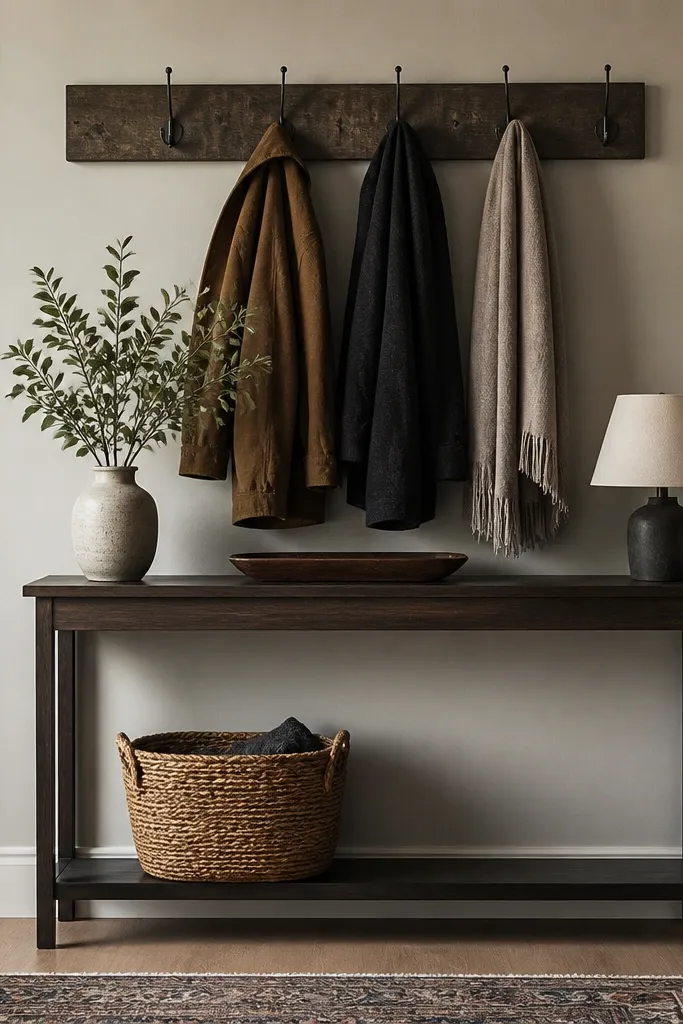
When your wall space is limited, rack-over-console setups keep coats off chairs and away from the door swing. The visual line stays vertical, and guests see a tidy “coat moment” instead of a mess. A slim console with a single tray keeps the aesthetic from getting crowded. This is especially helpful when you live in a place with frequent rain and you need a real drop place.
Pick a console depth under 16 inches and a coat rack with at least 5 to 7 hooks. Keep the spacing between hooks consistent so coats don’t tangle. Choose a console finish that matches your mirror frame so everything reads like one system.
Hang wet items on the far hooks first so they dry without touching dry coats.
Avoid mismatched coat hangers. Use the same hanger type so coats hang cleanly.