1. Ceiling Track Curtains in a Pocket-Opener Layout
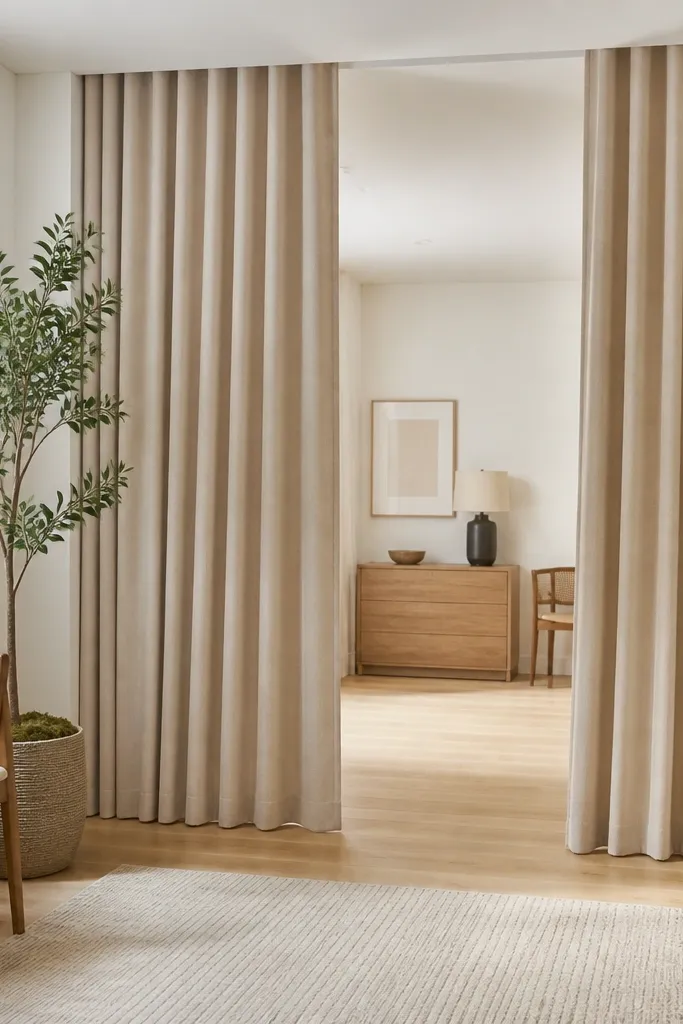
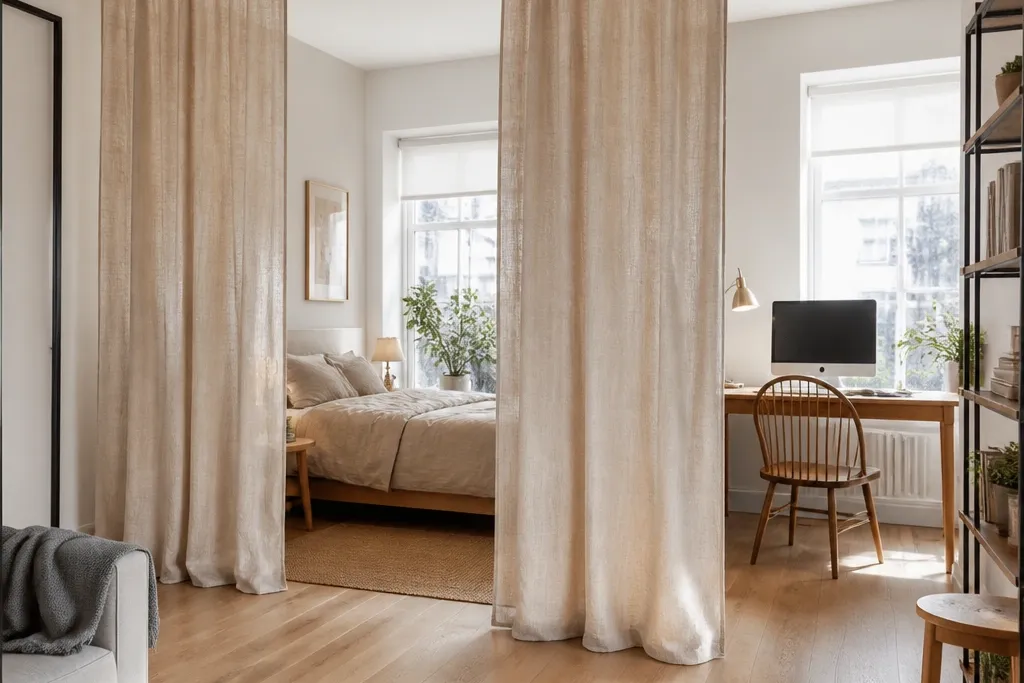
If you want flexible privacy in a small studio, ceiling track curtains are the cleanest look because the hardware disappears. Use two curtain panels in a warm neutral like sand or oatmeal so the space stays bright while the divider still feels like a boundary. For privacy, choose a curtain with a medium weight body (linen-cotton blend or thick cotton) and add a blackout liner if your divider faces windows. Hang it so the hem falls 1-2 inches above the floor; that gap keeps the divider from looking heavy or stuck to the ground. This setup is great for separating a sleeping nook from the rest of the room without blocking light when the curtains slide open.
Start by measuring the divider span and add 6-8 inches on each side so you don’t get light gaps. Install a ceiling track with screws into studs where possible; if you can’t hit studs, use proper anchors rated for the track load. Then attach curtain hooks or carriers, hang two full-width panels, and test the slide before you commit to the final hem height. Budget-wise, expect to spend about $25-80 for a track kit and $40-120 for panels plus liners, depending on fabric weight and length.
Pro tipUse curtain rings or carriers that glide quietly; noisy movement makes the divider feel like a hassle and you’ll leave it open.
Watch outSkip thin sheers without a liner if you need real privacy at night.
2. Tension Rod + Floor-Length Linen for a Soft Boundary
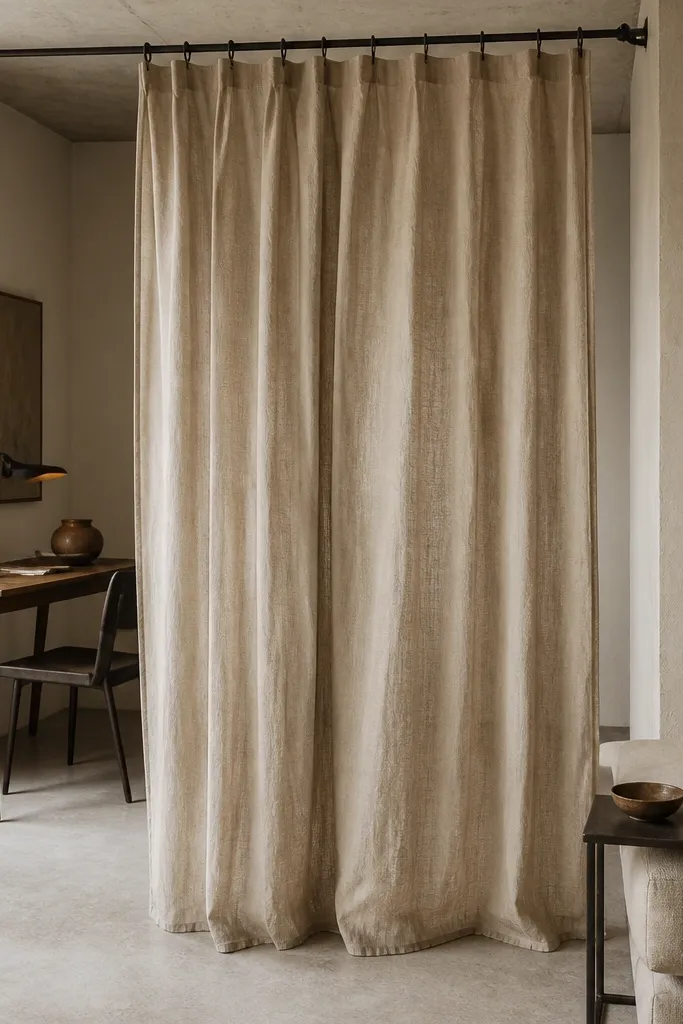
Tension rod dividers look casual and pretty, which is exactly why they work in small spaces. Linen in oatmeal or light greige gives that calm, lived-in look while still blocking enough view when the panels overlap. Choose a curtain that’s at least 1.5 times the divider width so it folds; flat fabric reads cheap and doesn’t block sightlines. This idea is best for renters who want privacy without drilling — like separating a desk corner or hiding a bed from the main room. Keep the hem 1-2 inches above the floor so it doesn’t drag and collect dust.
First, pick a tension rod width that spans the divider area plus 4-6 inches beyond each edge. Mount the rod on solid trim or wall sections that can handle the load, then hang two linen panels with grommets or back tabs for smooth movement. Finally, overlap the panels by 6-10 inches in the middle and adjust until the folds fall naturally when the curtain is closed. Plan on $20-50 for the rod and $30-100 for panels depending on length and linen weight.
Add two small tiebacks in the same color family so you can open one side without the whole divider collapsing into folds.
Don’t hang a single narrow panel — it leaves a view gap that ruins the privacy effect.
3. Wraparound Corner Divider with Two Curtains on One Rod
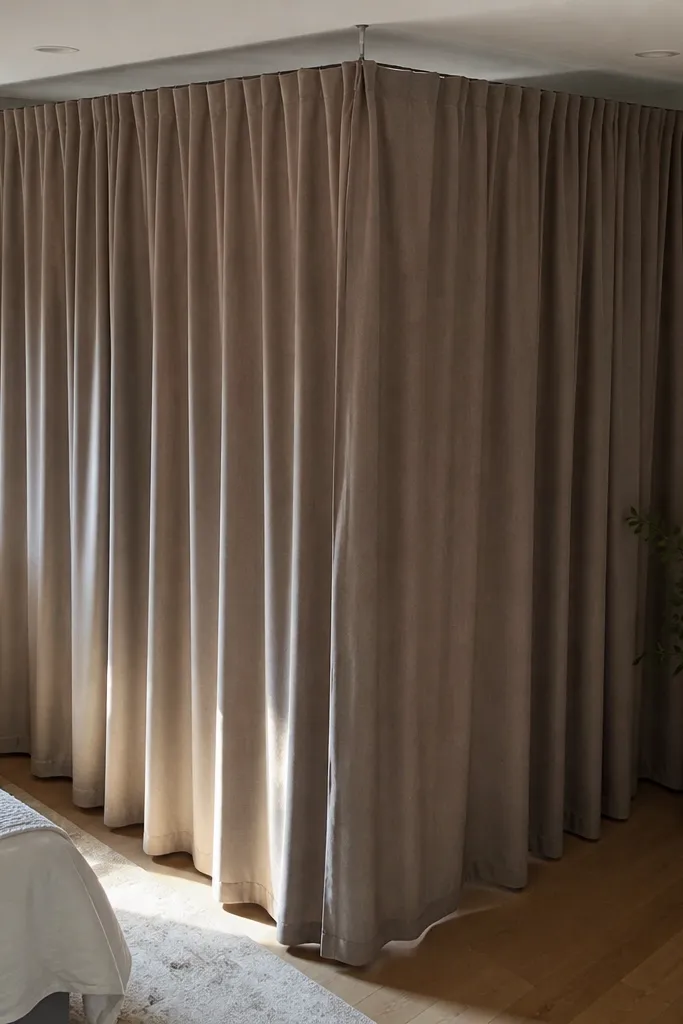
Corners are where small rooms feel most cramped, because everything lines up to one open sightline. A wraparound curtain divider solves that by covering two directions at once. Use a single ceiling-mounted rod that runs across the corner approach, then hang two panels that meet at the corner like a tent flap. Choose a medium-weight fabric in a shade like warm charcoal or deep olive; it hides shadows better and looks deliberate. This works well for creating a private entry-to-living separation or carving out a study nook near a corner window.
Measure the corner approach and install a rod or track so one run covers the main sightline and the other covers the side view. Hang two panels from the same system, then aim for overlap at the corner of 8-12 inches so the seam doesn’t show when closed. Adjust the drop length to hit 1-2 inches above the floor on each side, then use matching tiebacks to hold the panels open when you want the room to feel wider. Costs usually land around $35-120 depending on track hardware and panel fabric.
Pro tipPick fabric that holds shape; crisp cotton canvas or structured linen looks better at corners than drapey jersey.
Watch outDon’t mount the rod too low — corners look cluttered when the divider starts at chest height.
4. Sheer Over Blackout Layer for Daylight Privacy
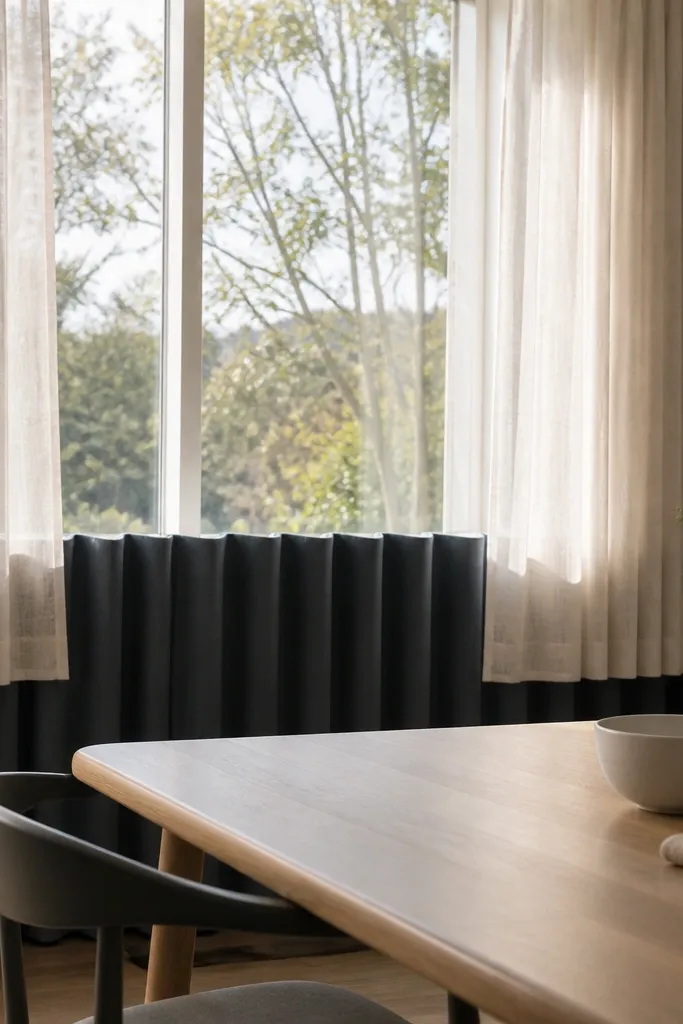
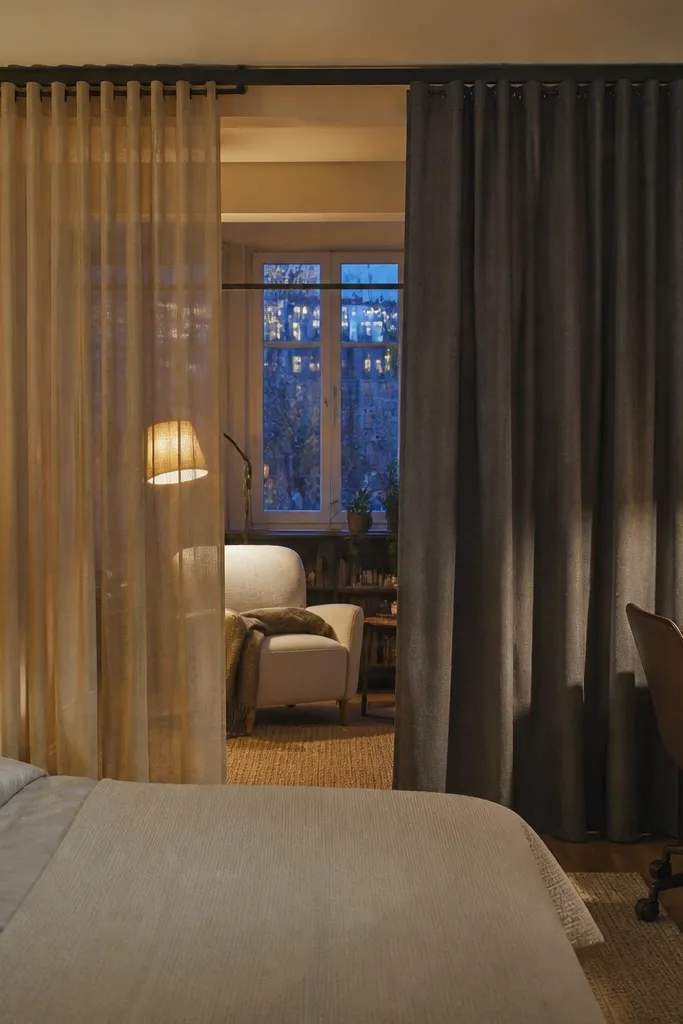
If you want privacy without losing daylight, layer a sheer curtain over a blackout panel. The top sheer lets morning light spread across the room, while the blackout layer blocks views when you close it at night. Use a sheer in soft white or ivory and a blackout in a deep tone like slate or chocolate so the closed divider looks finished, not patchy. This is one of the best curtain room divider ideas for apartments where your divider faces a window or bright exterior wall. Hang the blackout slightly behind the sheer so you get a clean layered effect rather than a flat wall of fabric.
Buy or sew blackout curtains to the same width as your divider area, then hang them on the inner track or rod position. Add a sheer panel on a second layer (or hang both panels from the same carriers but with an inner and outer rod height). Start with blackout hem at 1-2 inches above floor, then set the sheer to match so the bottom edge lines up. Expect $60-160 for a layered setup depending on sizes and blackout quality.
Use clip rings or two-layer carriers so opening the sheer doesn’t yank the blackout layer out of place.
Skip mismatched lengths — if the sheers and blackouts don’t line up, it looks like a temporary fix.
5. Bamboo Roll-Up Curtain for a Clean, Screen-Like Look
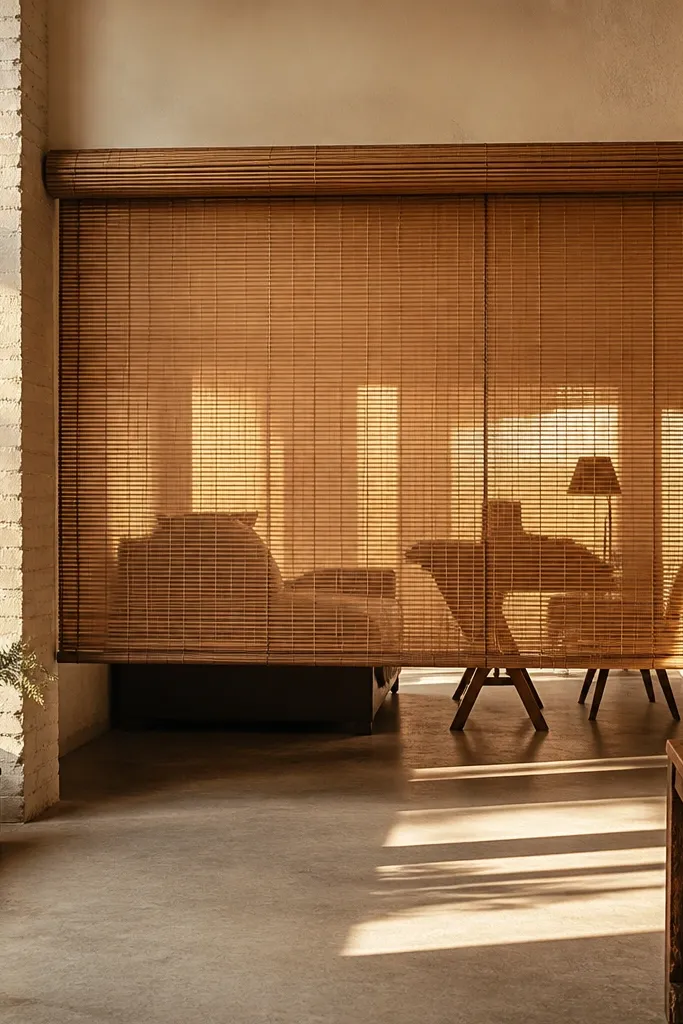
For curtain room divider ideas that look like furniture instead of fabric, a roll-up bamboo or woven shade is a strong move. It gives you privacy with a tighter, more architectural outline than traditional drapes. Choose a light bamboo tone with a warm undertone (honey or natural) to keep the room from feeling heavy. When you pull it down, you get privacy without a lot of extra bulk. This works especially well for dining corners, home offices, and hall-adjacent seating because it frames the zone and reduces visual clutter.
Measure the divider width and mount a ceiling or wall track for the roll-up shade so it stays level when fully extended. Install side guides or allow enough overlap on each side so you don’t get a clear gap. Roll it down and mark the final height so the bottom edge lands about 1-2 inches above the floor. Budget around $40-120 depending on size and whether you choose a manual chain or spring roll.
Pro tipMatch the bamboo tone to your wood furniture; warm bamboo + warm wood reads intentional fast.
Watch outDon’t mount it too close to the floor; a low edge catches dust and makes the divider look worn.
6. Macramé Curtain Panels for Texture Privacy Without Blockage
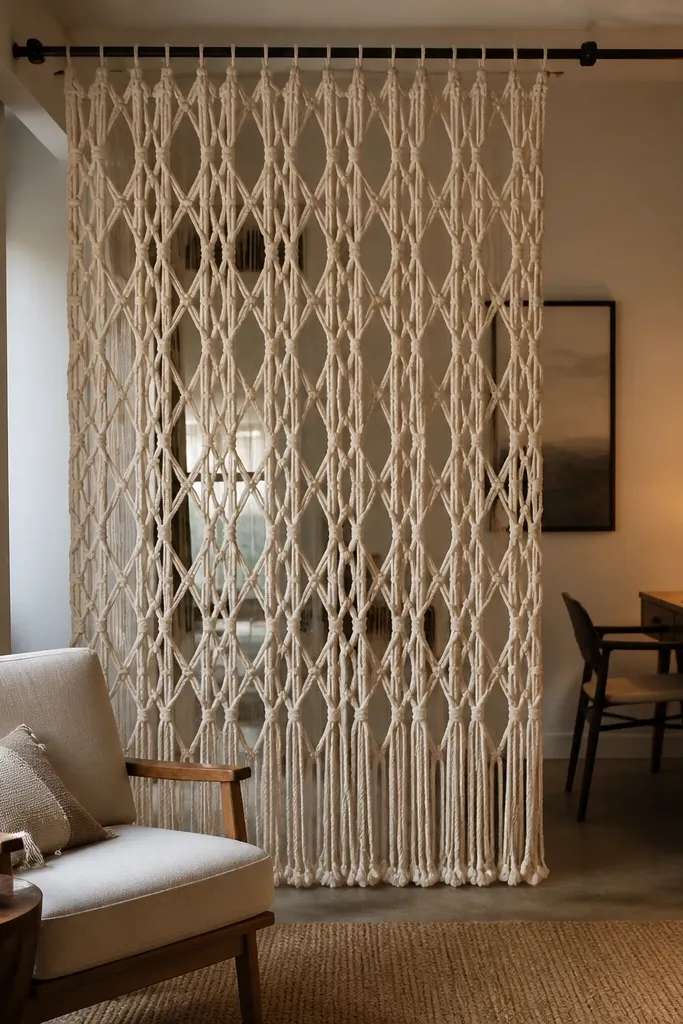
Macramé is the “privacy that still feels open” option. It doesn’t fully block views like blackout fabric, but it breaks up sightlines and adds texture that photographs well. Use cream, off-white, or warm beige so it blends with small-space lighting instead of turning the divider into a dark wall. This is ideal when the goal is softer separation for a bed corner or a reading nook, not complete visual privacy. Hang it with a ceiling rod or a tension rod so the top stays straight; uneven top lines make macramé look messy.
Choose macramé panels wide enough to overlap in the center by 6-10 inches when closed. Hang from a tension rod or ceiling line so the top is level — use a measuring tape and a pencil mark for the rod height. Keep the drop length to 1-3 inches above the floor so the bottom doesn’t drag. Costs usually fall around $25-90 per panel set depending on size and knot density.
Pro tipAdd a thin blackout liner behind it if you want stronger night privacy while keeping the macramé look in daytime.
Watch outSkip super-sheer macramé that has large open gaps if you need to hide a workspace.
7. Ripple-Fold Curtains on a Budget Track for a Designer Look
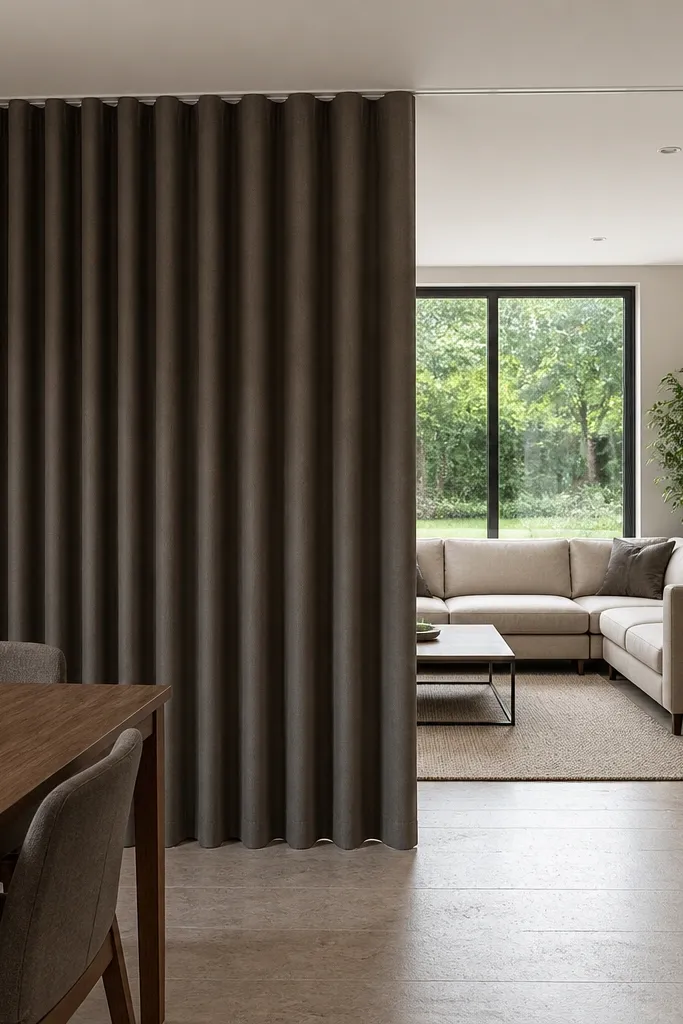
Ripple-fold curtains look expensive because the fabric forms a structured wave pattern instead of limp drapes. For curtain room divider ideas in small spaces, that structure matters: the divider reads clean, and the folds don’t swallow visual space. Pick a medium-dark color like charcoal, steel blue, or warm taupe so the waves show depth. Use a track mount so the curtain slides smoothly and you can stack them neatly when open. This works well for dividing a living room from a kitchen pass-through or creating privacy around a bed without adding bulky furniture.
Buy ripple-fold curtains or use a ripple system with evenly spaced rings; install a ceiling track wide enough to cover the zone plus side overlap. Hang panels so the pleat spacing stays even across the curtain width — adjust carrier positions before you set the final hem. Set the hem at 1-2 inches above the floor, then stack open to confirm the folds don’t bunch at the ends. Expect $60-180 depending on ripple system and curtain fabric weight.
Pro tipSteam the fabric before hanging; ripple folds look sharp only when the weave is smooth.
Watch outDon’t use very thin polyester — the wave pattern collapses and the divider looks flat.
8. Curtain + Wall Sconces Trick for a "Floating" Divider
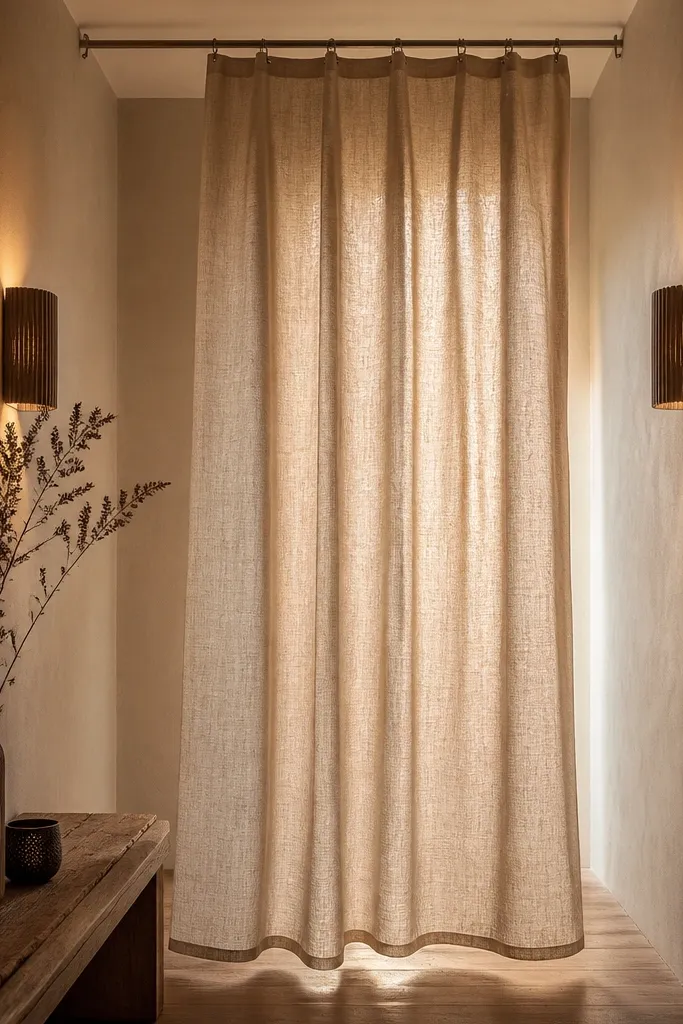
This is a lighting-forward curtain divider idea that looks intentional even on a tight budget. Hang a single wide curtain panel on a ceiling track or rod, then place warm wall sconces on the side of the divider zone so light grazes the fabric. Use a light fabric like oat linen or warm white cotton — it glows and creates a soft boundary without dark corners. The privacy comes from closing the curtain during work or sleep, and the look stays photogenic because the fabric catches light. Great for small living rooms where you want separation but don’t want the space to feel dim.
Mount a curtain rod or track above the divider so the curtain can close fully across the sightline. Install two wall sconces on the same side of the curtain zone, aiming light slightly upward to skim the fabric texture. Keep the curtain hem 1-2 inches above the floor so it doesn’t look like a dark strip. Costs vary, but plan $30-100 for curtain hardware and $40-200 for sconces depending on style and bulb type.
Use warm bulbs around 2700K so the fabric reads cozy instead of gray.
Don’t place sconces behind the curtain if you want the divider to look like it belongs.
9. Layered Curtain Panels on a Double Rod for Adjustable Privacy
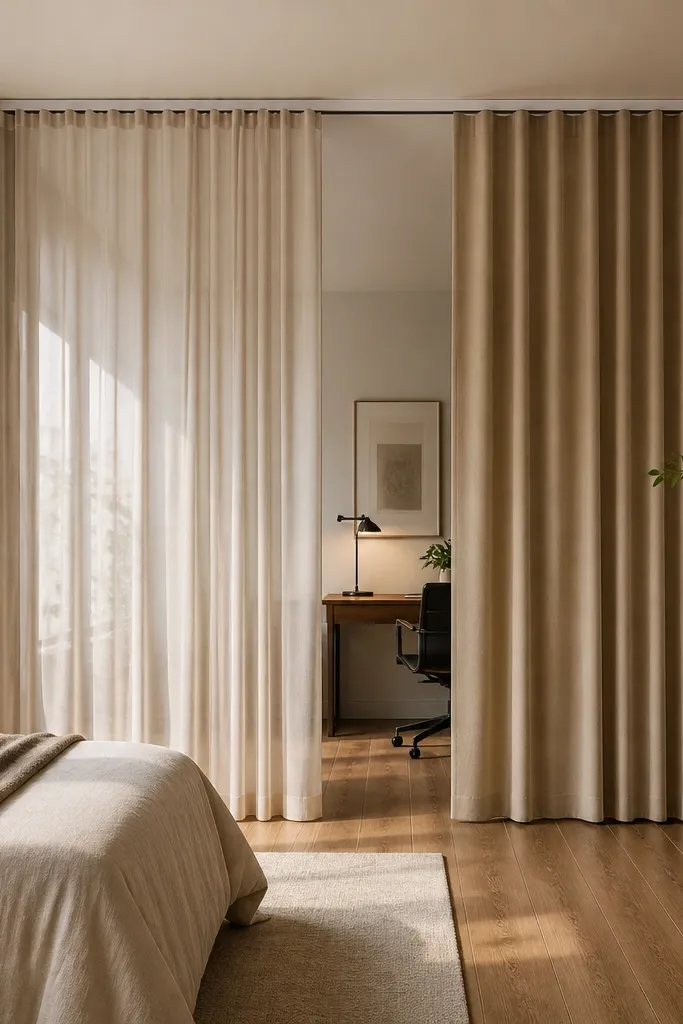
A double rod gives you real control over privacy level, which is the whole point of flexible room dividers. Hang one panel in a semi-sheer fabric and the second in a heavier solid — then you decide whether to close both layers or just one. For aesthetics, keep the colors in the same family: ivory sheer over warm sand or oatmeal blackout. This divider looks neat because both layers line up at the top and bottom edges. It’s a smart choice for a small bedroom in a shared home where you need privacy for sleep but still want daylight during the day.
Install a double curtain rod system at the correct height so the panels hang straight, then pick two sets of panels with matching lengths. Set the inner heavier layer so it overlaps the outer sheer by at least 6 inches when closed. Start with hem 1-2 inches above the floor, then adjust after you hang both layers to prevent uneven edges. Budget around $25-90 for a double rod and $60-160 for fabric depending on weight.
Pro tipUse the same tiebacks for both layers so they close together and look planned.
Watch outDon’t mix wildly different lengths; misaligned hems make layering look accidental.
10. Curtain Divider with Bed Skirt Hem for a Built-In Look
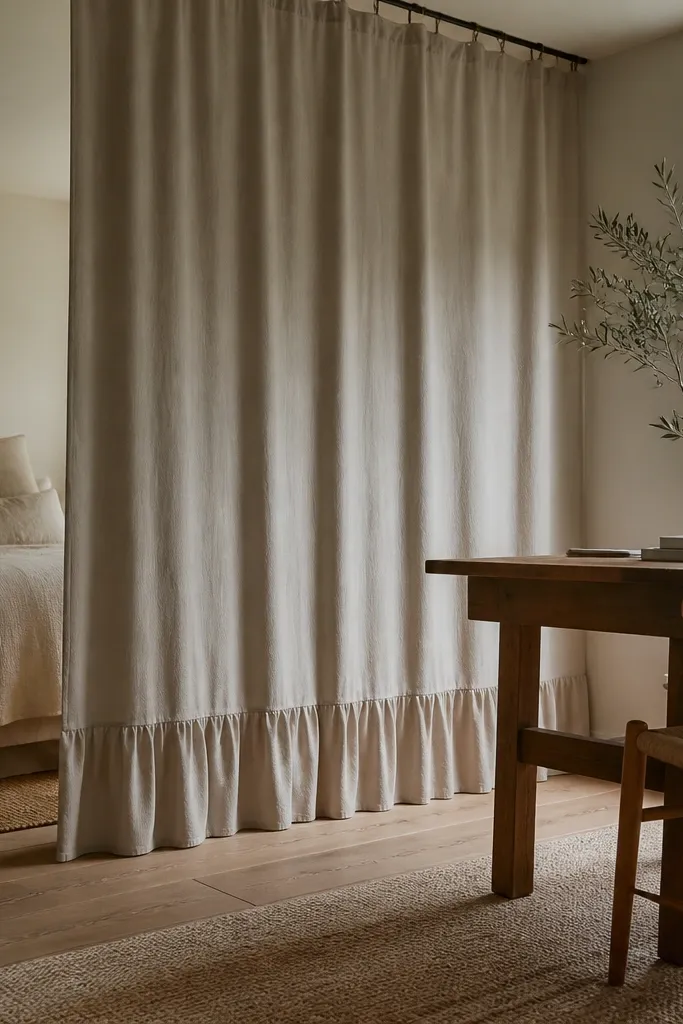
A tailored lower edge makes a curtain divider look built-in and less like a temporary partition. This idea uses a curtain panel plus a bottom trim like a bed-skirt-style panel or a gathered valance to create a clean visual line near the floor. Pick a fabric that drapes well but holds shape, like cotton sateen or medium linen. Choose a color that matches your bed or rug so the divider blends instead of competing. This is great for small bedrooms where you want privacy around the bed but you also want the room to look finished.
Hang your main curtain panel from a ceiling rod or track so it covers the sightline, then choose a bottom trim piece in the same color family. Attach the bottom trim with hidden clips or a simple stitch-and-clip method so it doesn’t pull the curtain out of alignment. Set the main curtain hem to 3-4 inches above the floor, then let the bottom trim land close to the floor for that tailored look. Cost is usually $40-150 depending on fabric and whether you buy trim pieces.
Pro tipUse matching thread color and hidden clips; visible fasteners cheapen the look fast.
Watch outDon’t use a very heavy trim with thin fabric — it creates a lumpy bottom edge.
11. Patterned Curtain Divider with a Solid Backing Panel
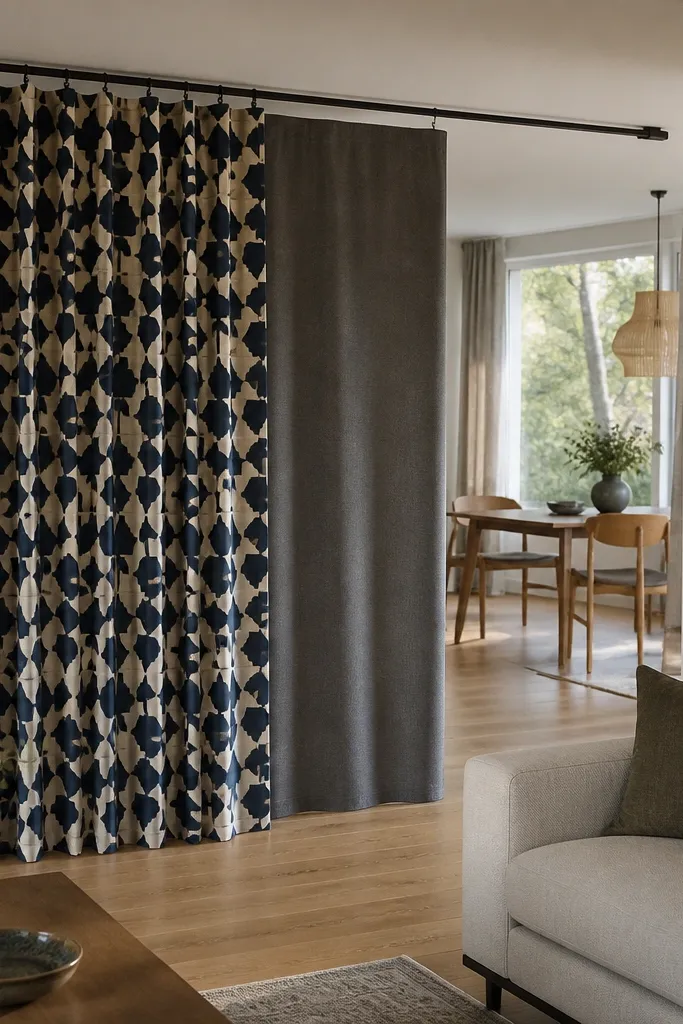
If you want curtain room divider ideas that are photogenic, pattern does the heavy lifting — but you need a solid backing to keep privacy consistent. Use a patterned curtain panel on the front layer and a solid backing panel behind it in a neutral like warm gray or cream. This gives you visual interest when closed while still blocking sightlines. Choose scale carefully: small-scale patterns look crowded in tight rooms, while big geometric shapes read clean. This works best in a corner zone like a kitchen nook or a workspace where you can face the divider from the open room.
Pick a patterned curtain panel width that covers the divider span plus 4-6 inches on each side. Hang the solid backing first on a track or rod, then layer the patterned panel in front using separate hooks so you can adjust both. Keep the hem aligned on both layers at 1-2 inches above the floor for a crisp edge. Expect $50-180 depending on pattern fabric and whether you buy blackout backing.
Stick to one accent color in the pattern and match it to a throw pillow or rug — it makes the divider look intentional.
Don’t use a busy pattern without backing; people will see through the open weave and the divider loses impact.
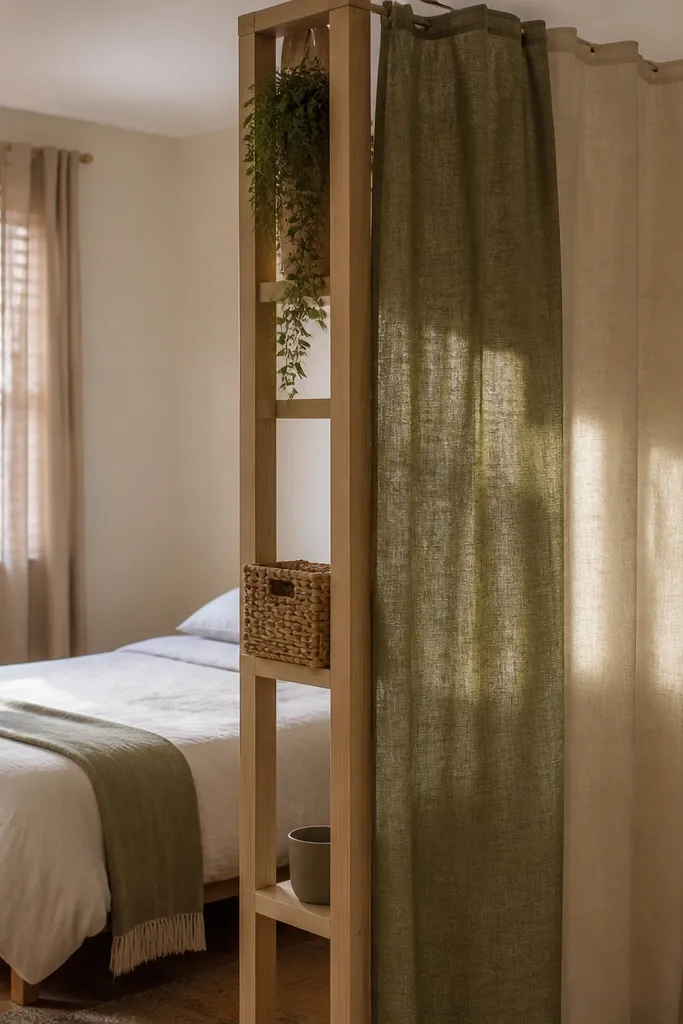
12. Curtains Hung from a Ladder Shelf Backdrop
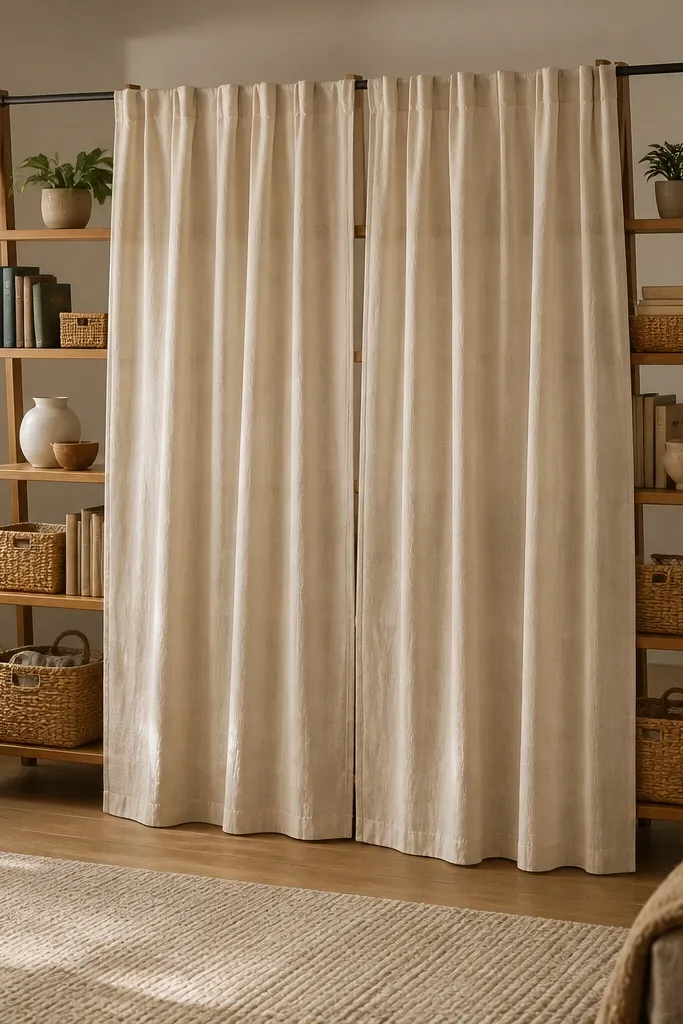
This is a “privacy with storage” divider that still reads like curtain room divider ideas. Use a simple ladder-style shelf or open-frame bookcase as the anchor, then hang curtains from a tension rod mounted across the shelf top. The shelf gives you a place for books, baskets, or small plants, and the curtain gives you visual privacy when you want it. Choose curtains in a solid linen or light cotton so the shelf texture stays the star. Great for small entry areas where you need a drop zone, and for studios where you want separation between kitchen and living without blocking airflow.
Place the ladder shelf so it blocks the sightline between zones, then mount a rod across the top rails using brackets made for your shelf material. Hang two curtain panels wide enough to overlap by 6-10 inches when closed, and keep the hem 1-2 inches above the floor. Style the shelf with low items only; tall clutter behind a curtain makes the divider look busy. Cost is $60-200 depending on shelf size and curtain fabric.
Use curtain clips at the shelf so the curtain doesn’t slide down unevenly when you open it.
Skip bulky shelf decor behind the curtain; it shows through and kills the privacy effect.
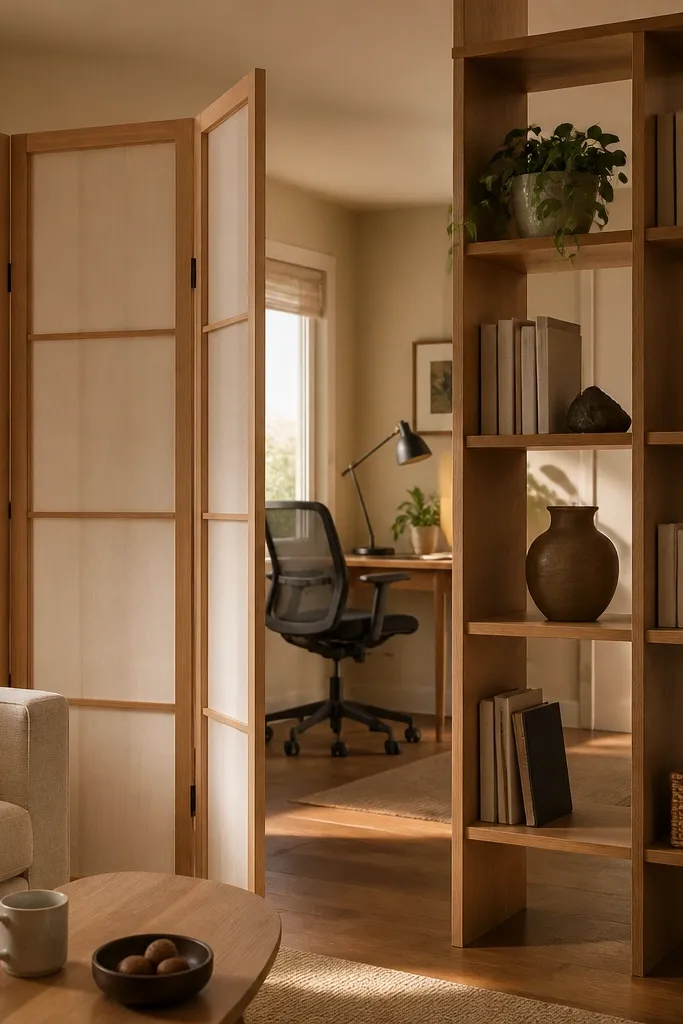
13. Curtain Room Divider as a Swinging Panel on a Hinge Rail
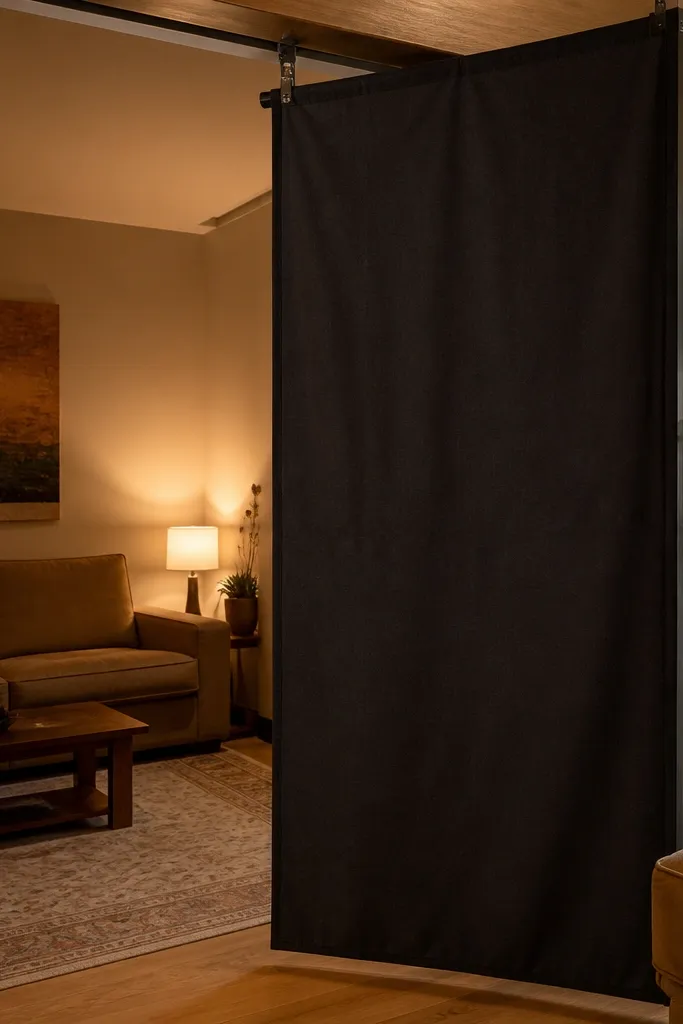
If you want privacy that feels more like a real door, a swinging curtain panel gives you that moment of separation without building a wall. You mount a hinge rail to the ceiling or a frame, then hang a single heavy curtain panel that swings closed. Use a thick curtain fabric like cotton canvas or blackout blend so the panel blocks sightlines when closed. This looks sleek because the curtain forms a clean vertical plane instead of draping in soft waves. It’s a strong fit for narrow studios where sliding curtains take too much floor space and you need a clear “close it and forget it” solution.
Install a hinge rail or ceiling pivot system above the opening width, then hang one wide heavy curtain panel from the rail. Test swing clearance and set the curtain length so the bottom edge lands 1-2 inches above the floor. Add a simple magnetic catch on one side so the panel stays shut quietly. Budget around $80-250 depending on the hinge hardware and curtain weight you choose.
Pro tipUse a dense fabric and add a blackout liner so the swinging panel doesn’t look see-through at night.
Watch outDon’t use lightweight sheer for a swinging panel; it will billow and leak privacy.
14. Color-Blocked Curtain Divider for Visual Zoning
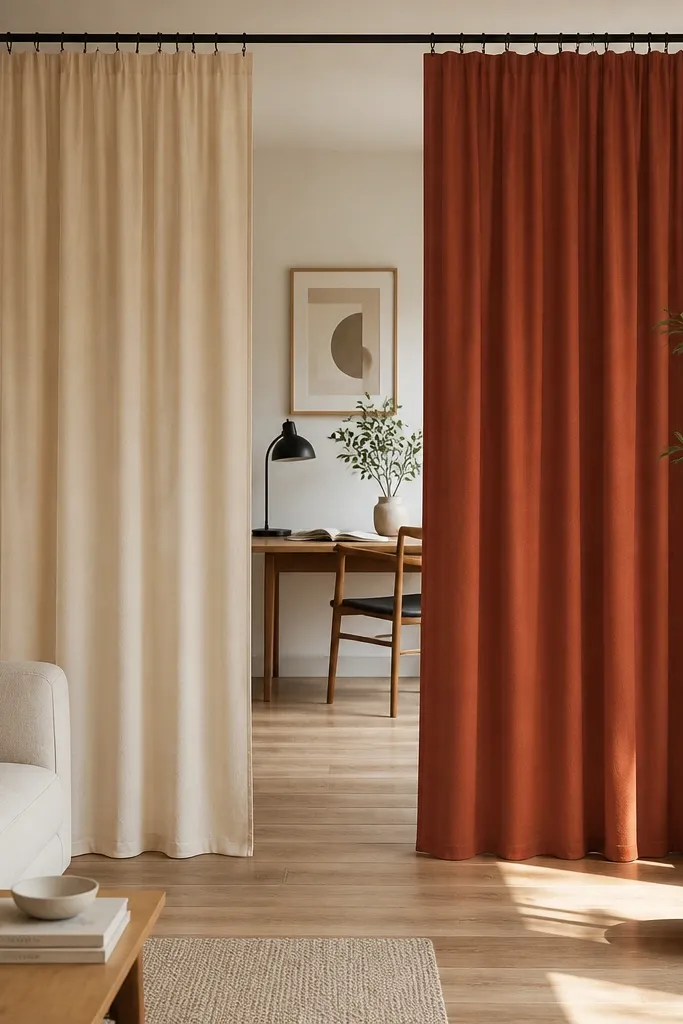
Color blocking turns a divider into a design feature, which is what makes it feel good in small spaces. Hang a curtain divider made from two complementary solid panels, like warm cream on one side and muted terracotta or sage on the other. When closed, you get a clear visual boundary; when partially open, you still get a styled look because the color blocks frame the zone. For privacy, stick with opaque fabrics — medium-weight cotton or linen — so the boundary holds up in any lighting. This works well for separating a desk area from a lounge where you want your “zones” to look intentional, not hidden.
Choose two solid curtain colors in the same fabric weight and hang them as two separate panels on one track or rod. Overlap the panels in the center by 6-10 inches so the seam doesn’t show as a gap. Set hem height to 1-2 inches above the floor, then adjust the overlap until the curtain closes with no daylight lines. Budget $50-170 depending on panel width and fabric.
Pro tipMatch one of the divider colors to a nearby textile like a rug or throw blanket so the divider looks planned, not random.
Watch outDon’t use two colors with very different sheens; gloss mismatch makes the seam look messy.