1. Blackout curtain + tension rod half-wall
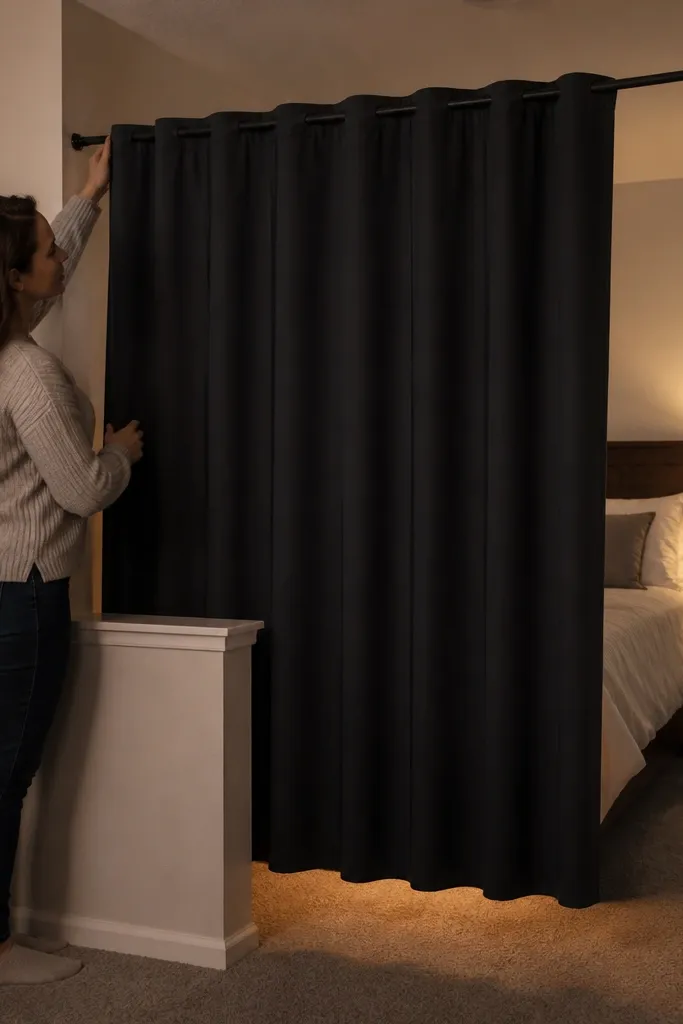
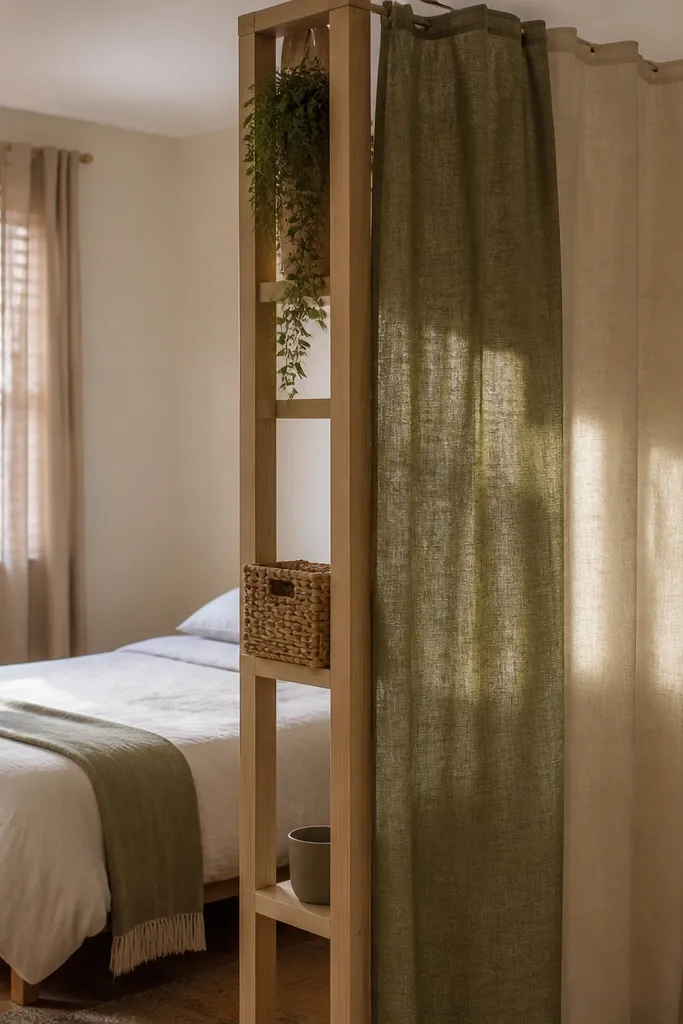
This is the cleanest temporary room divider look because it reads like a real wall when the curtain hangs straight. Use blackout curtain fabric (not “room-darkening”) so you get actual light control and less silhouette visibility at night. For a renter-friendly setup, mount a tension rod across the opening or between two stable surfaces, then hang one wide panel per side or one long panel folded to the right height. Choose a color that matches your room palette — warm greige, deep charcoal, or soft oatmeal — and let the fabric puddle slightly at the bottom for a finished edge.
Start by measuring the gap or span you want to divide. Use a tension rod rated for the width, then buy blackout curtain panels with grommets or a rod pocket that lets them hang evenly; aim for a total width 1.5-2x the span so it looks full, not flat. Hang the rod, then install the curtain and adjust the pleats so the top edge stays level and the curtain overlaps the sides by at least 2-4 inches.
Add a small clip at the curtain hem to keep the bottom from billowing when you walk by.
Don’t use sheer or thin “light filtering” fabric if you want privacy — it will show motion and faces.
2. Accordion folding screen with fabric panels
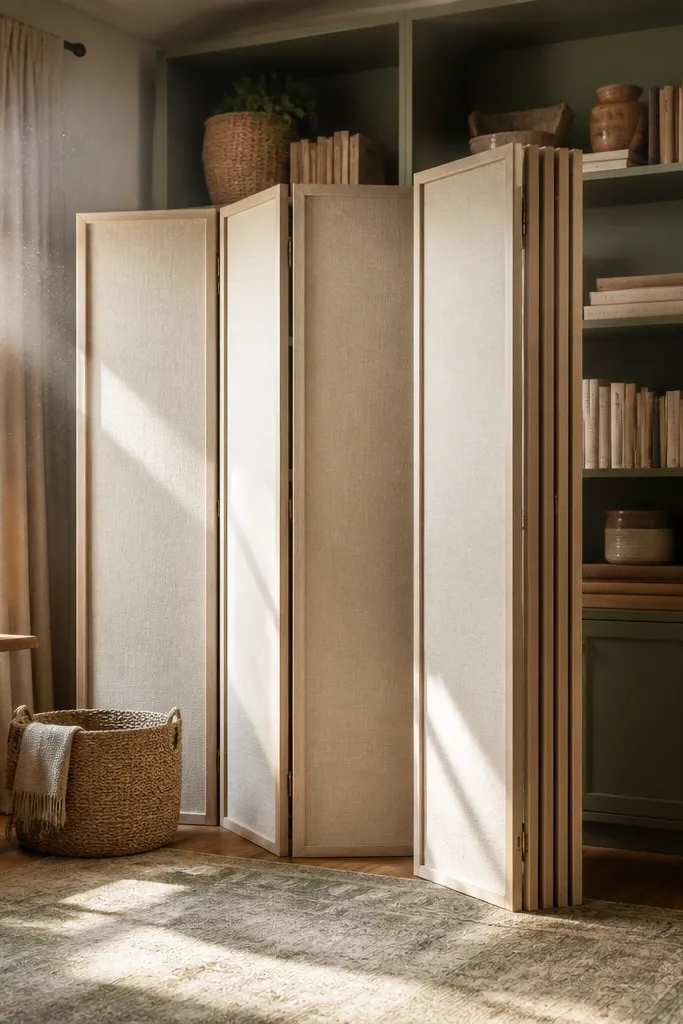
An accordion folding screen gives you fast zoning with a sculptural look. The trick is upgrading the panels: plain folding screens look temporary, but fabric-lined panels in linen or cotton canvas make them feel intentional and warm. Pick a screen that folds to a narrow stack so it stores easily, then choose a panel color that echoes your textiles — like oat linen against a white wall or deep ink against light wood. If you angle it slightly toward the seating area, it blocks sightlines better than a straight wall placement.
Pro tipHang a narrow strip of matching fabric or ribbon over the top seam so the screen reads like one continuous surface.
Pick an accordion screen size that can reach the sightline: measure from the edge of the bed or desk to where you want privacy. If the screen has removable panel covers, swap in fabric covers using a staple gun and tight stretch; if not, cover the existing panels with fabric panels secured using Velcro strips. Set it in place, then angle it 10-20 degrees so it creates a visual barrier instead of a flat “photo backdrop.”
Watch outDon’t place it parallel to furniture — a straight-on divider looks like a signboard and leaks views.
3. Rattan room divider with weighted planters
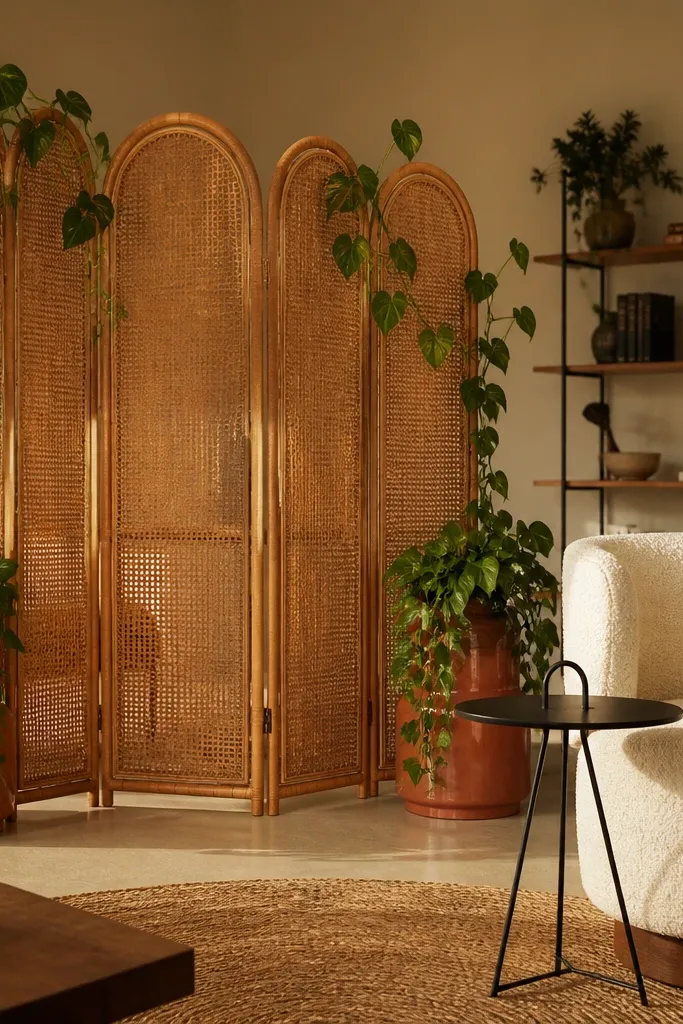
Rattan looks airy, but you can still get separation by controlling stability and using it in the right spot. A rattan divider works best in living rooms or open-plan spaces where you want a warm, photogenic boundary without making the room feel chopped up. Add weighted planters or ceramic bases at the bottom corners to stop it from drifting — that drift is what turns “intentional zoning” into “why is it crooked.” Choose natural rattan with a warm honey tone, then pair planters in matte terracotta or off-white ceramic for a cohesive look.
Choose a freestanding rattan divider that’s tall enough to cover seated eye level; aim around 64-72 inches. Place it where the divider will meet the natural flow of the room, usually between a couch and a dining table or between a bed and a walkway. Add two weighted planters at the base corners, then adjust until both top edges align; finally, style the planters with one plant or a single stem arrangement so the bottom doesn’t look cluttered.
Use rope or felt pads under the divider feet so it doesn’t scratch floors and slide when you bump it.
Don’t pick a divider that’s too short — low rattan reads decorative only and won’t block sightlines.
4. Bookcase room divider with removable inserts
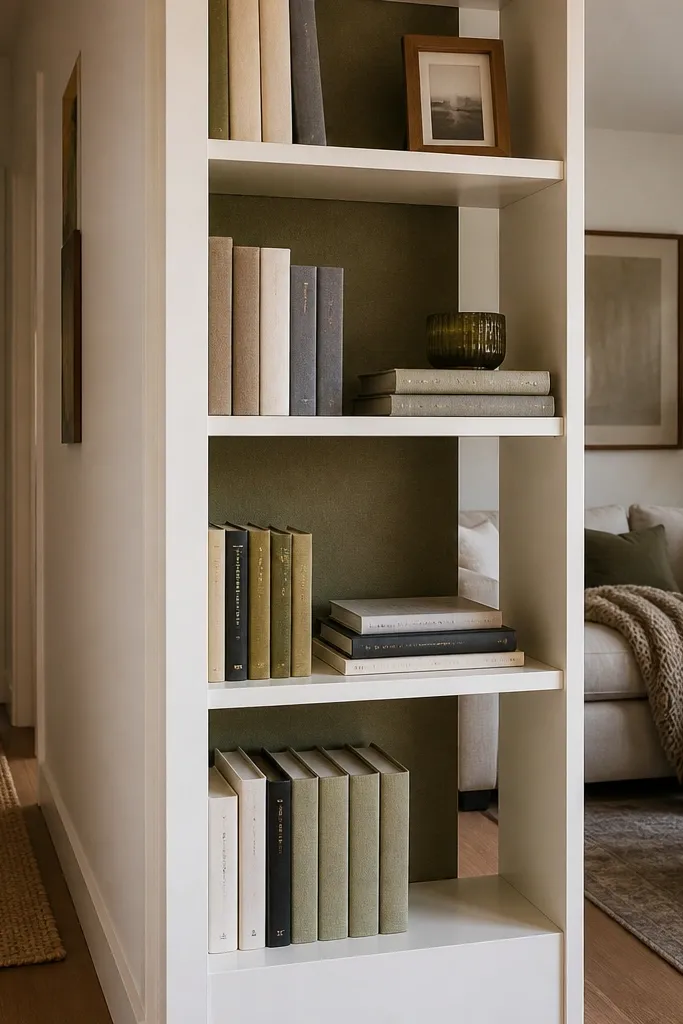
A narrow bookcase divider gives you separation plus storage, and the best part for renters is that it can be temporary if it’s stable and you don’t anchor it. Use a bookcase with open sides or adjustable shelves, then add removable fabric inserts where you want privacy — like behind the middle shelves. This creates a layered look: books on top, soft fabric where you want silhouettes reduced. Keep the palette tight: black-painted wood shelves with cream inserts looks crisp in photos and doesn’t fight with colorful art.
Select a bookcase that fits your space with at least 1-2 inches of clearance from walls and door trim. Install removable fabric inserts by using Velcro strips on the shelf edges, then press the fabric panels into place; choose fabrics that match your curtain or bedding so the divider looks styled, not patched. Place the bookcase perpendicular to the main walkway and add a stability kit if it includes one; even without wall mounting, you want it from tipping if kids or pets bump it.
Use the same fabric as your bedding or curtains so the divider looks like part of the room, not added furniture.
Don’t overload every shelf with small items — clutter makes the divider look messy instead of purposeful.
5. Pegboard divider with hanging fabric strips
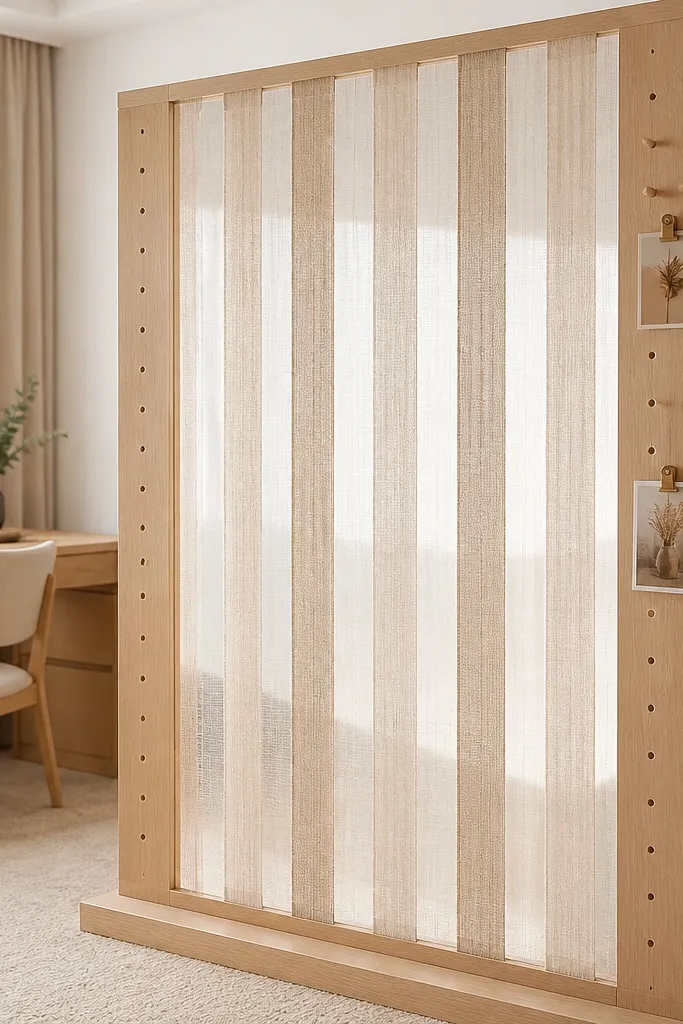
Pegboard looks modern, and it turns a divider into an interactive styling surface. You can hang vertical fabric strips to create a semi-opaque curtain effect without a heavy, solid wall. This is ideal for small spaces where you want the divider to look light but still reduce direct line-of-sight. Use a light pegboard color like matte white or pale oak so the strips don’t look heavy. For strips, choose thick cotton or linen in two tones — like warm white plus sand — so it reads designed rather than random.
Find a freestanding pegboard divider or a pegboard panel system that stands without wall anchoring. Cut fabric strips to 70-84 inches depending on how much height you want to cover, then attach with small clips or rings so they can be removed later. Space strips about 3-5 inches apart to block sightlines without becoming a solid wall; then angle the pegboard slightly so it faces the view you want to interrupt.
Keep strip widths consistent (around 2-3 inches) for a neat rhythm that photographs well.
Don’t use thin jersey strips — they twist and look messy instead of intentional.
6. Foldable curtain panel divider on a rolling stand
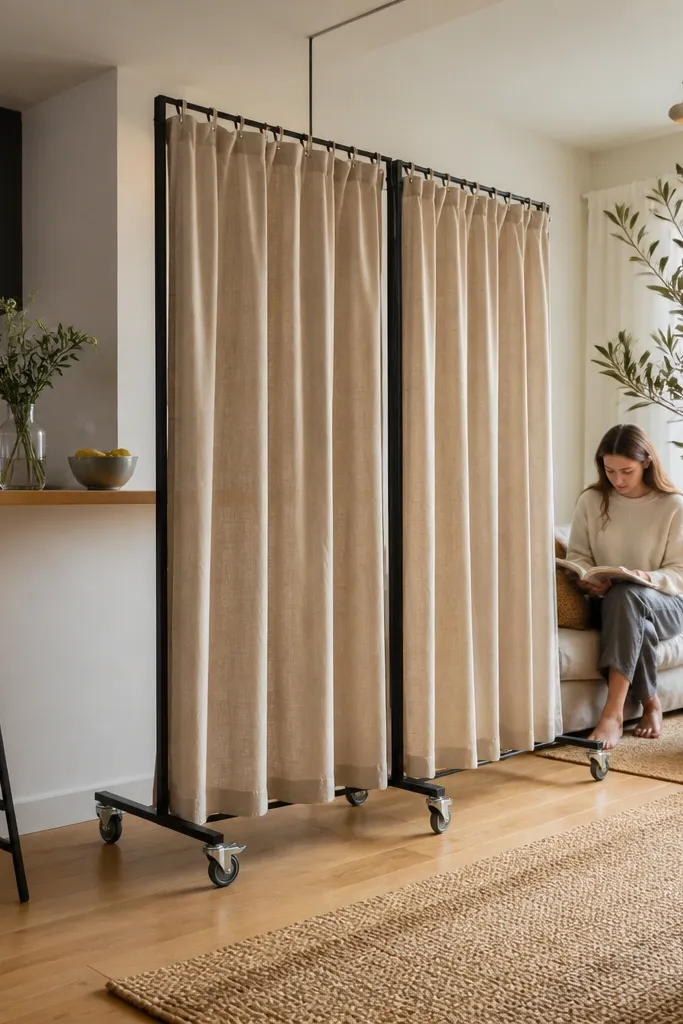
A rolling stand with curtain panels is the most flexible option for renters who move furniture frequently. You get a tall, soft barrier without committing to a fixed layout, and the wheels make it easy to pull the divider out for cleaning. Choose curtain fabric with a bit of weight so it hangs in straight folds; linen blends and cotton canvas look best. Color choice matters here: cream or light taupe reads warm and hides wrinkles better than bright white. This divider is great for a desk corner that needs privacy from the couch or for a temporary sleep zone in a studio.
Pro tipAdd a small weighted chain to the bottom hem if the fabric billows when the door opens.
Buy a rolling curtain stand or a garment rack-style stand with a crossbar, then choose curtain panels that are wide enough to overlap at the seam. Hang the panels on rings or clips so you can remove them quickly; aim for total width 1.5-2x the stand span for a full look. Place the stand where the desk chair will not hit it, then lock the wheels and adjust the hem so it sits 1-3 inches above the floor for a clean line.
Watch outDon’t hang lightweight sheers on a rolling stand — they flutter and make the divider look unstable.
7. Layered macrame curtain with ceiling hooks removed later
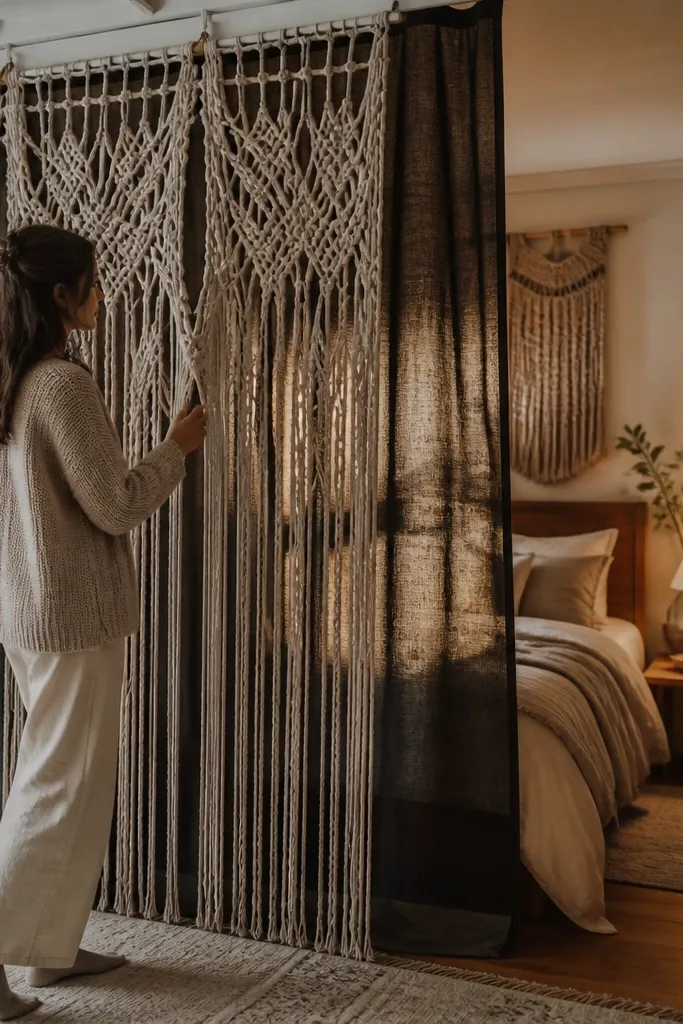
If you want a divider that looks like art, layered macrame does it. The key is layering: macrame alone is decorative and leaves visibility gaps, but macrame over a blackout or dark curtain liner creates a pretty front with real privacy behind. This setup is photogenic because the texture catches light and makes the divider look dimensional even in a small room. Use neutral tones — natural macrame over black or charcoal liner, or white macrame over oat liner — so it blends with your existing decor.
Pro tipKeep the liner a darker color than the macrame so the texture stays visible in photos.
Measure the area where you want the divider to hang and pick a length that covers from just above seated eye level down to near the floor. Install ceiling hooks that are removable and rated for the weight of your macrame plus liner; attach the macrame to the hooks using rings for easy removal. Add the liner behind the macrame and secure the bottom edge with removable clips so the fabric doesn’t shift. When you move out, remove the hooks and patch the holes if needed using the landlord-approved method.
Watch outDon’t use a heavy liner that pulls the macrame out of shape — choose a liner fabric that drapes, not stiffens.
8. Curtain panel room divider with DIY track from suction mounts
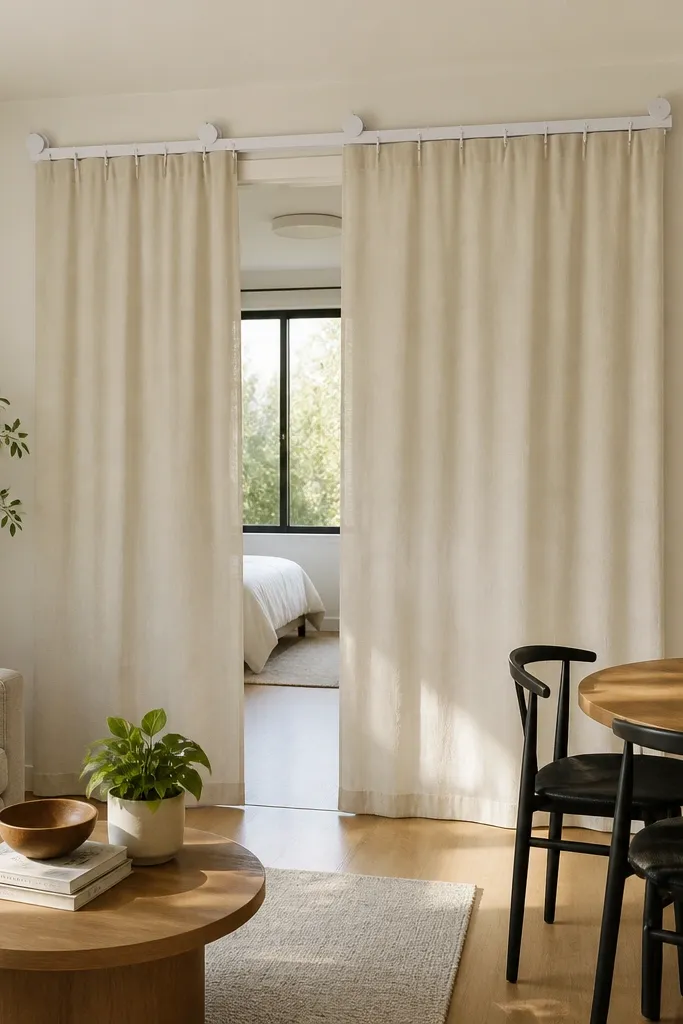
A sliding curtain divider looks built-in and saves floor space, which is the whole point in small apartments. Suction-mounted tracks work when your walls are smooth and suitable for it, and they keep the curtain from dragging or tangling like a normal hanging setup. Use two curtain panels that slide past each other so you can open and close the divider without moving a bulky piece. Pick a fabric that holds shape — cotton sateen, linen-cotton blend, or blackout — and keep the track low enough that the curtain covers the gap cleanly.
Pro tipUse a slightly longer panel width than the track so the seams overlap when closed.
Check that your wall surface supports suction mounts, then mount the track endpoints at the height where you want the curtain edge. Hang two panels with rod pockets or curtain hooks designed for tracks, then test slide distance before fully tightening anything. Position the divider where it won’t block a doorway swing, and add a small magnetic strip or weighted hem clips so the panels meet with minimal light gaps.
Watch outDon’t mount the track too high — a high curtain line leaves a visible gap at eye level.
9. Japanese-style shoji-inspired folding panels with paper-look fabric
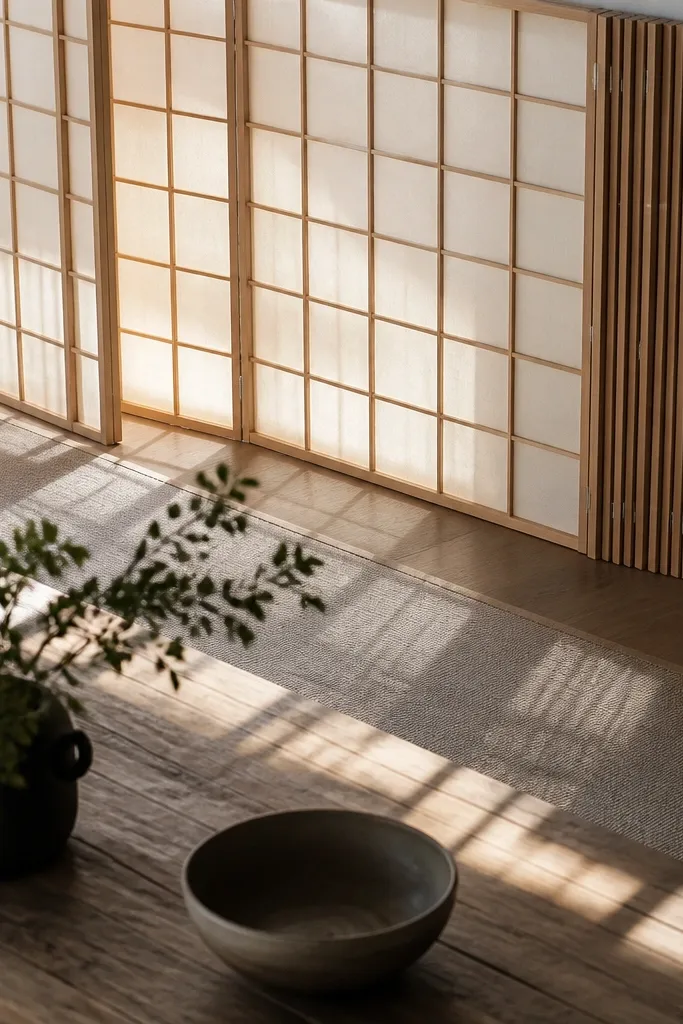
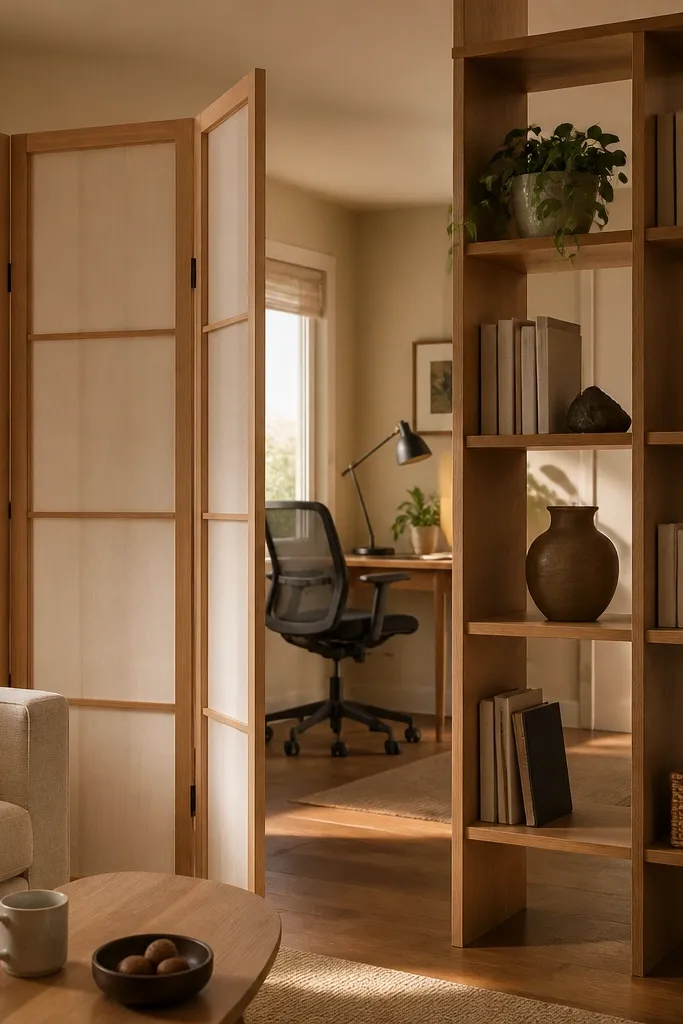
Shoji-style panels give you that clean grid look without needing actual wood frames. For renters, the winning move is using folding panels with a paper-look fabric grid or lightweight lattice inserts, so the divider stays light and easy to store. The visual effect is soft and calm, and the grid helps break up sightlines while still letting some light through. Choose warm white panels with a thin dark frame, then place them near a window so the light makes the grid glow instead of looking flat.
Pro tipUse the same color for floor mat and panel base so the divider reads intentional instead of floating.
Pick folding panels that look like shoji and can stand upright without wall mounting. If your panels have plain inserts, swap in paper-look fabric sheets stretched taut with removable clips. Arrange the panels in an L or slight arc so the divider wraps the corner and blocks direct views from the walkway. Test the height with someone seated — you want the grid to sit around the eye level zone, then adjust by adding a base mat under the feet if needed.
Watch outDon’t place it directly in front of a dark wall — the grid will disappear and look like a cheap prop.
10. Upholstered fabric panels on a lightweight frame
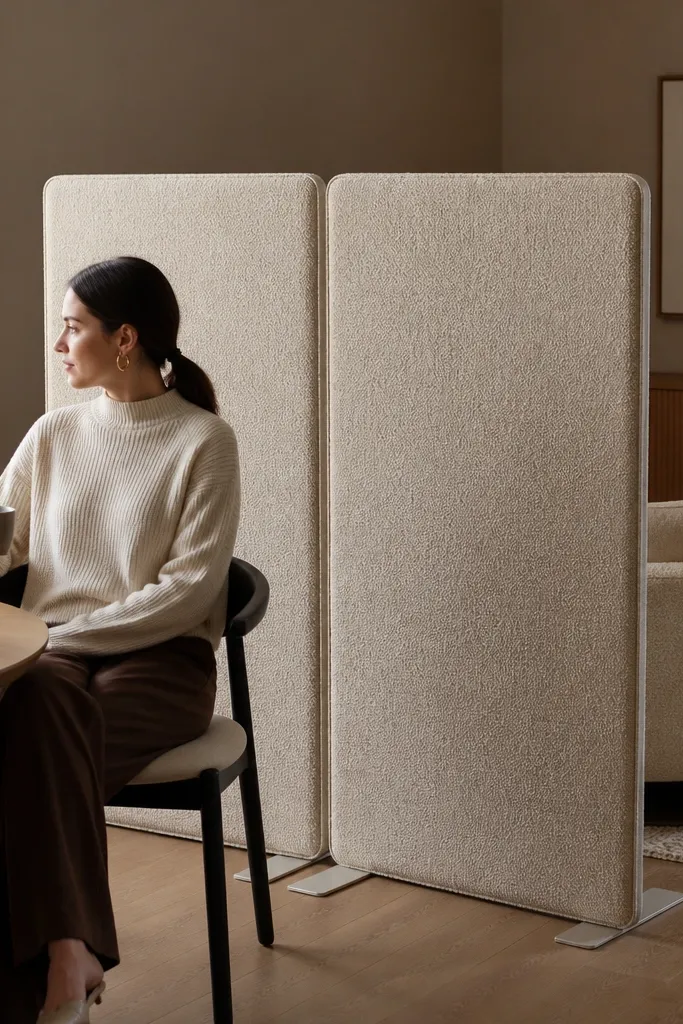
For a luxe, photo-ready divider, use upholstered fabric panels on a lightweight frame. This option looks like custom millwork because the fabric is tight and the edges are finished, but it’s still temporary if you use freestanding frames with stable feet. Choose a medium-weight upholstery fabric like textured bouclé, woven linen, or performance fabric that resists snagging. Color choice: go for warm beige, stone gray, or deep olive — colors that hide shadows and keep the divider from looking stark. Place two panels to create a partial enclosure that feels private without making the room feel boxed in.
Buy or build two freestanding frames with flat feet, then stretch fabric over a thin batting layer; keep seams on the back edges so the front stays smooth. If you’re buying frames, choose ones with removable fabric covers so you can swap colors later. Place the panels in an angled “gate” position, leaving a small opening for airflow, then add corner floor protectors to keep them from sliding on rugs.
Use fabric with a visible texture — it hides minor wrinkles and looks expensive in indoor light.
Don’t use slippery satin — it shows every fold and looks wrinkled fast.